





Vintage Curule Seat
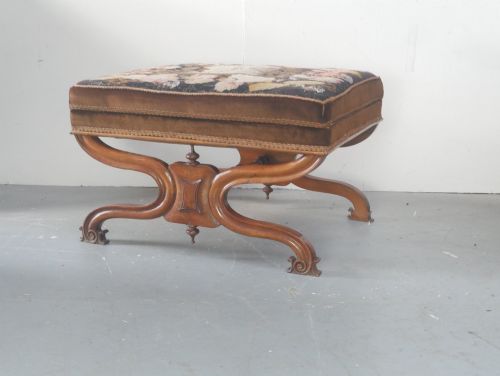
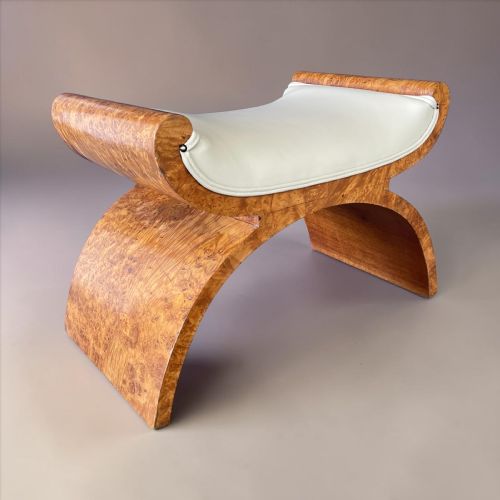
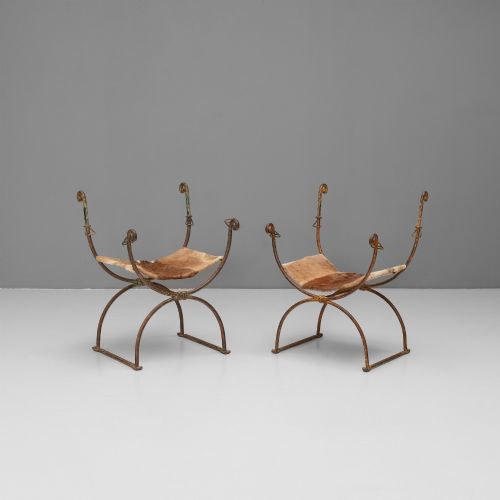
These vintage curule seat examples bring classical X-frame elegance to an interior, offering structured form and historical pedigree.
Vintage Curule Seat
A vintage curule seat takes its foundational X-frame architecture from ancient Roman magistrate chairs, evolving across centuries into seating forms suited for refined interiors. When searching for a vintage curule seat, a buyer encounters diverse interpretations spanning stools, armchairs, footstools, and benches.
The selections on this page draw predominantly from nineteenth century revivals, alongside pieces from the eighteenth century, the Edwardian era, and nineteen-thirty. Stylistic variations include Regency, Renaissance Revival, Victorian, and Art Deco manifestations.
Stools and dressing stools appear frequently alongside armchairs and window seats. These pieces function effectively as focal points or accent seating within traditional and eclectic room schemes.
How they were made
Cabinetmakers constructed the supportive X-frames of these seats using dense timbers such as mahogany, rosewood, walnut, and oak, often employing ebonised finishes or gilding for decorative emphasis. Structural integrity relies upon precise joinery where the curved cross-legs intersect to bear weight.
Upholstery techniques applied to the seats integrate tactile materials including velvet, leather, textile, and tapestry, secured over padding. Brass components occasionally provide structural reinforcement or decorative accents at the frame intersections.
Vintage Curule Seat Retail Price Guide 2026
Typical asking prices for vintage curule seat among the pieces listed under this phrase on Sellingantiques today, from the lower quarter to the upper quarter. They describe what is for sale here now, not the wider market.
Materials documented across these listings include mahogany, rosewood, walnut, oak, fabric, brass, leather, and velvet.
What varies in quality
The distinction between standard and superior pieces rests upon the crispness of the frame carving and the fidelity of the historical revival style. Richness of timber grain, particularly in rosewood and mahogany examples, elevates the visual presence of the furniture.
Integrity of the structural cross-frame joints determines durability, while the quality and authenticity of the textile or leather upholstery influence overall finish. Pieces bearing documented cabinetmaker attribution represent the apex of craftsmanship in this category.
Harry and Lou Epstein·Miles and Edwards·White, Allom and Co.
The Vintage Curule Seat Glossary
- Curule seat
- An ancient form of seating characterised by opposing curved legs forming an X-shape, revived during periods such as the Regency and Victorian eras.
- X-frame
- A structural furniture design utilising two intersecting diagonal members to support the seat, seen in stools, chairs, and benches.
- Savonarola chair
- A specific folding armchair type constructed from multiple wooden slats forming an intricate X-frame, often associated with Renaissance styling.
- Dante chair
- An X-frame armchair typically featuring padded arms and an upholstered seat and back, popular during revivalist periods.
- Ebonised
- Wood finished with a dark stain or paint to imitate the appearance of dense ebony, frequently utilised in nineteenth-century decorative furniture.
- Scottish Baronial
- A nineteenth-century architectural and decorative style drawing inspiration from medieval Scottish castles, reflected in robust framing.
Vintage Curule Seat: Frequently Asked Questions
How do I style a curule seat at home?
Place a curule stool at the foot of a bed or position an X-frame armchair beside a fireplace to introduce classical architectural lines to the room.
Because these pieces have compact visual footprints, they work well as flexible accent seating in hallways, dressing rooms, or sitting areas.
Are these seats comfortable for daily use?
Many examples feature upholstered pads in leather, velvet, or tapestry that offer supportive seating for dressing or brief periods of relaxation.
Armchairs with padded backrests provide additional support, making them suitable for occasional sitting in studies or living spaces.
How can I identify the period of an X-frame stool?
Examine the timber species, such as rosewood or mahogany, alongside the specific revival style indicators like Renaissance Revival or Regency details to narrow down the era.
Cabinetmaker signatures or stamps, where present on the frame, provide definitive evidence of origin and date.