



Art Deco Ottoman Seat
These art deco ottoman seat pieces bring period character and practical seating, combining striking geometric lines with useful interior storage.
Art Deco Ottoman Seat
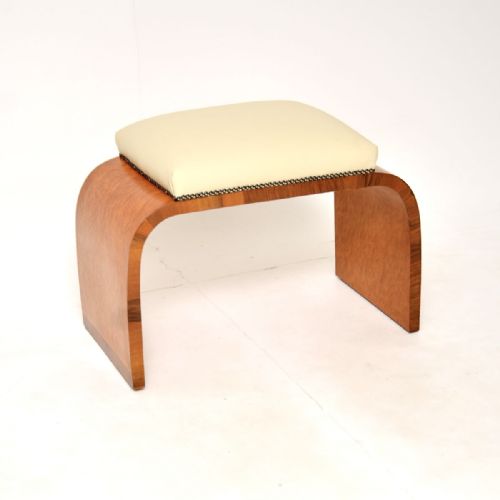
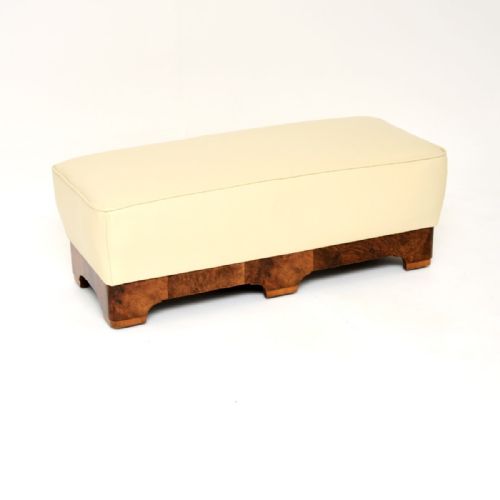
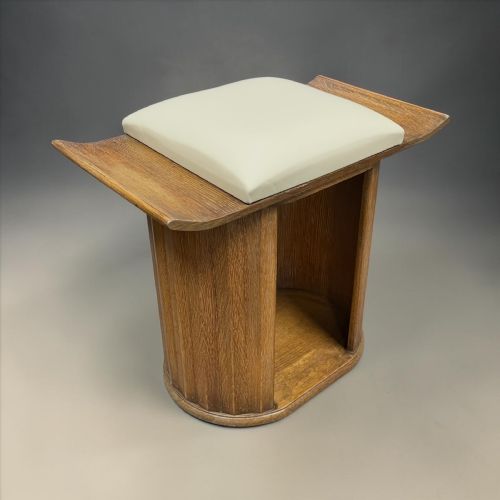
An art deco ottoman seat is a compact form designed for the bedroom, dressing room or parlour, often doubling as a useful storage container. When searching for an art deco ottoman seat, buyers encounter dressing stools, piano stools, and drum-shaped storage pieces originating from the nineteen thirties.
The selection on this page centres primarily on utilitarian stools and ottomans from nineteen thirty, reflecting the distinct modernist taste of the period. These items bridge the gap between ornamental furniture and everyday utility, offering a clear glimpse into interwar design.
How they were made
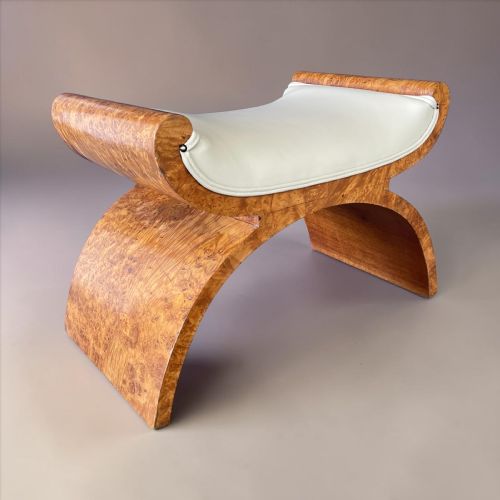
Cabinet makers utilised richly figured timbers such as burr walnut and birds eye maple, veneering sturdy carcases of oak to achieve striking symmetrical grain patterns. These wooden frames were then paired with contrasting leather or woven upholstery fabric.
Makers constructed drum-shaped bodies and low rectangular forms with integrated lift-up lids for storage, marrying cabinet work with traditional upholstery techniques. Metal fittings occasionally appear on hinges and internal mechanisms.
Art Deco Ottoman Seat Retail Price Guide 2026
Typical asking prices for art deco ottoman seat among the pieces listed under this phrase on Sellingantiques today, from the lower quarter to the upper quarter. They describe what is for sale here now, not the wider market.
Object forms currently represented include dressing stools, piano stools, and drum-shaped ottomans equipped with storage.
What varies in quality
The distinction between standard examples and superior pieces rests on the choice of surface veneer and the prestige of the maker. Master workshops selected highly figured burr walnut and birds eye maple to create dramatic visual movement across the curved surfaces.
Execution of the joinery and the integrity of the original leather or fabric upholstery determine the overall refinement of the piece. Subtle curves on drum-shaped bodies demand precise carpentry that separates standard production from high workshop output.
Harry and Lou Epstein
The Art Deco Ottoman Seat Glossary
- Art Deco
- A design style of the nineteen thirties characterised by sleek geometric lines, streamlined forms, and modern industrial materials. It replaced the ornate floral motifs of earlier Victorian and Edwardian work.
- Burr Walnut
- A prized wood harvested from the wart-like growths on walnut trees, yielding swirling, knotty patterns. Cabinet makers utilised these decorative veneers on prominent exterior surfaces.
- Birds Eye Maple
- Timber featuring small, circular figures that resemble tiny birds' eyes scattered across the grain. This light-toned wood was favoured by interwar designers for contrasting accents.
- Drum Shaped
- A cylindrical furniture form featuring a circular top that often lifts to reveal a hollow interior storage cavity. This shape softens the angular geometry common in interwar interiors.
Art Deco Ottoman Seat: Frequently Asked Questions
What is an art deco ottoman seat?
An art deco ottoman seat is a low stool or box seating unit dating from the nineteen thirties, built with clean geometric lines. Many examples incorporate a hidden storage compartment beneath the upholstered lid.
These pieces served practical functions in dressing rooms and parlours as piano stools or dressing seats. They combine decorative wood veneers with functional interwar design.
Where were these stools used?
These pieces were typically placed in bedrooms, dressing rooms, and music rooms alongside matching dressing tables or pianos. Their compact dimensions allowed them to tuck neatly beneath tables when not in use.
The inclusion of internal storage made them suitable for holding sheet music, gloves, or small garments. They added a touch of modernism to domestic spaces without dominating the room.
How do I identify nineteen thirties pieces?
Nineteen thirties pieces display characteristic streamlining, minimal ornamentation, and a preference for geometric silhouettes over traditional curves. The reliance on bold wood grains like burr walnut defines the aesthetic.
Construction methods also point to this interwar era, utilising specific veneer techniques on sturdy oak carcases. Maker attribution, when present, confirms this precise production window.
How do I care for the leather?
Leather upholstery requires gentle cleaning with a soft, dry cloth to remove dust and prevent surface abrasion. Conditioning balms help maintain suppleness and prevent the historic hide from drying out over time.
Keep these seats away from direct sunlight and heat sources to protect both the leather and the underlying wood veneers. Proper environmental control preserves the original finish.