





Vintage Crystal Appliques
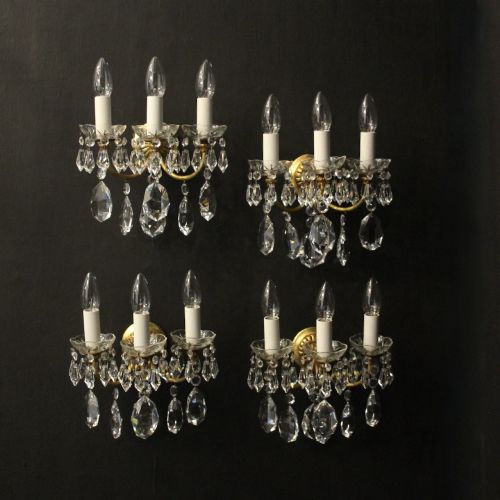
These vintage crystal appliques are decorative wall mountings that catch and refract candlelight and electricity to transform a room.
Vintage Crystal Appliques
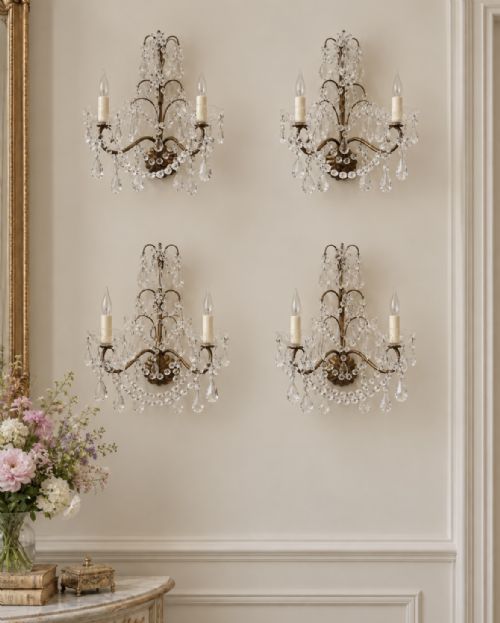
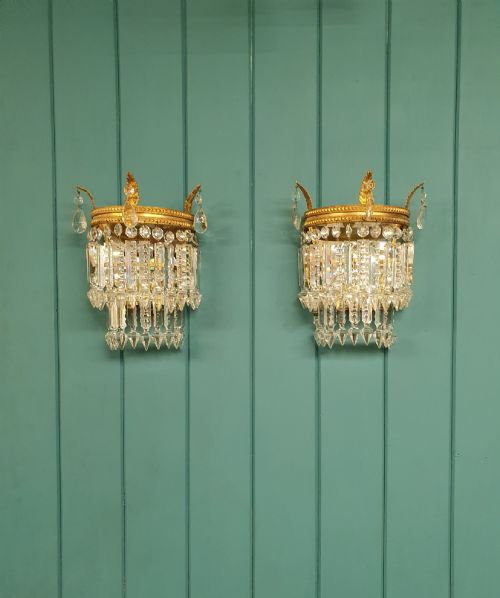
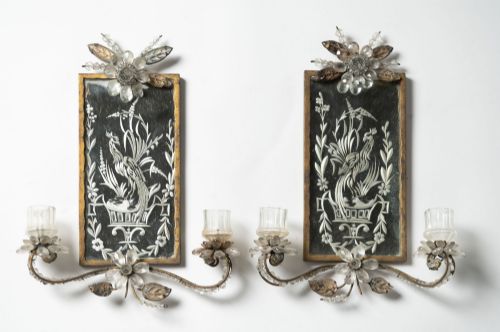
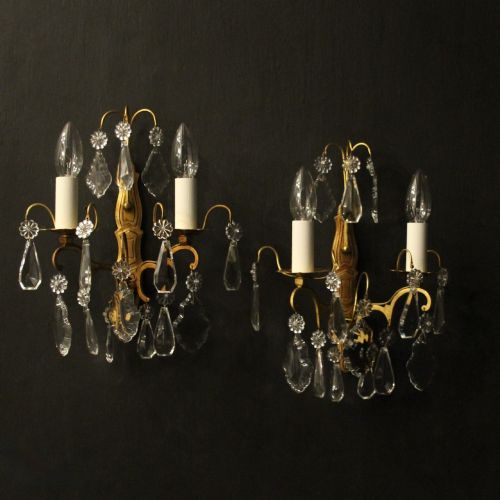
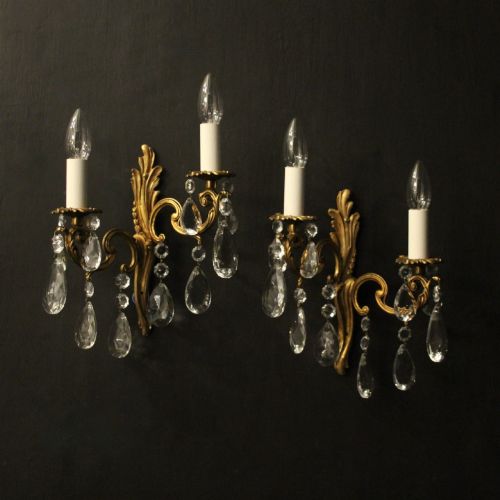
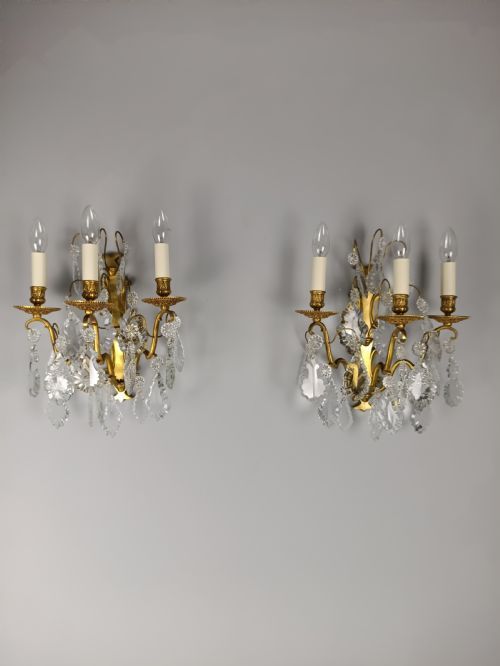
You are most likely to meet French designs on this page, particularly those finished in styles such as French Rococo, French Baroque, and French Neoclassical. These fixtures incorporate heavy metal frames adorned with hanging drops and beads that distribute light across a wall surface. Alongside French examples, Italian, Swedish, and English stylistic influences appear within the inventory.
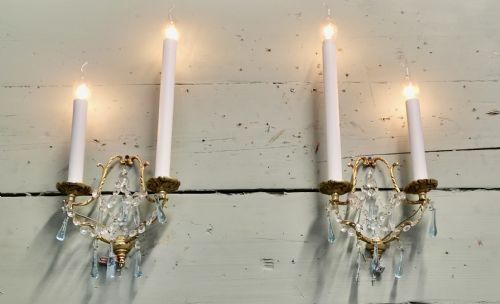
The forms range from twin-arm and triple-arm wall lights to taller wall chandeliers and single candle sconces. Many of these items utilise metal backplates that mount directly to the wall, supporting the central stem and the glass or crystal dressing. Their primary purpose is to provide both functional illumination and a decorative focal point within a room.
How they were made
The construction of these wall fixtures relies on a combination of metal casting and glass cutting. Frames are formed from brass, gilt brass, bronze, gilt bronze, and ormolu, often shaped into elaborate scrollwork, floral motifs, or classical figures. Toleware and silver-gilded finishes also feature in the manufacture, providing varied surface textures for the metalwork.
Suspended from these metal frames are components of cut crystal and cut glass. Individual drops, lustres, and beads are shaped by hand or machine to maximise light refraction, then wired or pinned to the metal structure using brass wire or rings. The integration of solid metal backplates ensures the fixtures can support the considerable weight of the glass dressings.
Materials recorded across the inventory include cut crystal, cut glass, brass, gilt bronze, ormolu, and toleware.
What varies in quality
The distinction between tiers of quality rests on the density and clarity of the crystal components alongside the precision of the metal casting. Higher-grade pieces utilise heavily leaded crystal that yields sharper refraction and clearer transparency, paired with crisp, deeply chased bronze or brass mounts. Inferior examples rely on pressed glass with softer edges and lighter, simpler sheet metal frames.
Another factor is the completeness and matching nature of the glass dressing. Superior wall lights retain their original configuration of drops and lustres without mismatched replacements, while lesser pieces may show disparate glass components accumulated over decades of restoration. The weight and rigidity of the backplate and arms also indicate the standard of original manufacture.
Maison Baguès·F. & C. Osler
The Vintage Crystal Appliques Glossary
- Sconce
- A wall-mounted lighting fixture designed to carry candles or electric lamps. These units project outward from the wall surface to distribute light across a room.
- Ormolu
- A metallic technique involving the application of finely ground high-carat gold to a bronze object. This process creates a rich, durable golden finish on the metal frame.
- Lustre
- A cut glass or crystal pendant hanging from a light fixture to reflect and multiply the illumination. Lustres are typically faceted to catch light from multiple angles.
- Toleware
- Painted or lacquered metalware used in decorative arts. This material provides coloured or patterned surfaces on wall light bodies.
- Backplate
- The flat or shaped metal section that fastens directly to the wall. It acts as the structural anchor for the branching arms and hanging crystal.
Vintage Crystal Appliques: Frequently Asked Questions
How were vintage crystal appliques used historically?
These wall lights were positioned in pairs or sets along reception room and hallway walls to supplement ambient lighting from chandeliers. They functioned as both practical illumination sources and decorative accents that reflected candle or gas flame.
Over time, many of these fixtures were adapted to electricity while retaining their original placement flanking mirrors, mantelpieces, or architectural doorways.
How do I tell different periods apart?
Nineteenth-century examples frequently feature heavier cast bronze or ormolu frames with hand-cut crystal drops and oil or candle fittings. Twentieth-century pieces from the nineteen tens and twenties often show lighter brass construction and standardised electrical conversions.
Stylistic cues also guide dating, with ornate Baroque and Rococo Revival forms belonging to earlier decades, and more streamlined Neoclassical or Gustavian profiles emerging later.
Are these wall lights suitable for modern wiring?
Many vintage wall lights arrive rewired for contemporary electrical standards while preserving their antique frames and glass components. Professional installation ensures the heavy metal backplates secure safely to standard wall junction boxes.
Consulting a qualified electrician is recommended to verify that the internal wiring and bulb sockets comply with current safety regulations in your region.
How should I clean crystal wall sconces?
Maintenance involves dusting the metal frame and individual crystal drops with a soft, dry cloth to prevent buildup. For deeper cleaning, crystal pendants can be removed, washed in warm soapy water, dried thoroughly, and reattached to the frame.
Harsh chemical cleaners should be avoided to protect the gilt finishes and aged metal patinas from damage.