


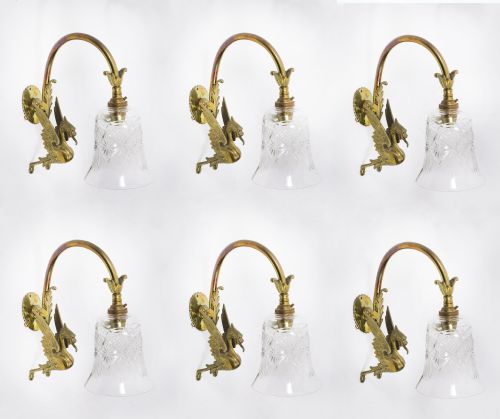

Classical Brass Sconces
Classical brass sconces bring structural weight and polished warmth to an interior, channelling historical forms through lasting metalwork.
Classical Brass Sconces
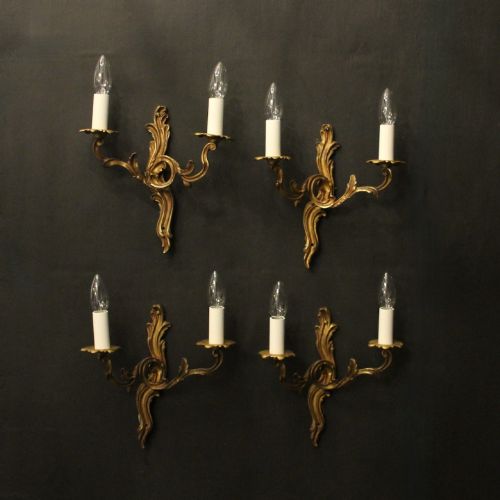
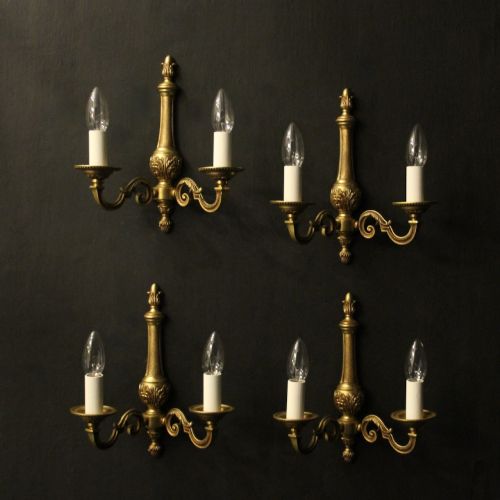
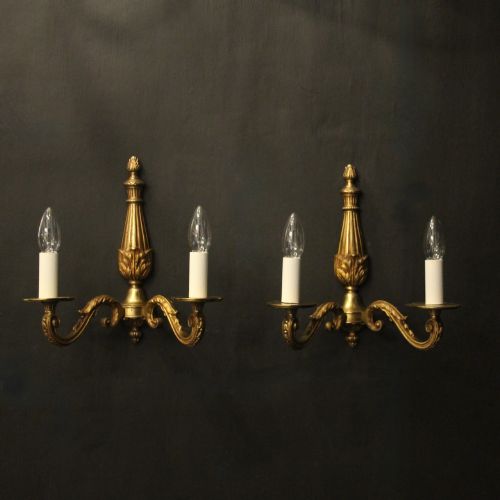
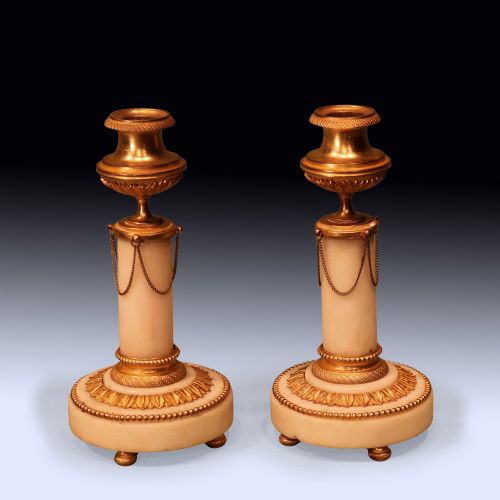
Classical brass sconces comprise wall lights, wall sconces, and adapted candlesticks designed to illuminate rooms with reflected metal and candle or electric light. The selection centres heavily on French designs from the nineteenth and early twentieth centuries, spanning periods from seventeen-fifty to nineteen-thirty.
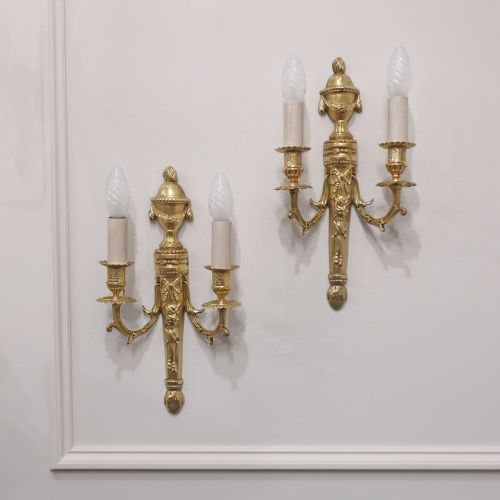
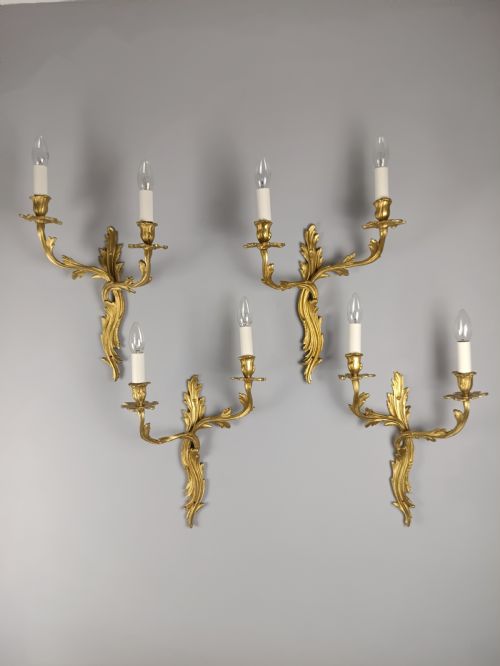
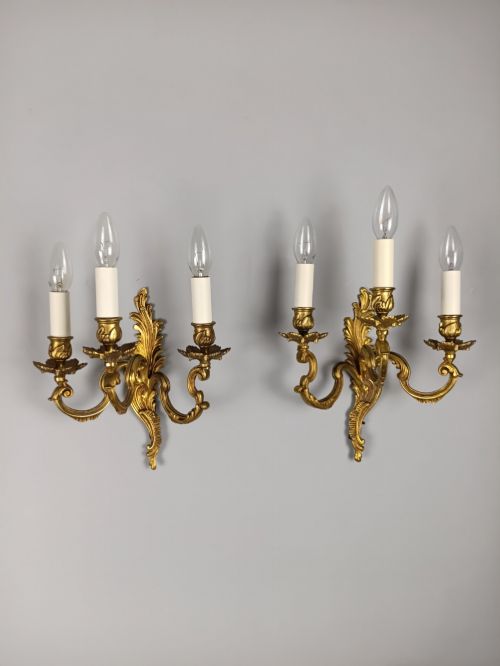
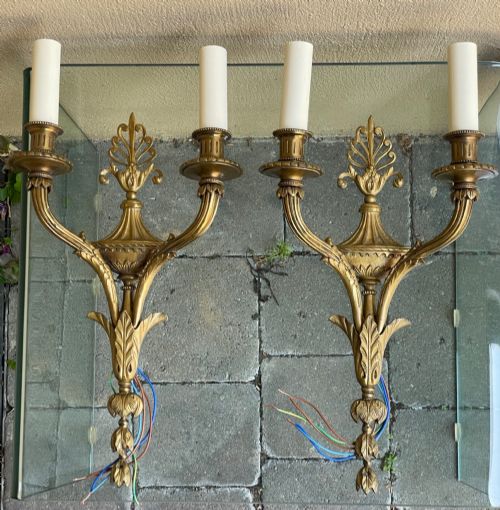
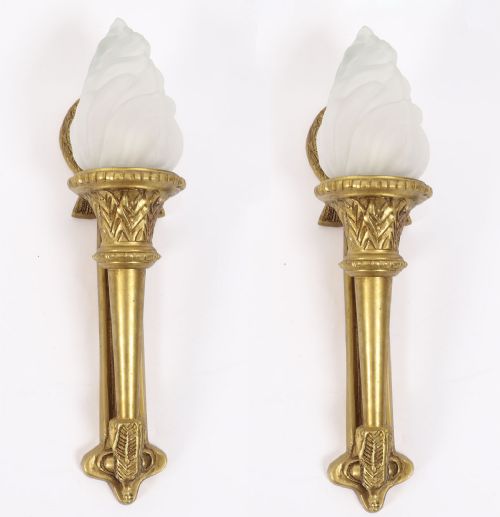
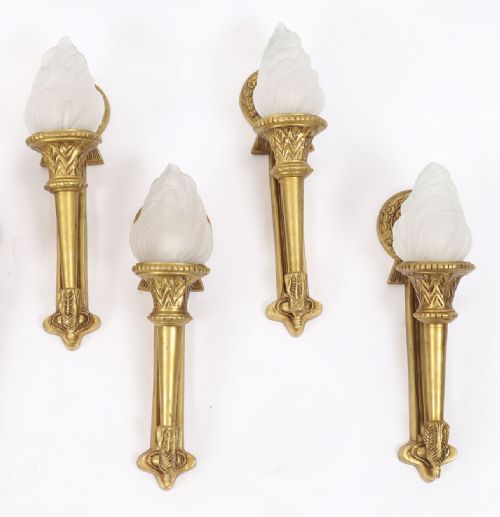
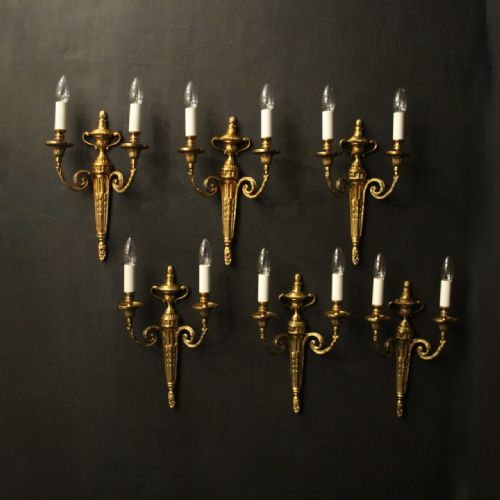
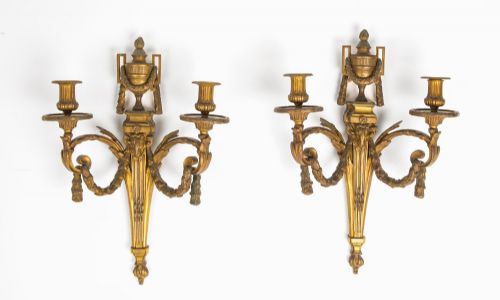
Buyers encounter twin-arm and triple-arm wall lights alongside large pairs featuring classical motifs. French neoclassical, Louis XVI, and Adam styles dominate the offerings, often taking the form of twin arm wall lights or flaming torch brackets.
How They Were Made
Pieces are cast primarily in brass, bronze, gilt bronze, and ormolu, utilising metalworking techniques suited to intricate relief work. Gilded surfaces and silvered brass finish the metal, whilst select examples incorporate white marble and glass components.
Casting allows for detailed ornamentation such as ram's head masks, cherubs, and griffin figures. Ormolu application involves mercury gilding or modern electroplating depending on the period, securing a lustrous metallic coating over base bronze.
Several pairs feature sculpted cherubs and carved ram's head masks staring out from the wall.
What Varies in Quality
Quality rests in the crispness of the cast ornamentation and the depth of the gilt bronze or ormolu surface. Finer examples display sharp detailing on motifs like flaming torches and drapery, whereas lesser pieces show softer, shallower relief work.
The choice of materials also dictates calibre, with heavy cast bronze and genuine ormolu outperforming plain stamped brass. Retaining original mercury gilding or period marble elements elevates an object above standard commercial replacements.
Casier·F. & C. Osler
The Classical Brass Sconces Glossary
- Ormolu
- Gilt bronze produced by applying a mercury and gold amalgam to a bronze base and heating it. This technique creates a durable, rich golden surface characteristic of fine French decorative objects.
- Neoclassical
- A style drawing inspiration from classical antiquity, featuring symmetrical lines, urns, and torch motifs. It prevails across many nineteenth-century wall lights.
- Sconce
- A wall-mounted lighting fixture designed to hold candles or electric bulbs. Historical examples often use mirrored or metallic backplates to reflect illumination.
- Louis XVI
- A French aesthetic defined by straight lines, neoclassical restraint, and classical ornamentation. Pieces from this design language often incorporate ribbons, urns, and floral garlands.
Classical Brass Sconces: Frequently Asked Questions
How do I wire antique brass sconces?
Wiring requires channeling internal flex through the original mounting bracket or arm where possible. Modern electricians can adapt these fixtures to take contemporary candle tubes and safe internal wiring.
Ensure the wall plate remains secure enough to bear the weight of heavy bronze or cast brass bodies without pulling away from the plaster.
What is the difference between brass and ormolu?
Brass is an alloy of copper and zinc, used structurally or cast for simpler light fittings. Ormolu specifically refers to high-grade bronze finished with a gold amalgam, offering a deeper and more lustrous golden colour.
Many listings use gilt bronze and ormolu interchangeably to describe high-status nineteenth-century French wall lights.
How do I clean gilded brass sconces?
Dusting with a dry, soft microfiber cloth prevents the accumulation of grime without harming delicate gilt surfaces. Avoid commercial metal polishes, as abrasive compounds strip away thin layers of gilding.
Professional conservation is recommended for pieces showing active tarnish or corrosion on nineteenth-century bronze.
Are these sconces original or revival pieces?
Dating relies on casting quality, patination, and construction methods such as threaded screws or hand-cut fixings. Revival pieces from the Edwardian era or nineteen-thirty faithfully copy eighteenth-century models using period techniques.
Examining the backplate and mounting hardware reveals whether a piece originates from the nineteenth century or a later revival.