

Vintage Crest Wall Mirror
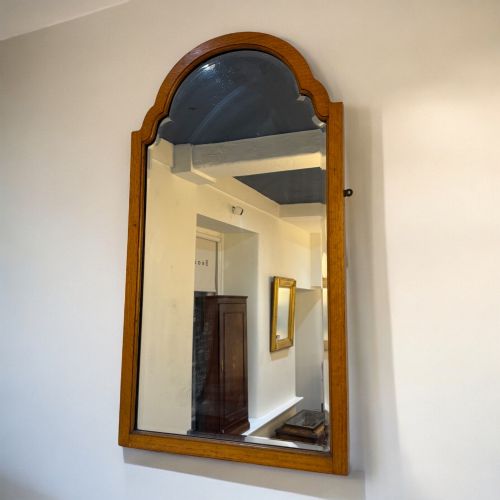
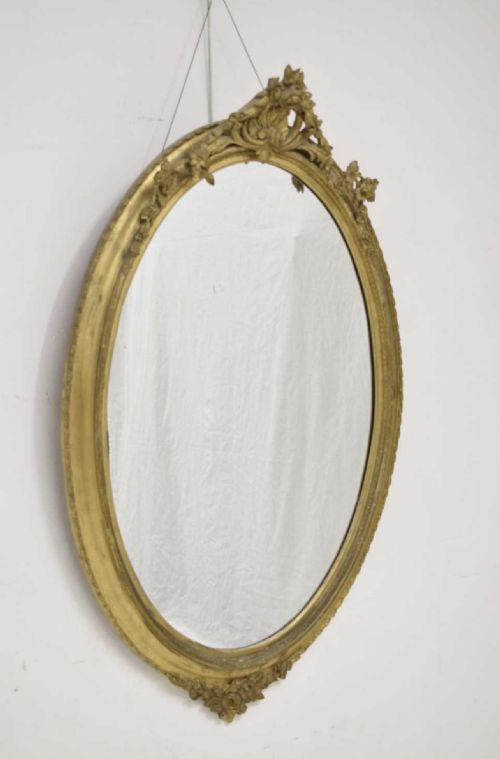
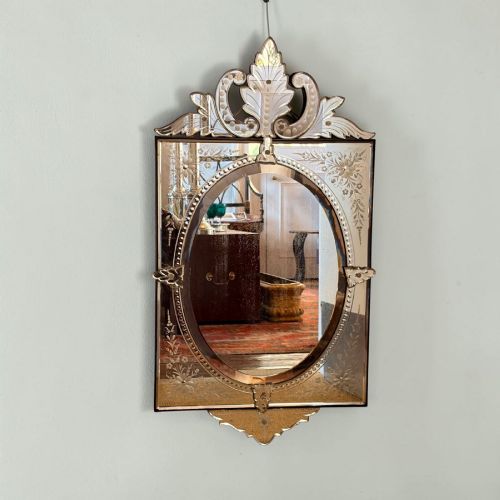
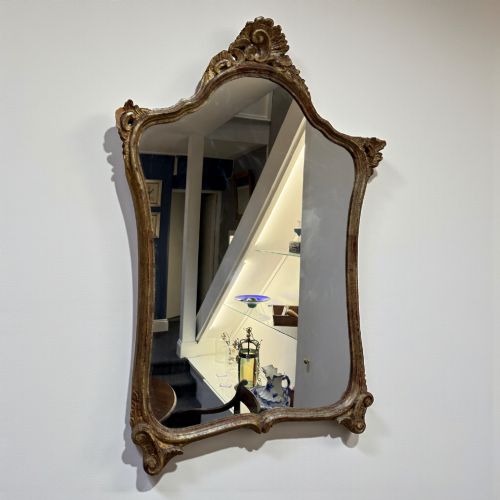
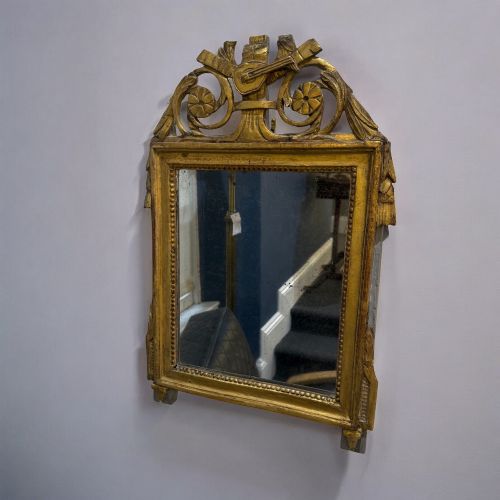
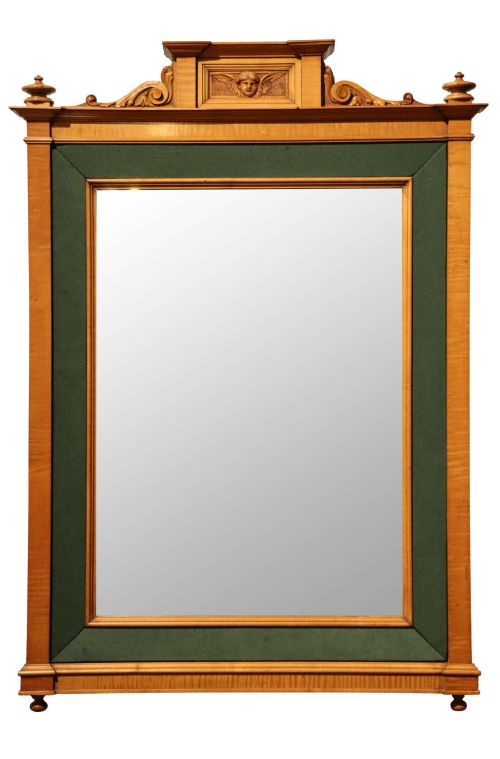
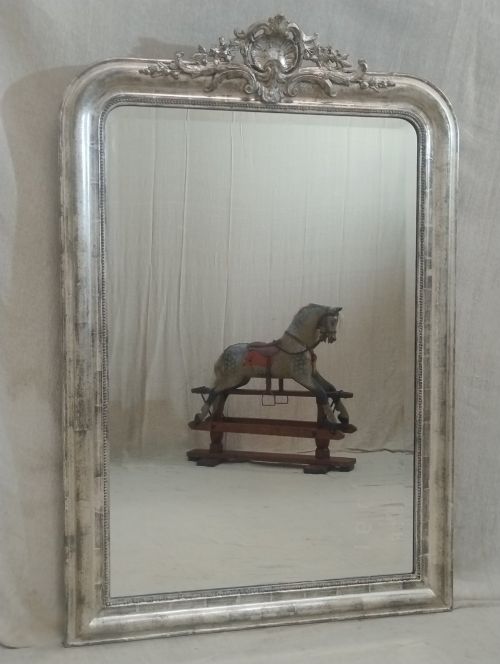
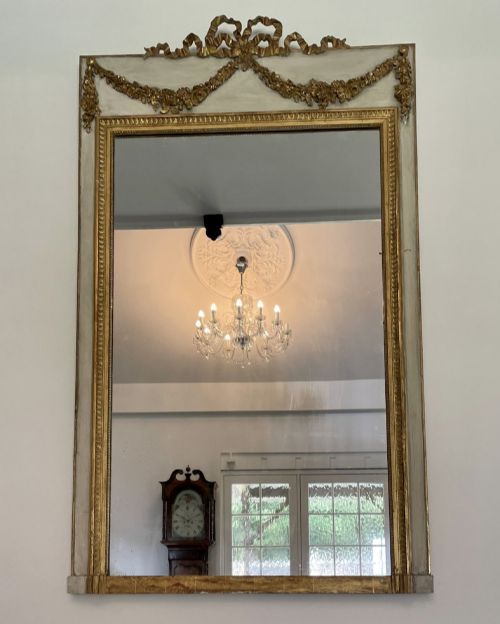
A vintage crest wall mirror brings architectural weight and reflective depth to a room through carved wood, gesso, and gold leaf.
Vintage Crest Wall Mirror
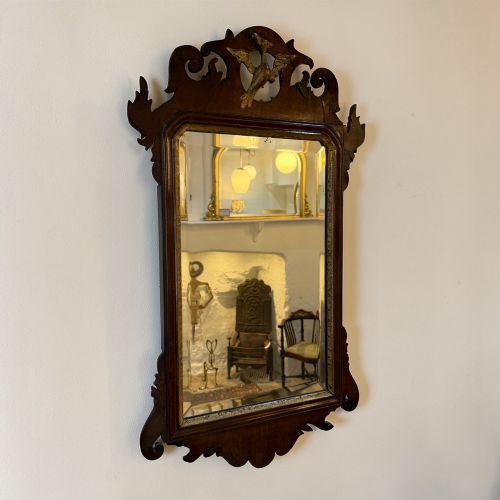
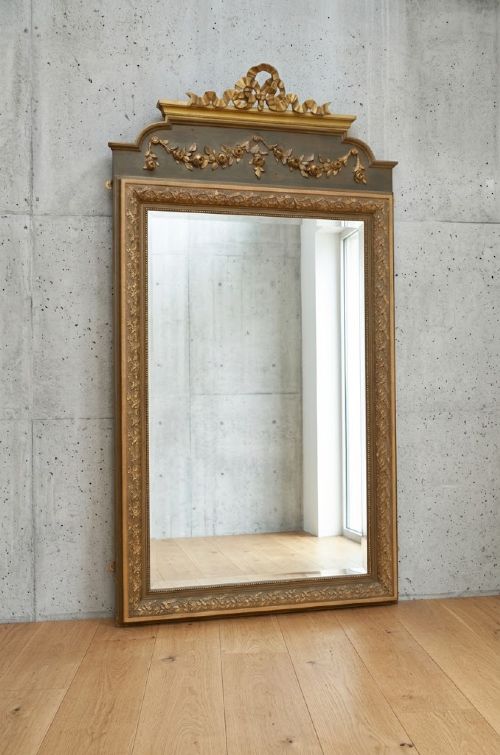
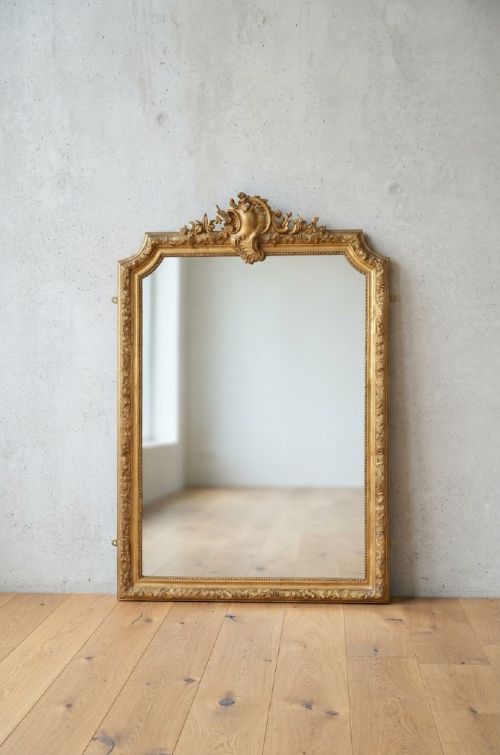
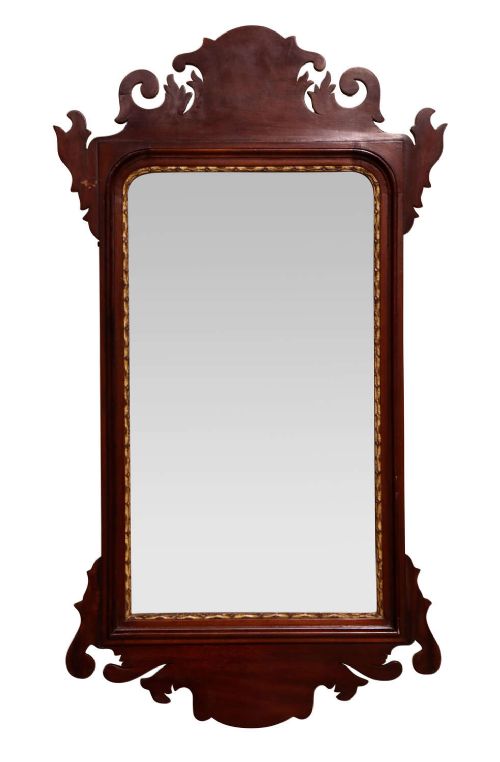
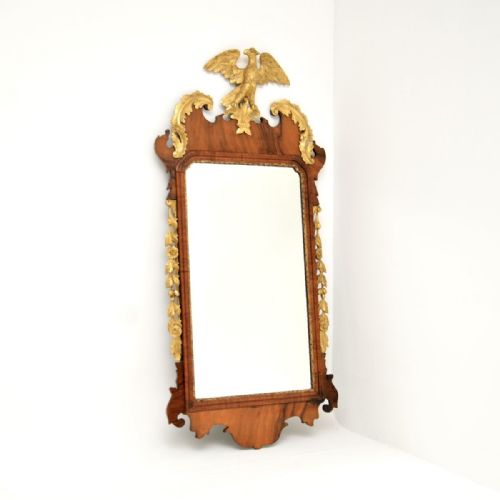
A vintage crest wall mirror combines traditional framing with a distinct upper ornamentation, often shaped as an eagle, ribbon, or carved cartouche. These pieces emerge from periods spanning the eighteenth century through to the early twentieth century, drawing on Georgian, Victorian, and French revival design.
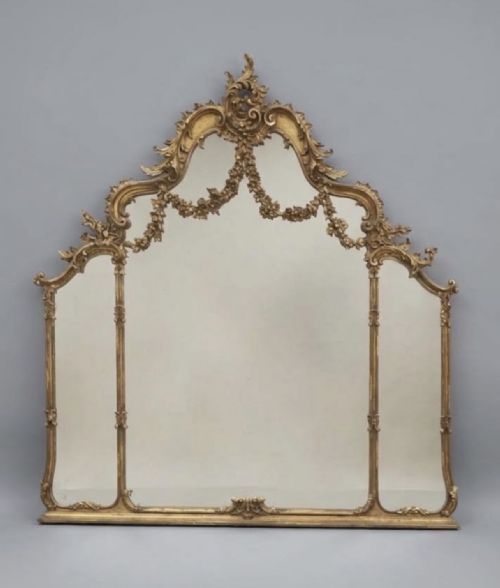
The selection on this page centres heavily on nineteenth-century French and English output, alongside earlier Georgian forms and later revival pieces. Overmantel mirrors and pier mirrors form the primary categories, designed originally to anchor large reception rooms and mantelpieces.
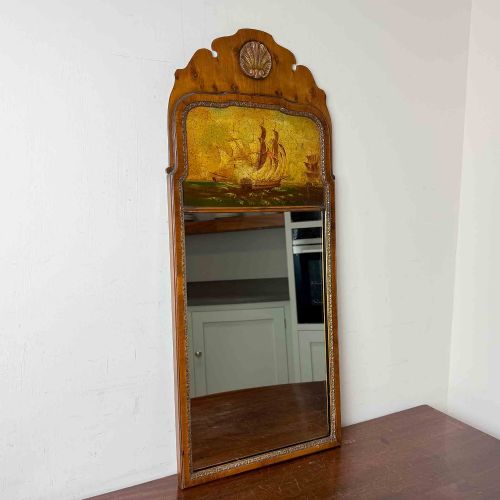
Buyers encounter substantial carved wood and gesso frames alongside mahogany and painted surfaces. The decorative crests frequently define the character of the object, directing the eye upward through detailed foliage or heraldic motifs.
Materials and construction
Frames rely on a foundation of solid timber, such as mahogany, oak, or pine, which provides structural integrity for heavy glass plates. Artisans applied layers of gesso - a mixture of chalk and binder - directly onto the wood to build up intricate relief ornaments and mouldings.
Gold leaf or metallic paint finishes were subsequently applied over the gesso, often burnished to achieve varied levels of reflection and depth. Early mirrors utilise mercury plate or standard silvered glass, held within the rebate by wooden backing boards.
The inventory contains both wall-hanging formats and large overmantel mirrors originating from English and French workshops.
Assessing quality
Quality rests upon the depth and precision of the hand-carved ornament on the crest and frame. Crisp relief work in the gesso and wood demonstrates superior craftsmanship compared to mass-produced moulded substitutes.
The integrity of the original gilding and the clarity of the mirror glass dictate the visual weight of the piece. Proportion between the primary glass plate and the decorative crest remains vital for overall visual harmony.
The Vintage Crest Wall Mirror Glossary
- Gesso
- A plaster-like mixture applied to wood frames to create a smooth surface for carving and gilding. Artisans model this material while pliable to form intricate decorative motifs.
- Pier mirror
- A tall mirror specifically designed to hang on the wall space between two windows. These pieces often feature matching console tables or extend downwards toward the floor.
- Overmantel mirror
- A wide mirror intended for placement directly above a fireplace mantel. They reflect light across the room and balance the horizontal proportions of the hearth.
- Parcel-gilt
- A finish where only specific portions of a wooden object receive gilding while the underlying wood grain remains visible elsewhere. This technique highlights particular architectural details.
- Mercury plate
- An early method of silvering mirror glass using a tin and mercury amalgam. This process yields a distinctive mottled, dark reflection.
- Fretwork
- Thin wood designs cut with a fretsaw to create geometric or organic patterns. It appears frequently on eighteenth-century and revival mahogany frames.
Vintage Crest Wall Mirror: Frequently Asked Questions
How do I hang a heavy mirror?
Heavy antique mirrors require substantial wall fixings anchored directly into masonry or deep wooden studs. Professional mirror hangers utilise heavy-duty D-rings and steel wire rated well above the weight of the frame.
Position the mirror at eye level to ensure the crest is fully visible and properly balanced within the room's architectural proportions.
Are the mirror plates original?
Many nineteenth-century frames retain their original glass, which often exhibits light foxing, minor speckling, and gentle distortion. These natural signs of age confirm the historic nature of the piece.
Replacement glass tends to appear entirely clear and uniform, lacking the undulating reflections characteristic of older plate manufacturing methods.
How do I clean a gilded frame?
Dust gilded and gesso surfaces gently using a dry, soft artist's brush or a clean feather duster. Moisture and chemical cleaners can dissolve historical water-gilt finishes and damage fragile gesso.
Keep the mirror away from direct heat sources and damp environments to prevent the wooden backing and preparation layers from warping.
What defines a crest mirror?
The crest refers to the decorative ornamentation mounted at the very top of the frame. These focal points range from carved birds and ribbons to elaborate rococo shells and scrolls.
Design styles shifted across periods, moving from formal Georgian architectural pediments to flowing Victorian and Edwardian organic curves.