
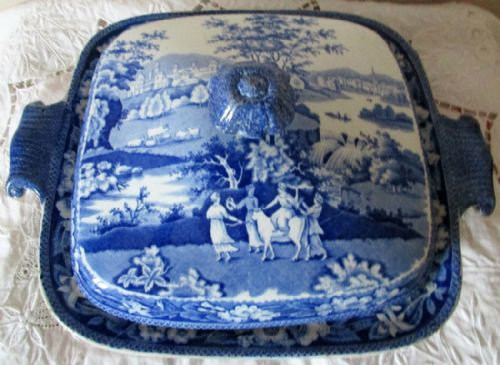


Vintage Covered Vegetable Dish
These vintage covered vegetable dish examples bring silver plate and transfer-printed earthenware directly to the dining table.
Vintage Covered Vegetable Dish
A vintage covered vegetable dish serves as a practical lidded container for presenting food at the dining table. The pieces gathered under this phrase include silver plated entree dishes, porcelain tureens, and transfer-printed earthenware vessels.
You will frequently meet Edwardian silver plated rectangular and oval serving dishes alongside 19th-century blue and white pottery tureens. These items span periods from the Georgian era through to the 1930s, offering a range of formal and domestic serving vessels.
How they were made
Makers utilised silver plate, nickel silver, and Old Sheffield plate over base metals, applying electroplating techniques during the Victorian and Edwardian periods. Ceramic versions rely on earthenware, ironstone, and porcelain bodies finished with glaze and blue and white transfer printing.
The construction of metal entree dishes involves fitted lids and handles, while ceramic pieces combine hand-painted or transfer-printed motifs with robust moulded clay bodies.
Listings feature silver plate, earthenware, and porcelain across Georgian, Victorian, and Edwardian periods.
What varies in quality
The distinction between standard domestic wares and superior items rests upon the crispness of the transfer print, the weight of the metal, and the precision of the casting. Maker attributions to established firms also elevate the standing of a piece.
Subtleties in hand-painted details on ironstone and porcelain, alongside the intact preservation of silver plating over base metal, mark the separation between everyday utility and finer craftsmanship.
John and Richard Riley·Mappin and Webb·Hamilton and Inches·Walker and Hall·Matthew Linwood·Christofle Gallia·Müller Volkstedt MV Co·Ridgways·Copeland and Garrett
The Vintage Covered Vegetable Dish Glossary
- Entree dish
- A lidded serving vessel designed for bringing main or side dishes to the table. These metal containers often feature removable handles for versatile serving.
- Tureen
- A deep serving bowl with a lid, used primarily for soups, sauces, or vegetables. They appear in ceramic, ironstone, and porcelain materials across various 19th-century styles.
- Old Sheffield plate
- A composite material formed by fusing a thin sheet of silver to a thicker copper ingot. This technique precedes standard electroplating methods.
- Ironstone
- A heavy, durable type of earthenware patented in the 19th century. It resists chipping and serves as a robust body for transfer-printed patterns.
- Transfer printing
- A method of applying detailed designs to pottery by engraving a copper plate and transferring the ink via tissue paper. This technique enabled consistent production of intricate blue and white patterns.
Vintage Covered Vegetable Dish: Frequently Asked Questions
How were covered vegetable dishes used?
These vessels held hot vegetables, sauces, or entrees at the dining table, keeping food warm with their fitted covers. Servants or hosts lifted the lids during service to plate individual portions.
Today they function as decorative centrepieces or practical serving items for dinner parties. Their enclosed design preserves heat while presenting food in a formal manner.
How do I clean silver plated dishes?
Silver plate requires gentle washing in warm soapy water using a soft cloth to avoid scratching the surface. Proprietary silver cleaners should be applied sparingly and only when necessary to preserve the underlying metal.
Avoid abrasive sponges and dishwasher cycles, which strip the thin layer of silver from the base metal. Thorough drying prevents water spots and tarnishing.
How do I tell ironstone from porcelain?
Ironstone is a heavy, opaque earthenware that feels substantial and dense in the hand. It produces a dull thud when tapped rather than a high-pitched ring.
Porcelain is finer, lighter, and often translucent when held to the light. Ironstone prioritises durability for daily service, whereas porcelain offers a more delicate appearance.
Can I use antique tureens for food?
Most ceramic and silver plated dishes remain suitable for serving food if they are washed thoroughly before use. Glazed earthenware and intact silver plate provide a safe surface for dry or moist dishes.
Items with cracked ceramic bodies or worn plating where base metals are exposed should be restricted to decorative display. Acidic foods should not remain in silver plated vessels for extended periods.