
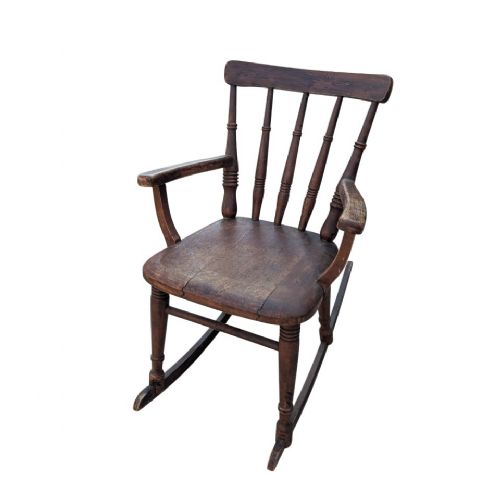
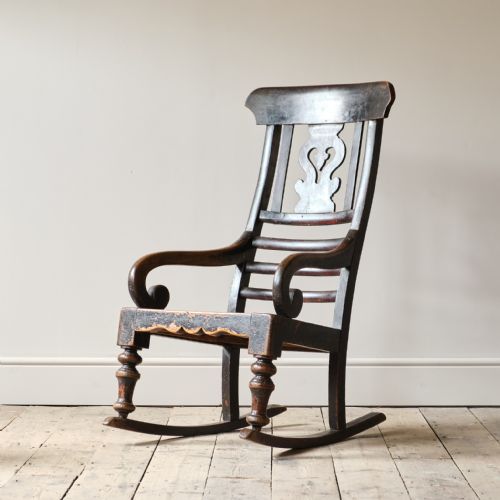
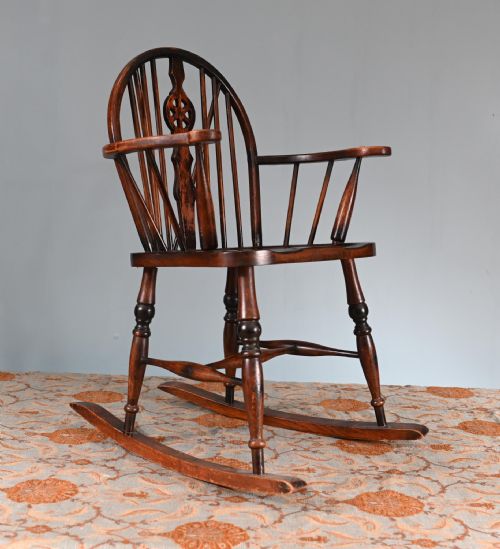


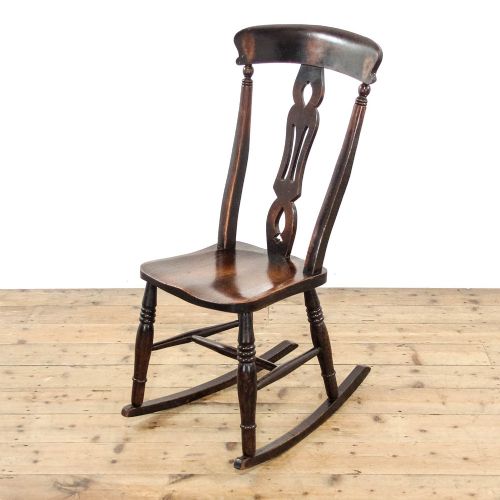


Vintage Country Rocking Chair
A vintage country rocking chair brings vernacular comfort and honest construction into a room, offering tactile seating shaped by generations of domestic use.
Vintage Country Rocking Chair
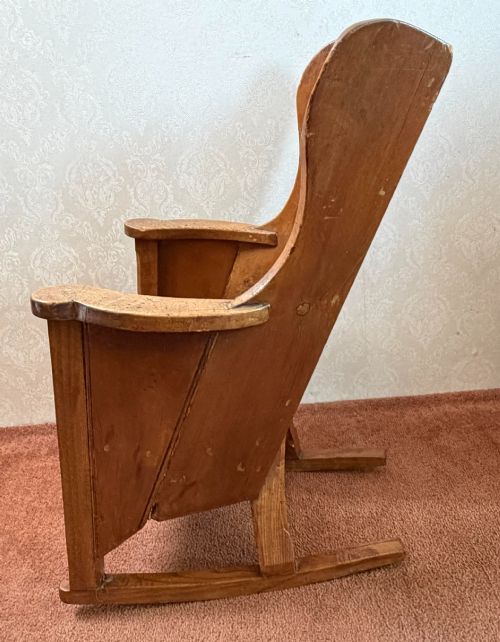
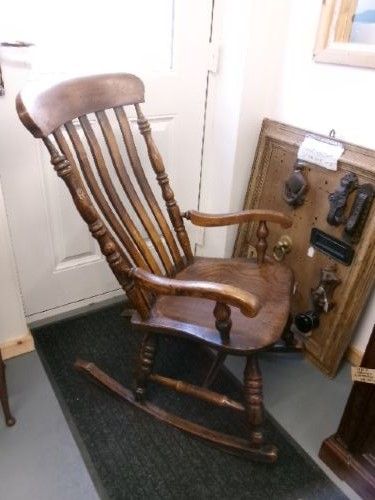
A vintage country rocking chair encompasses sturdy vernacular seating designed for domestic comfort, ranging from full-sized Windsor armchairs to diminutive children's potty rockers. These pieces emerge predominantly from the eighteenth and nineteenth centuries, spanning Georgian, Victorian, and Regency periods.
Smaller child-sized variants appear frequently alongside standard armchairs, reflecting domestic life across centuries. Regional styles such as the Thames Valley Windsor and Yorkshire farmhouse chairs demonstrate local woodworking traditions.
Materials and construction
Wood selection prioritises tough indigenous timbers, combining elm seats with ash or beech spindles and oak frameworks. Cabinetmakers and local bodgers turned components on pole lathes, shaping solid timber seats to receive steam-bent arms and back bows.
Surface finishes range from bare scrubbed timber and polished fruitwood to original paint schemes and ebonised treatments. Seating surfaces incorporate solid wood, woven rush, sea grass, or leather inserts pegged into sturdy frames.
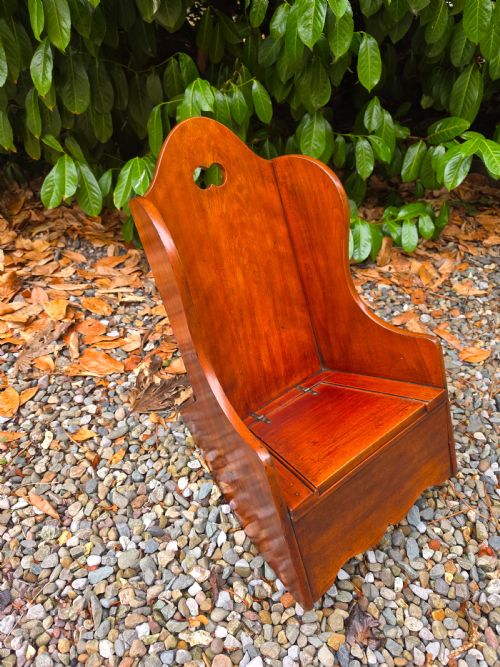
Several small chairs hide nursery secrets beneath their seats, designed to keep toddlers stationary by the fire.
Assessing quality and integrity
Quality rests upon the retention of original surfaces, whether aged patina on bare timber or untouched historic paint. The harmony of proportions between the upper spindle work and the curved wooden rockers determines the visual balance of each piece.
Construction integrity depends on the tightness of traditional joints and the preservation of original turned components rather than modern replacements. The subtlety of spindle turning and the ergonomic shaping of the solid wood seat distinguish superior vernacular examples.
The Vintage Country Rocking Chair Glossary
- Windsor chair
- A chair built with a solid wooden seat into which the legs and back spindles are separately bored and wedged. This technique creates a light yet exceptionally rigid frame.
- Vernacular
- Everyday objects made by regional craftsmen for local use rather than following strict high-style metropolitan fashions. These pieces prioritise practical utility and local material availability.
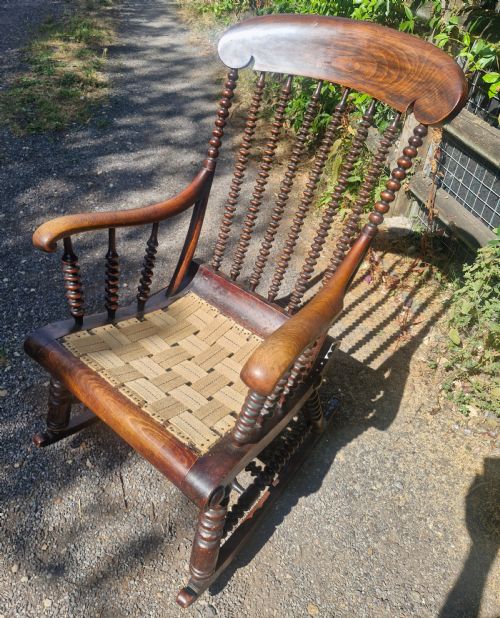
- Bobbin framing
- Furniture construction featuring turned wood formed of rounded spheres resembling bobbins or spools. This decorative turning style appears frequently on nineteenth-century frames.
- Potty rocker
- A specialised child's chair incorporating a concealed cavity beneath the seat for a chamber pot. These practical nursery pieces date primarily from the Georgian and Victorian eras.
- Ladder back
- A chair back constructed from horizontal wooden slats set between vertical posts. This traditional form offers robust support through simple joinery.
Vintage Country Rocking Chair: Frequently Asked Questions
How do I date an old rocking chair?
Dating relies on examining construction marks, tool traces, and timber species. Earlier eighteenth-century examples often utilise hand- cleft oak and elm, while nineteenth-century pieces incorporate machine-sawn components and standardised turnings.
Changes in chair forms, such as the transition from heavy ladder backs to refined Windsor wheelbacks, help narrow down the period of manufacture alongside any surviving maker marks or historical finish layers.
Were these chairs originally built as rockers?
Many country armchairs and Windsor chairs began life with standard four-legged underframes before having rockers fitted later in their domestic life. Craftsmen frequently added curved wooden rockers to older seating to adapt them for nursery or fireside use.
Evidence of pegged leg sockets, the height of the seat above the floor, and the wear patterns on the base help determine whether the rockers are original to the piece or a later adaptation.
How do I care for original painted surfaces?
Preserving historic paint requires keeping the chair away from direct sunlight and maintaining stable indoor humidity. Avoid harsh chemical cleaners or modern polishes that can lift or soften delicate historic pigment layers.
Dusting gently with a dry, soft cloth remains the best method for maintaining the surface. Any conservation work should focus on stabilising the underlying wood without disturbing the outer layer of paint.
What is a Thames Valley Windsor chair?
A Thames Valley Windsor chair represents a distinct regional variation produced along the River Thames valley using local hardwoods like yew, elm, and beech. These pieces typically feature characteristic pierced splats, crinoline stretchers, and generous proportions.
Makers in this region developed sophisticated steam-bending techniques for the continuous arm bow, creating distinctively comfortable seating that remains highly sought after by collectors.