
Vintage Corinthian Table Lamp
These vintage corinthian table lamp designs bring classical proportion to a room, cast in solid brass or silver plate with fluted columns.
Vintage Corinthian Table Lamp
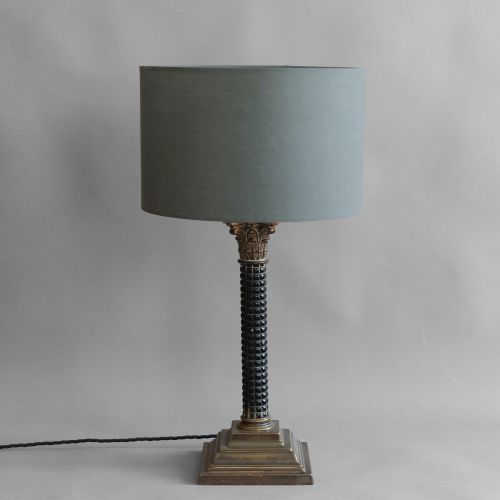
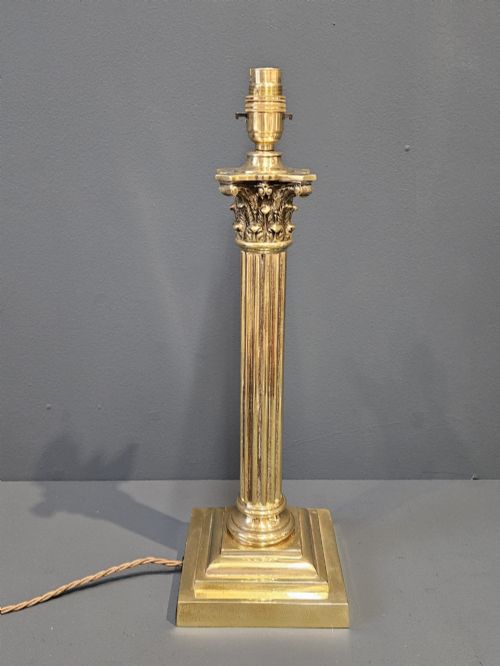
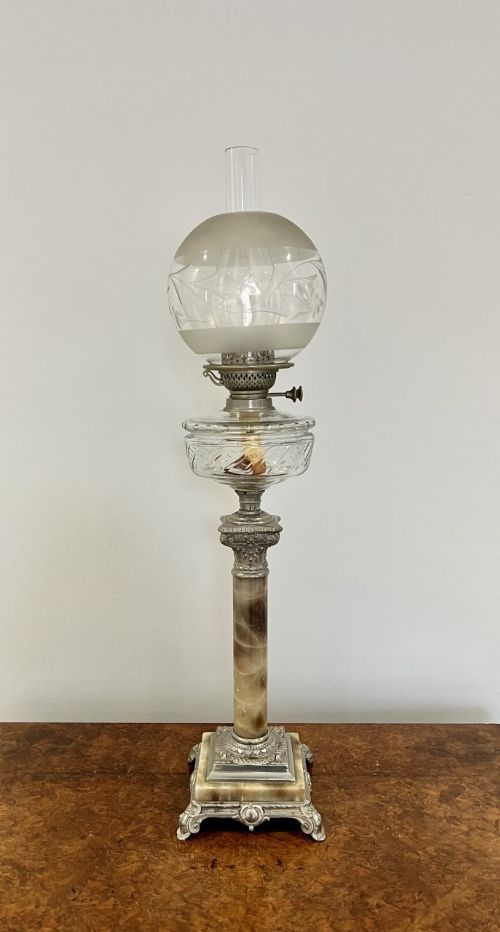
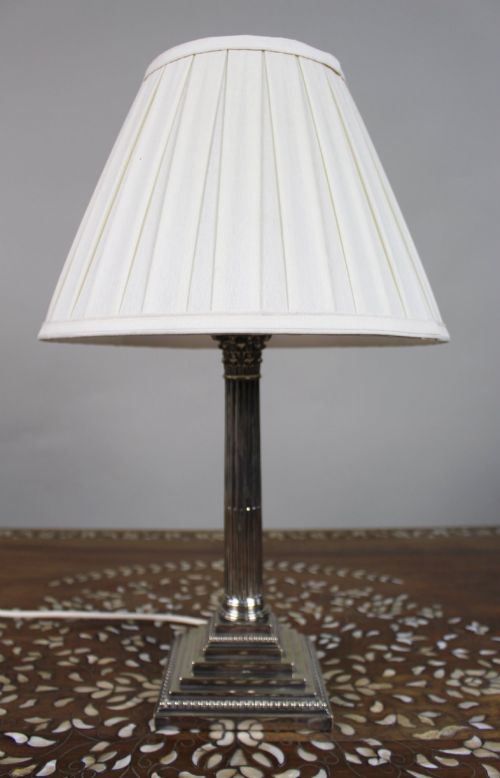
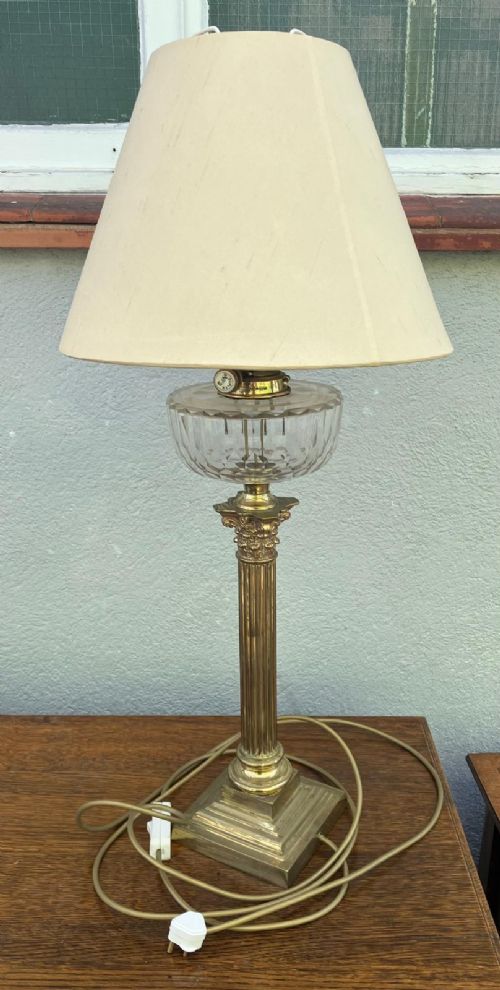
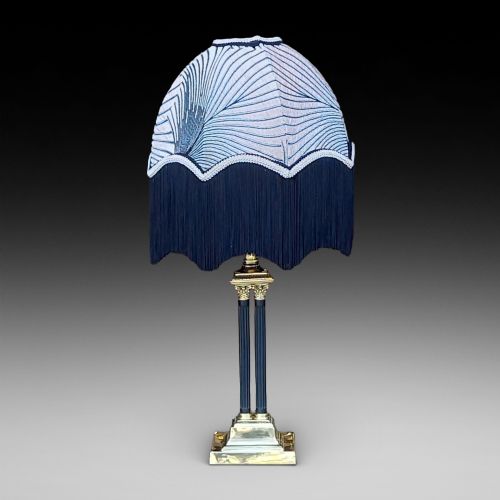
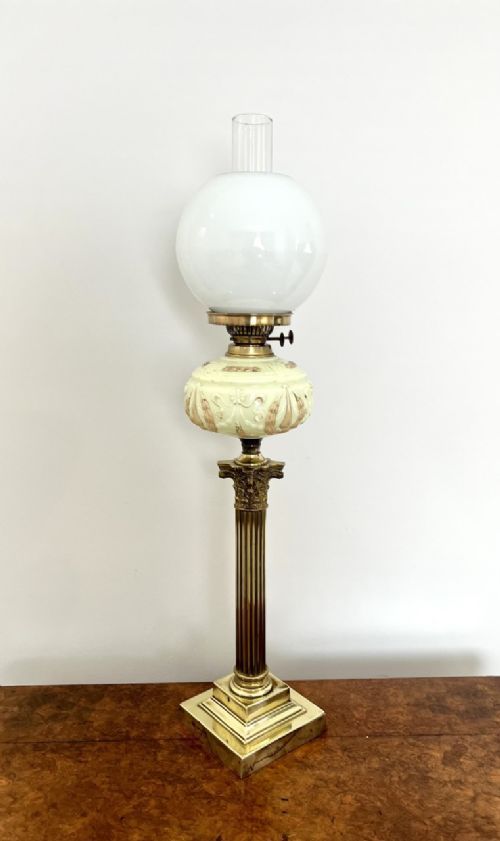
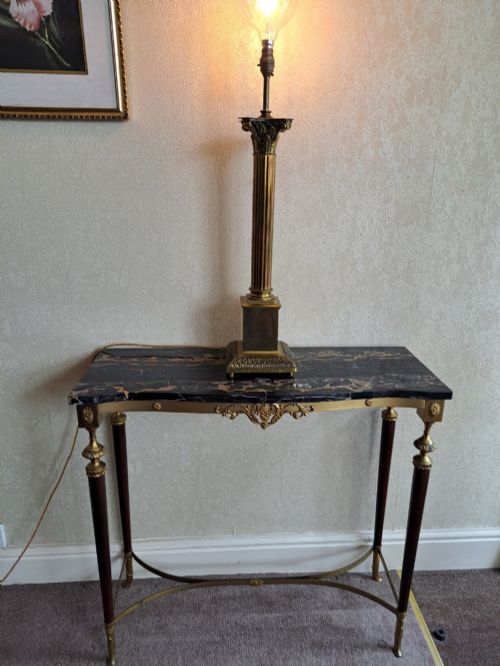
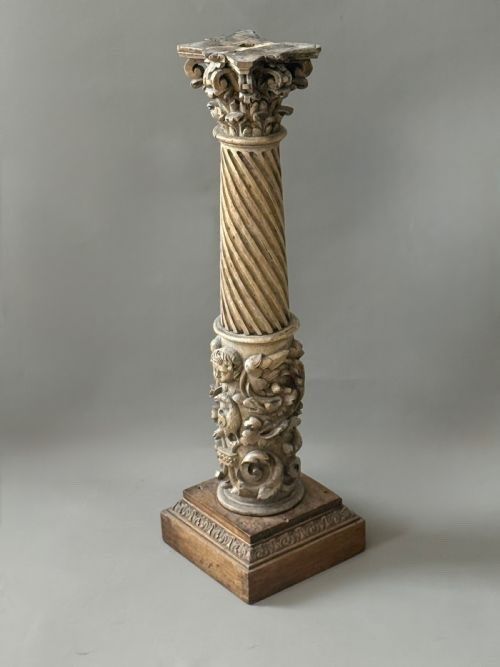
A vintage corinthian table lamp typically takes the form of a fluted classical column supporting an ornate capital modelled on ancient Greek architecture. You will frequently meet examples created during the Victorian and Edwardian periods, constructed as both dedicated electric bases and converted oil lamps.
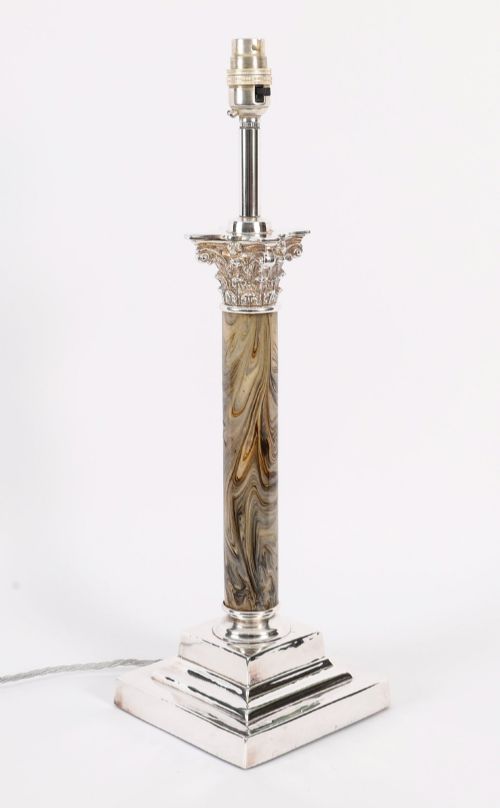
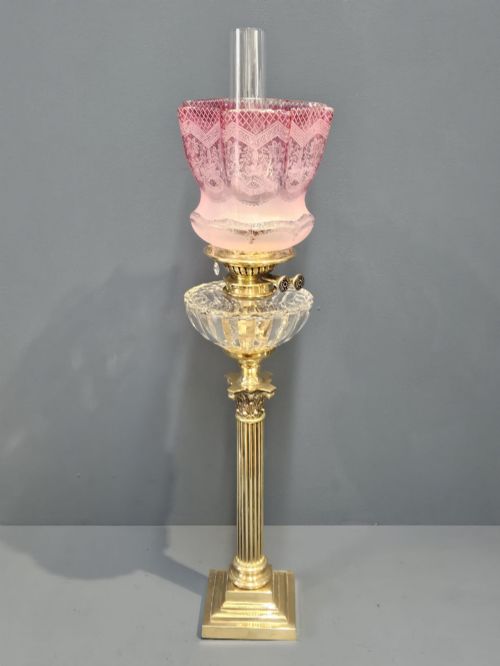
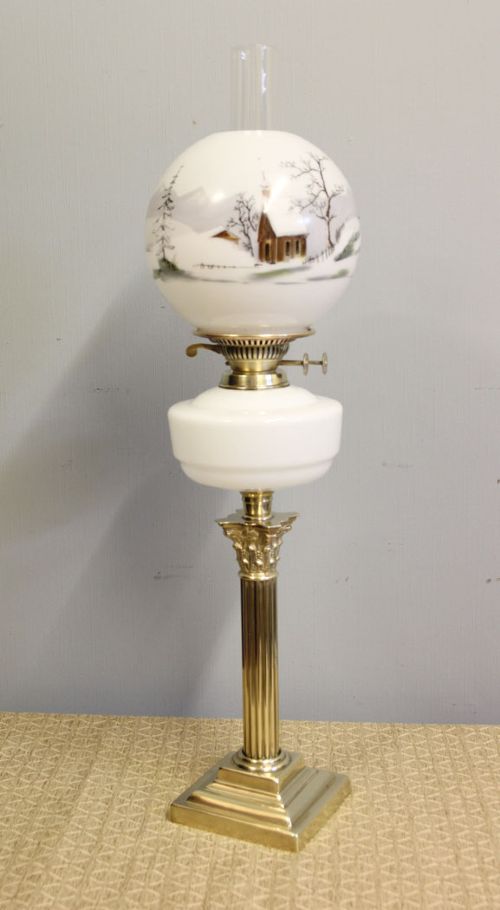
The majority of pieces encountered on this page utilise heavy brass or gleaming silver plate, often standing upon stepped square bases with occasional lion paw feet. Some specimens incorporate contrasting materials such as onyx, marble, or coloured glass fonts in cranberry and pink hues.
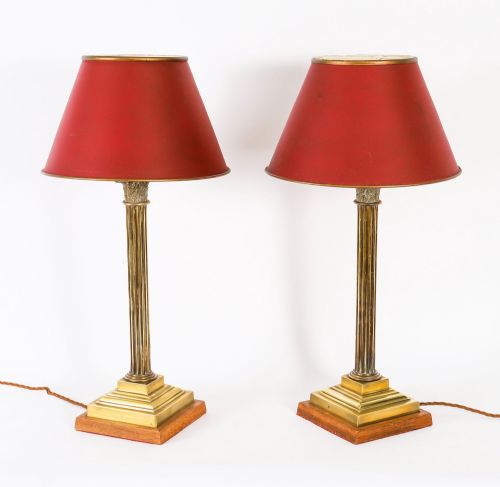
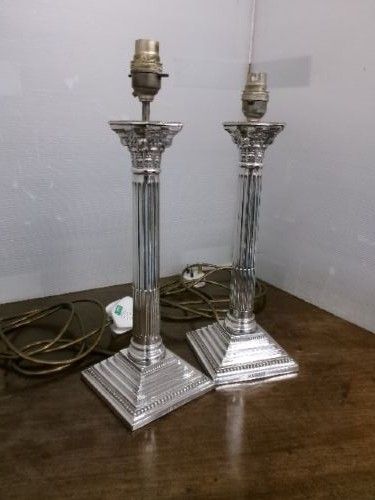
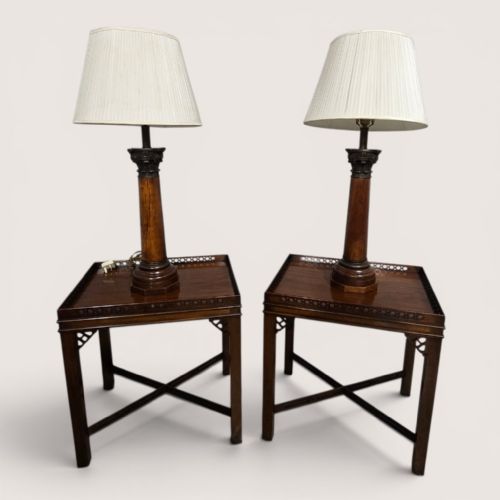
Beyond standard single table lamps, makers also produced substantial pairs designed for mantelpieces or sideboards. Many retain period shades in fabric, silk, or etched glass, though many survive simply as monumental columns ready for modern wiring.
Materials and Construction
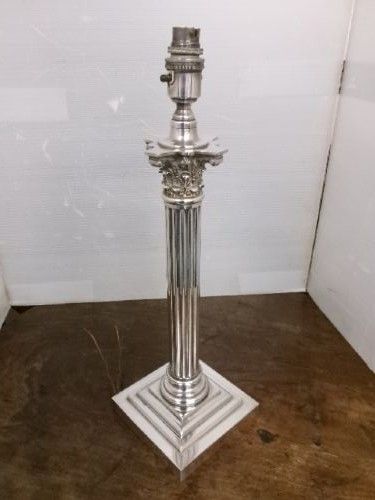
Metalworking formed the backbone of these pieces, employing heavy brass castings and thick silver plating over base metals. Silversmiths and brass founders utilised detailed stamping and chasing techniques to define the intricate acanthus leaves on the capitals.
Glass production played an equally vital role, particularly for the oil lamp fonts and decorative shades. Artisans blew and etched cranberry, ruby, and clear crystal glass, sometimes pairing the translucent vessels directly with metal columns.
Listings span the Victorian, Edwardian, and Neoclassical periods, utilising materials including solid brass, silver plate, onyx, and etched cranberry glass.
Judging Quality
The distinction between ordinary and superior examples lies in the crispness of the cast bronze or brass ornament. Finer columns display deeply undercut acanthus foliage on the capital and substantial weight in the metal base.
Proportion and scale dictate the visual impact of the piece, with taller proportions and heavy gauge silver plating marking out the more ambitious Victorian productions. The integration of maker marks or specialised burner mechanisms also separates standard domestic lighting from higher tier works.
Hinks of Birmingham·Walter Latham & Son
The Vintage Corinthian Table Lamp Glossary
- Capital
- The uppermost member of a column, carved or cast with ornate acanthus leaves in the Corinthian order. This architectural detail sits directly beneath the lamp fitting.
- Duplex
- A type of twin-wick oil burner mechanism popular during the Victorian era. It provided a significantly brighter flame than single-wick predecessors.
- Font
- The oil reservoir of a lamp, commonly manufactured from coloured glass, brass, or ceramic. It rests upon the main column structure.
- Silver plate
- A thin layer of silver fused to a base metal such as brass or copper. This technique allowed manufacturers to produce luxurious tableware and lighting at a lower cost than solid silver.
Vintage Corinthian Table Lamp: Frequently Asked Questions
Were these originally oil lamps?
Many examples began life as paraffin or oil lamps before conversion to electricity during the twentieth century. This transition often involved removing the original burner mechanism to accommodate standard electrical lamp holders.
Converted pieces frequently retain their original glass fonts and weighted metal bases, preserving the proportions intended by the Victorian or Edwardian manufacturer.
How do I date a brass column lamp?
Dating relies upon examining the weight of the metal, the style of the base, and assembly methods such as threaded rods versus pinned joints. Victorian and Edwardian iterations tend to show heavier brass casting and sharper detailing on the Corinthian capitals.
Maker stamps on the thumb turns of oil burners or hallmarks on silver components provide the most precise chronological markers for these domestic objects.
What shades suit these lamps?
Original setups frequently featured etched glass tulip shades or pleated fabric and silk covers in deep tones like cranberry. Selecting a replacement shade depends on whether the piece functions as an oil lamp conversion or a standard table lamp base.
Traditional proportions benefit from empire or empire-pleated fabric shades that do not overwhelm the classical geometry of the fluted brass column.
Are pairs difficult to find?
Matched pairs of Corinthian column lamps occur less frequently than single examples because many were separated across different rooms or households over the decades. When matching pairs do survive, they usually originate from substantial dining rooms or drawing room sideboards.
Makers occasionally produced monumental twin sets, though collectors should inspect the base dimensions and capital casting details to confirm they are a true pair.