



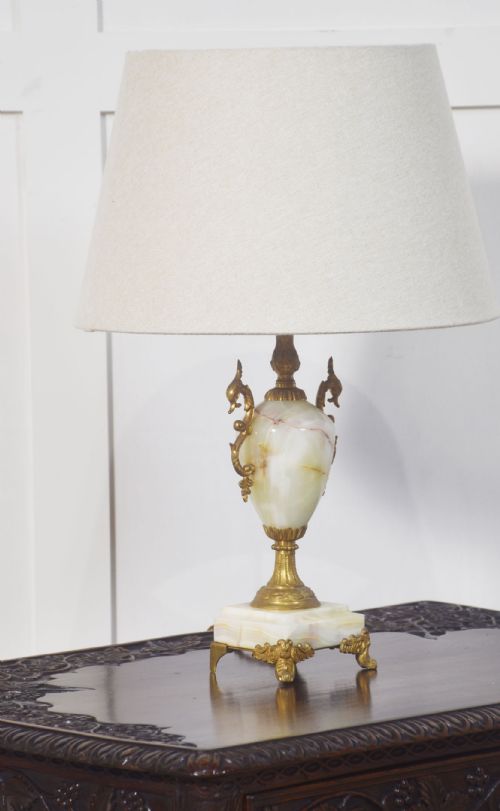


Cream Marble Desk Lamp
A cream marble desk lamp brings solid weight and natural veining to a workspace, combining functional lighting with classical dignity.
Cream Marble Desk Lamp
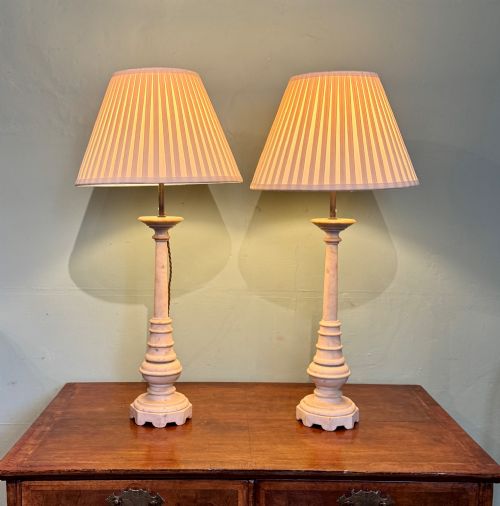
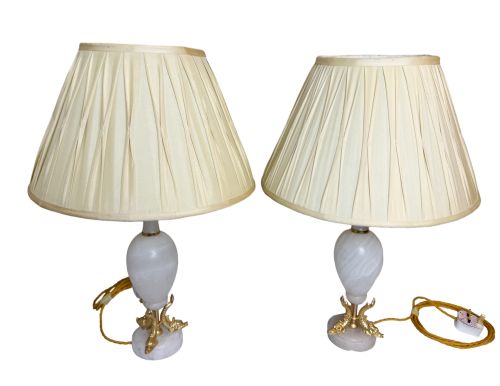
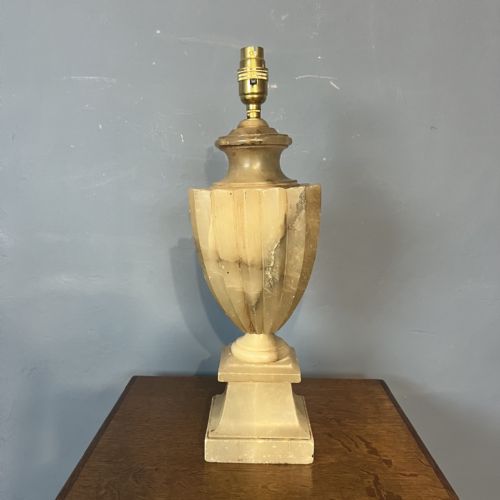
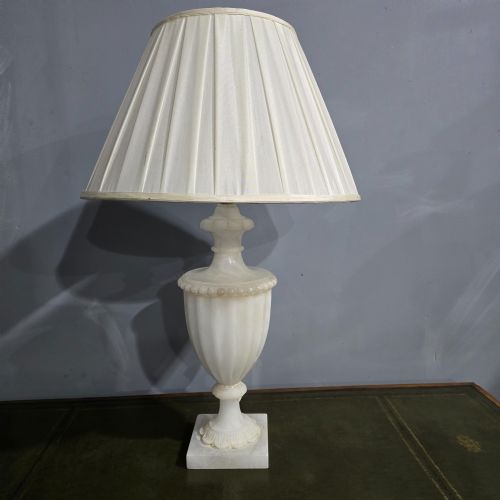
When you search for a cream marble desk lamp, you encounter table lamps built from stone, onyx, and alabaster across the Victorian, Edwardian, and Art Deco periods. These pieces often incorporate brass, ormolu, or bronze mounts, reflecting neoclassical, empire, and revivalist styles.
You are most likely to meet single and paired table lamps utilising white or cream Italian marble and translucent alabaster. Forms range from simple classical columns to sculptural figures and metal-mounted vessels dating from the late nineteenth century into the nineteen-thirties.
How they were made
Makers shaped heavy natural stone such as marble, onyx, and alabaster into columns, urns, and stepped bases using turning and cutting techniques. These dense materials provide the structural stability required to support heavy lighting configurations.
Craftsmen combined the stone bodies with cast metal elements, utilising brass, bronze, ormolu, and spelter for mounts, capitals, and figural details. Fabric shades and glass components completed the construction, pairing natural mineral textures with cast metalwork.
What varies in quality
The fineness of the stone carving and the expressiveness of the natural veining dictate the visual appeal of each lamp. Uniformity in colour and careful matching across pairs elevate the decorative impact.
The weight and detail of the metal mounts, whether cast bronze, ormolu, or brass, separate standard productions from finer decorative objects. Substantial mounts integrated cleanly into the stone demonstrate superior workshop practice.
The Cream Marble Desk Lamp Glossary
- Alabaster
- A fine-grained, translucent stone often used for carved lamp bases and shades. It allows light to diffuse softly through the mineral surface.
- Ormolu
- Gilded bronze or brass applied as decorative mounts and trims. This technique adds metallic contrast to the cream stone body.
- Onyx
- A banded variety of chalcedony or calcite prized for its layered translucency and rich natural patterning. It appears frequently in twentieth-century lighting.
- Empire Style
- A neoclassical design vocabulary drawing on ancient Roman and Greek motifs. Lamps in this style feature formal symmetry and military or classical bronze mounts.
Cream Marble Desk Lamp: Frequently Asked Questions
What periods do these lamps come from?
The pieces span from the late nineteenth century through the Edwardian era and into the nineteen-thirties. Victorian and Edwardian examples lean towards classical revival designs, while nineteen-twenties pieces introduce Art Deco geometry.
Materials and mounting techniques shift across these decades, moving from heavy columnar forms to streamlined stone and metal combinations.
How do I identify alabaster from marble?
Alabaster is softer and noticeably more translucent than marble, often glowing when a light source is placed near it. Marble presents a denser, opaque structure with pronounced crystalline veining.
Both stones provide substantial weight, but alabaster yields to finer, smoother surface carving.
Are these lamps usually found in pairs?
The selection includes both individual statement pieces and matched pairs intended for larger desks or side tables. Pairs often feature identical stone turning and corresponding metal mounts.
Matching sets reflect formal interior schemes typical of grander nineteenth and early twentieth-century rooms.
How should I clean a stone lamp?
Use a dry or barely damp microfiber cloth to remove dust from the marble, onyx, or alabaster surfaces. Avoid harsh chemical cleaners that can etch the stone or damage the metal mounts.
Careful dusting preserves the natural polish and the delicate patination on the brass and bronze elements.