


Vintage Copper Water Jug
A vintage copper water jug brings warmth and heavy hand-forged utility to a room, offering sturdy service that outlasts modern vessels.
Vintage Copper Water Jug
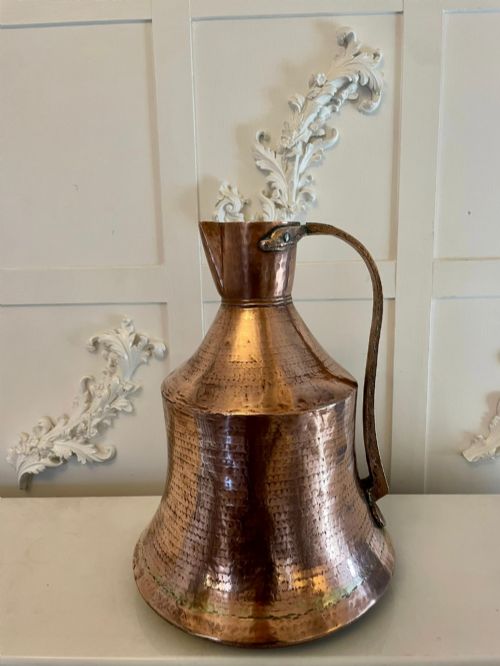
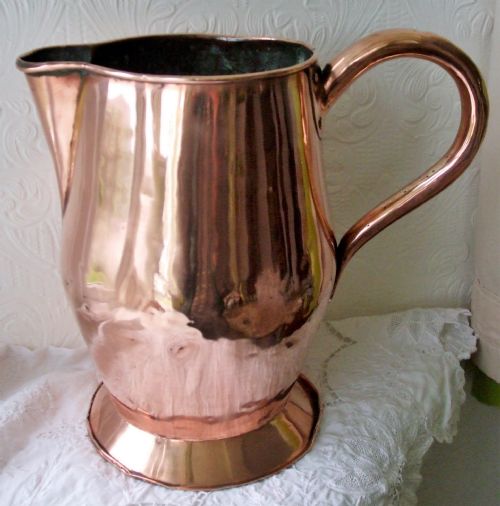
When you search for a vintage copper water jug, you encounter heavy utilitarian vessels spanning the Georgian, Victorian, and Edwardian eras. These pieces range from large measuring capacities of several gallons down to small domestic sizes, often shaped for serving or heating.
Materials and construction methods
Makers formed these bodies from sheet copper, joining seams with folded edges and often adding brass handles for grip and contrast. Interiors frequently retained a tin lining to prevent the water reacting with the copper metal.
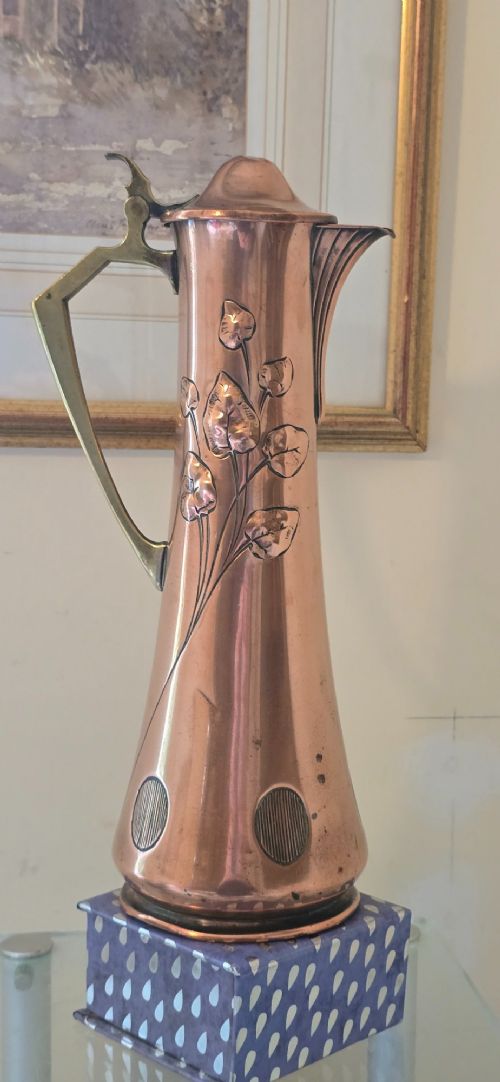
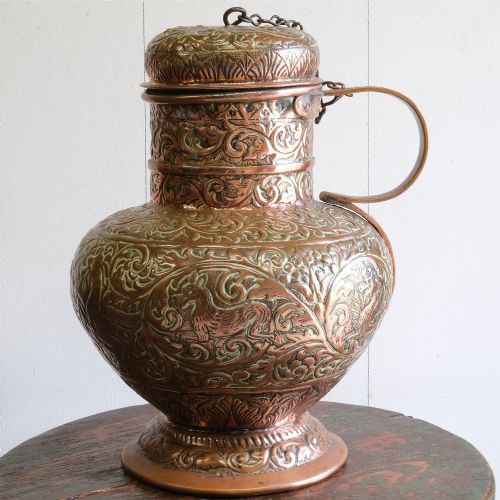
Artisans employed surface decoration such as floral relief work, hammered textures, and engraved markings to elevate utilitarian items into decorative display pieces. Rivets and soldered joints secure spouts and handles, bearing witness to manual fabrication.
Materials documented across the pieces include copper, brass, ironstone ceramic, earthenware, and tin.
Distinctions in grade and execution
Superior examples separate themselves through thicker gauge metal that resists denting and maintains structural rigidity under heavy liquid loads. The refinement of the handle attachment and the crispness of any decorative repoussé work dictate the tier of craftsmanship.
The presence of maker marks, capacity stamps, or royal verification ciphers elevates an ordinary utility vessel into a documented piece of metalwork history. Heavier capacity measures show greater material substance compared to thin domestic jugs.
WMF·Joseph Sankey·Livesley Powell and Co·Orme Evans and Co·Loftus of Oxford Street London
The Vintage Copper Water Jug Glossary
- Repoussé
- Metalworking technique where the artisan hammers the design from the reverse side to form a raised relief on the front. This method appears on decorative jugs from the Art Nouveau period.
- Jersey Can
- A traditional tall, narrow-necked cylindrical jug originating in the Channel Islands, used for storing and pouring dairy or water. These feature distinctive spouts and sturdy brass handles.
- Ewer
- A large jug with a wide-spouted mouth and a curved handle, traditionally used for holding water. They often appear in decorative copper and brass finishes.
- Lusterware
- Pottery treated with a metallic glaze that produces an iridescent sheen upon firing. This finish appears on ceramic variants found alongside metal vessels.
- Seamed Measuring Jug
- A vessel constructed from rolled sheet metal with visible vertical and horizontal joins, calibrated for accurate volume. These often bear official verification stamps.
Vintage Copper Water Jug: Frequently Asked Questions
How do I clean a copper water jug?
Wash the vessel gently using warm soapy water and a soft cloth to protect the historic surface finish. Avoid abrasive scouring pads that strip away the aged patina.
Dry the metal completely after washing to prevent water spotting. Specialist copper creams can restore brightness if desired, though many prefer the dark oxidation.
How do I date a copper jug?
Examine the construction methods, such as hand-cut dovetail seams, heavy cast brass handles, and individual rivet placements. Earlier Georgian pieces often display simpler, heavier utilitarian forms compared to decorative Edwardian or Art Nouveau styling.
Look for stamped capacity marks, VR ciphers, or manufacturer names punched into the metal. Stylistic shifts from plain utility to artistic relief work help narrow the decade of manufacture.
Can I use these jugs for fresh flowers?
These vessels make striking display containers for cut stems and dried botanicals alike. Their waterproof metal construction handles floral arrangements with ease.
Protect delicate wooden furniture underneath by placing a modern saucer inside if the antique base shows old solder repairs. The contrast between bright foliage and dark patinated copper creates a compelling visual display.