


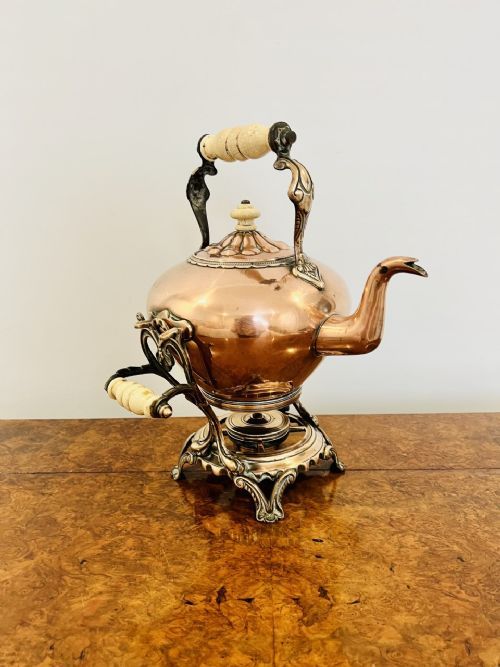


Vintage Copper Tea Urn
These vintage copper tea urn vessels bring warmth and weight to a room, functioning as heavy metal water heaters shaped by Georgian and Victorian hands.
Vintage Copper Tea Urn
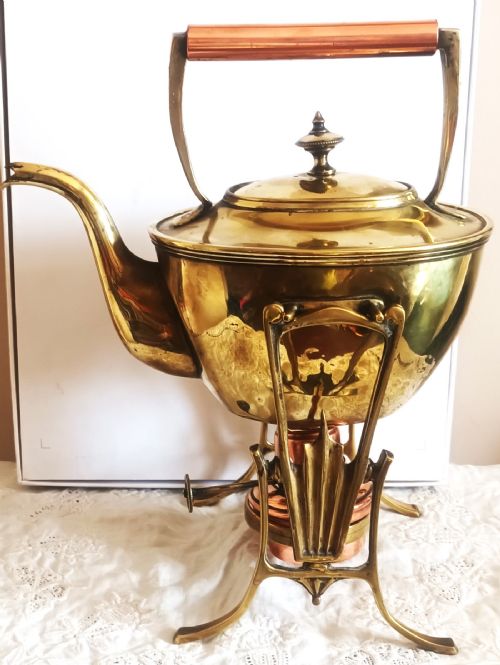
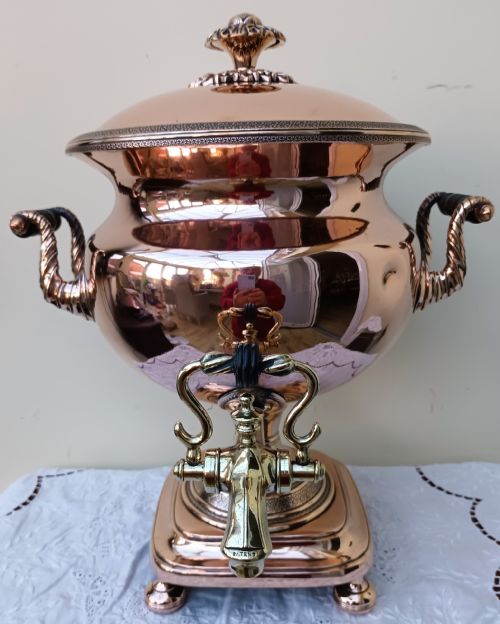
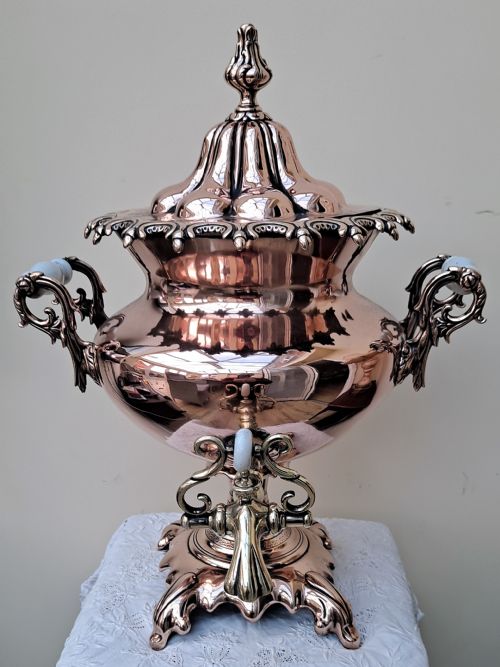
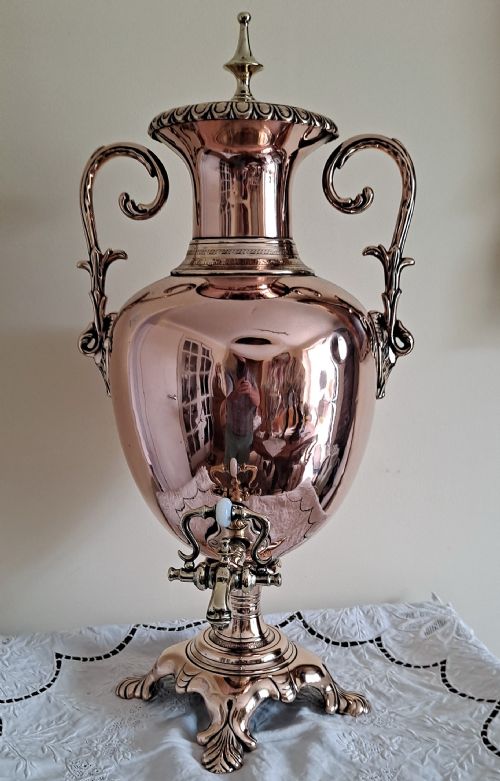
When you search for a vintage copper tea urn, you are looking at substantial vessels designed for heating water, spanning George III, Regency, and Victorian periods. Most examples on this page take the form of samovars, kettles, and spirit kettles intended for tea service.
The objects originate from English workshops across the nineteenth century, combining utility with decorative presence. Alongside copper, makers incorporated brass, bronze, and occasional ceramic or wooden elements into the construction of these tea urns.
How they were made
Metalsmiths hammered and shaped sheet copper to form the main bodies of these tea urns, often mounting them on sturdy brass or bronze legs. Cast brass taps, handles, and fittings were secured to the body to handle daily use.
Makers integrated internal heating tubes or accommodated spirit burners beneath the vessels for boiling water. Details like ebonised wood or bone insulators protected hands from hot metal components.
Materials paired with copper across these pieces include cast brass, bronze, ceramic inserts, and ebonised wood handles.
What varies in quality
The distinction between standard utility vessels and superior examples lies in the weight of the metal and the complexity of the casting. Heavier copper gauges and ornate, detailed brass mounts separate finer pieces from simpler utilitarian ones.
Proportion and decorative restraint dictate the visual success of each piece. Well-balanced forms with intact original hardware and harmonious bronze or brass detailing stand apart from altered or mismatched items.
William Soutter & Sons
The Vintage Copper Tea Urn Glossary
- Samovar
- A heated metal container traditionally used to boil and heat water for tea, often featuring a spigot near the base. These large vessels sit on substantial stands and form the core of many tea urn collections.
- Spirit kettle
- A portable kettle mounted on a metal stand with an integrated spirit burner underneath to keep water hot. These pieces offer a smaller alternative to the fixed samovar.
- George III
- The period spanning the reign of George III from seventeen sixty to eighteen twenty, known for classical proportions and restrained ornament. Pieces from this era display clean architectural lines.
- Regency
- The stylistic period covering the early nineteenth century up to eighteen thirty-seven, drawing inspiration from classical antiquity. Furniture and metalwork from this time incorporate bold bronze mounts and bronze patination.
- Arts and Crafts
- A design movement emerging in the late nineteenth century that valued honest construction and visible craftsmanship over mass production. Items from this style exhibit simpler, more tactile surfaces.
Vintage Copper Tea Urn: Frequently Asked Questions
What is a vintage copper tea urn used for?
These vessels were originally manufactured to heat and dispense water for tea service in grand dining rooms and drawing rooms. The internal chambers held hot coals or accommodated burners to keep the water at temperature.
Today, buyers use them as striking decorative objects for sideboards or hallways. Their warm metallic surfaces add texture and historical weight to traditional and modern interiors alike.
How do I tell a George III tea urn from a Victorian one?
George III pieces, dating around eighteen hundred, tend to feature neoclassical urn shapes with strict geometric balance and crisp classical mounts. They often display finer, restrained proportions characteristic of earlier Georgian design.
Victorian examples, produced through the nineteenth century, frequently show heavier proportions and more eclectic ornamentation. You will notice greater variety in the brass handles, spigots, and overall silhouette during this later era.
What metals are found on these tea urns?
Copper forms the primary body of almost every piece, valued for its malleability and deep colour. Brass is extensively used for taps, handles, feet, and decorative bands.
Some examples incorporate bronze elements, ceramic components, or wrought iron stands. Bone or ebonised wood frequently appears on handle grips to provide insulation against the heat.
How do I clean a copper tea urn?
Much depends on whether you prefer a dark, aged patina or a bright metallic shine. Gentle dusting and occasional wiping with a soft cloth preserve the historical surface.
Avoid harsh abrasive cleaners that strip away the natural ageing of the copper. Many collectors prefer to leave the stable oxidation undisturbed to show the true age of the metal.