



Victorian Brass Tea Urn
A victorian brass tea urn is a striking vessel designed for heating and dispensing water, prized for both its utility and its imposing presence.
Victorian Brass Tea Urn
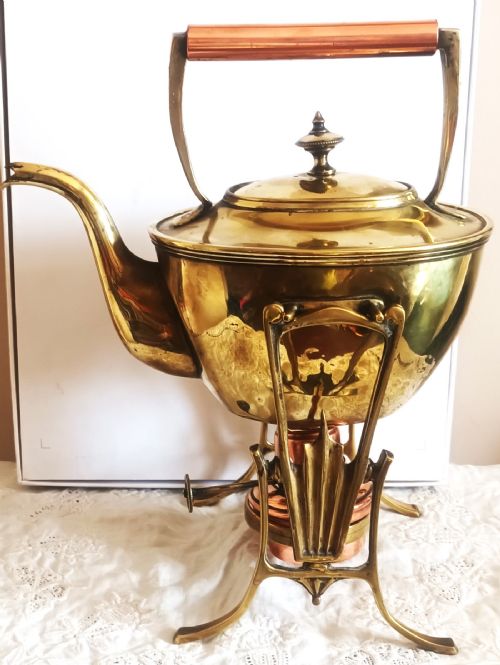
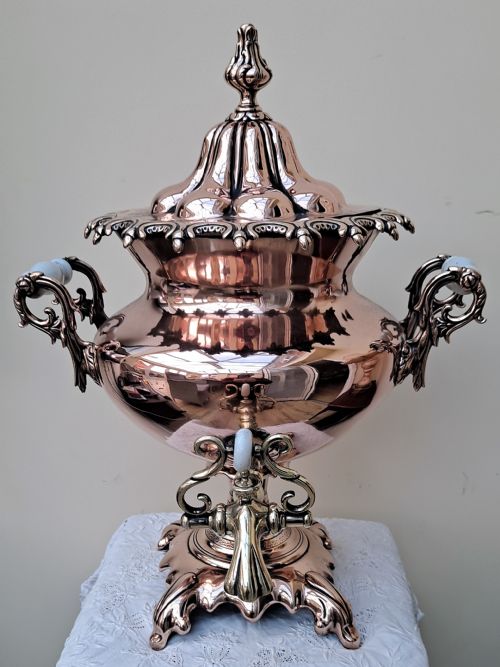
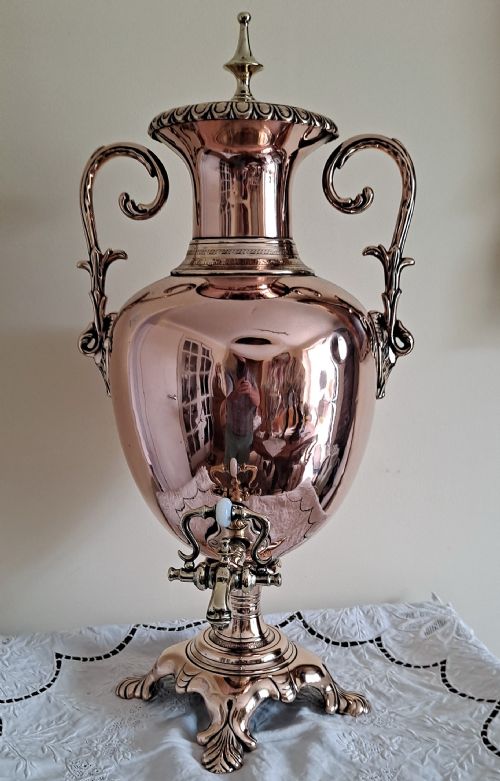
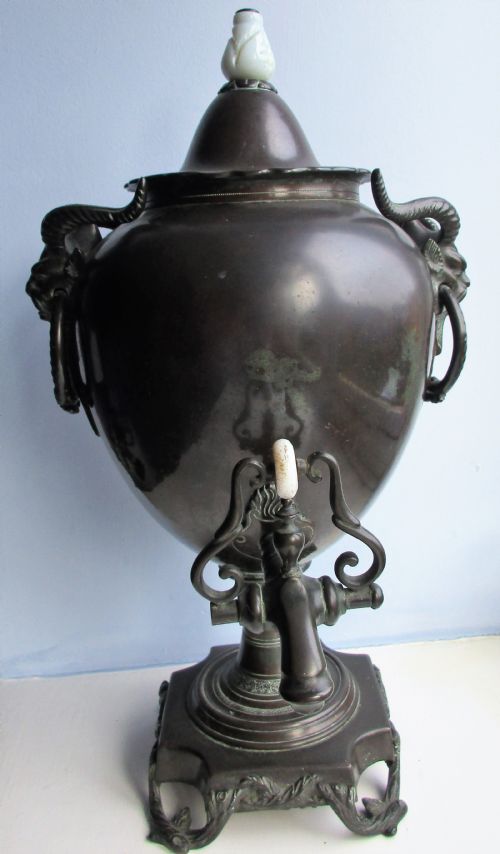
When you search for a victorian brass tea urn, you encounter large heating vessels and associated brewing equipment spanning the nineteenth century. These objects include samovars, tea urns, and spirit kettles on stands, predominantly originating from English workshops.
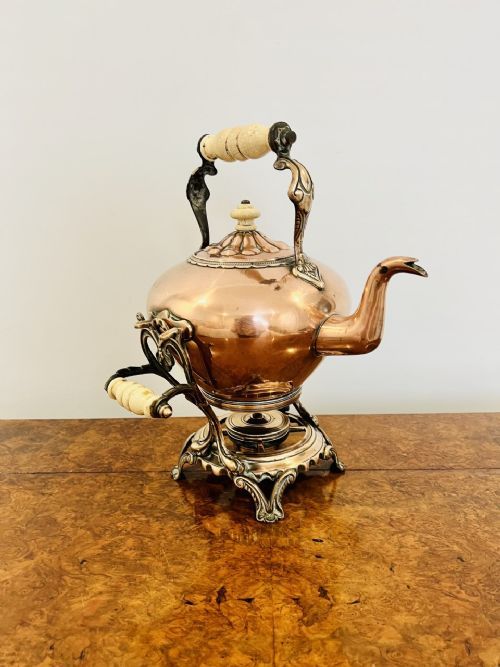
The versions most commonly met on this page combine bright brass with warm copper bodies. Many examples incorporate stands, spirit burners, and small handles of wood or bone, reflecting the formal hospitality customs of the period.
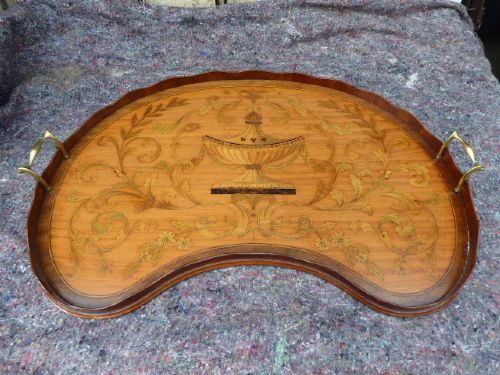
Beyond standard Victorian manufacturing, the selection incorporates pieces influenced by specific design movements such as the Aesthetic Movement, Arts and Crafts, and Neoclassical Revival. Occasional related pieces like serving trays and kettles also appear among the records.
How they were made
Makers utilised heavy gauge copper for the main bodies of these vessels to retain heat effectively, pairing it with bright brass for taps, handles, and mounts. This dual-metal construction required skilled sheet metalworking, joining, and polishing.
Details often include turned wood, ebonised wood, or bone for insulation on handles and spouts, preventing burns during use. Certain pieces also incorporate ceramic elements and intricate woodwork.
Decorative finishes range from plain burnished metal to detailed engraving and applied mounts, aligning with the stylistic shifts from Georgian traditions through to Edwardian production.
Among the brass and copper vessels sits a single king size iron bedstead, proving that nineteenth-century metalwork occasionally takes unexpected forms.
What varies in quality
The standard of manufacture shows in the weight of the metal and the precision of the joints and taps. Heavier gauge copper and substantial brass mountings indicate a higher grade of original production.
Design ambition separates standard utility items from superior pieces created by notable makers or influenced by distinct stylistic movements. The presence of matched stands, spirit burners, and secondary materials like satinwood or marquetry elevates the piece.
William Soutter And Sons·Edwards And Roberts·Benetfink And Co
The Victorian Brass Tea Urn Glossary
- Samovar
- A heated metal container traditionally used to boil and heat water in Russia and throughout Europe during the nineteenth century. These large vessels often feature an internal vertical pipe or a spirit burner beneath.
- Spirit kettle
- A portable kettle mounted on a dedicated metal stand above a small spirit burner. This arrangement kept water hot at the tea table.
- Aesthetic Movement
- A late nineteenth-century design current that prioritised visual beauty over narrative or moral content. Objects from this period often display simplified, harmonious forms and stylised decoration.
- Pontypool Ware
- A term associated with tinned sheet metal vessels decorated with japanned finishes. It references a historic production centre known for decorative metalwork.
Victorian Brass Tea Urn: Frequently Asked Questions
How do I use a victorian brass tea urn today?
These vessels are generally acquired today as decorative items for interiors, sideboard displays, or collections of historic metalwork.
While some retain their original internal workings, many owners choose to display them unplumbed as sculptural statements of nineteenth-century craftsmanship.
What is the difference between a samovar and a spirit kettle?
A samovar is typically a larger, upright vessel with an internal heating tube or a spigot near the base, designed to hold a substantial volume of water.
A spirit kettle is usually smaller, suspended in a portable stand above an adjustable flame burner for tabletop use.
How do I date a brass and copper tea urn?
Dating relies on observing construction methods, maker marks, and stylistic indicators such as Neoclassical revival motifs or Aesthetic Movement lines.
Mid-nineteenth-century examples often display heavier Georgian-influenced proportions, while later pieces shift towards Edwardian and Arts and Crafts aesthetics.
Why are copper and brass combined on these urns?
Copper was chosen for the main body because of its excellent thermal conductivity and ability to withstand direct heat from internal tubes or burners.
Brass was utilised for fittings, taps, and structural mounts because it could be cast into complex shapes and polished to a bright contrast against the darker copper.