
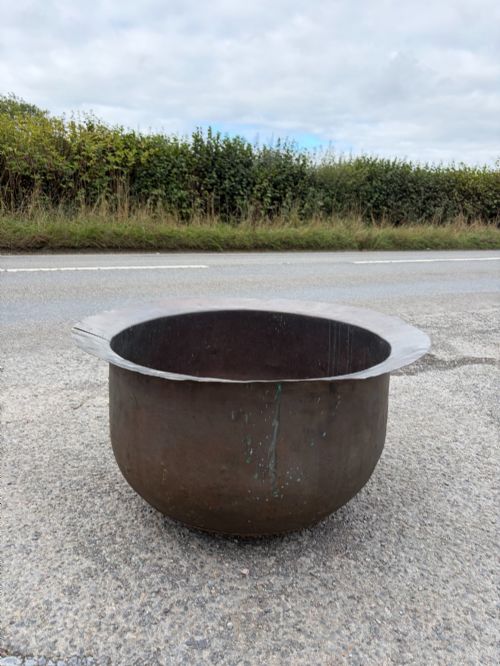


Vintage Copper Kettle
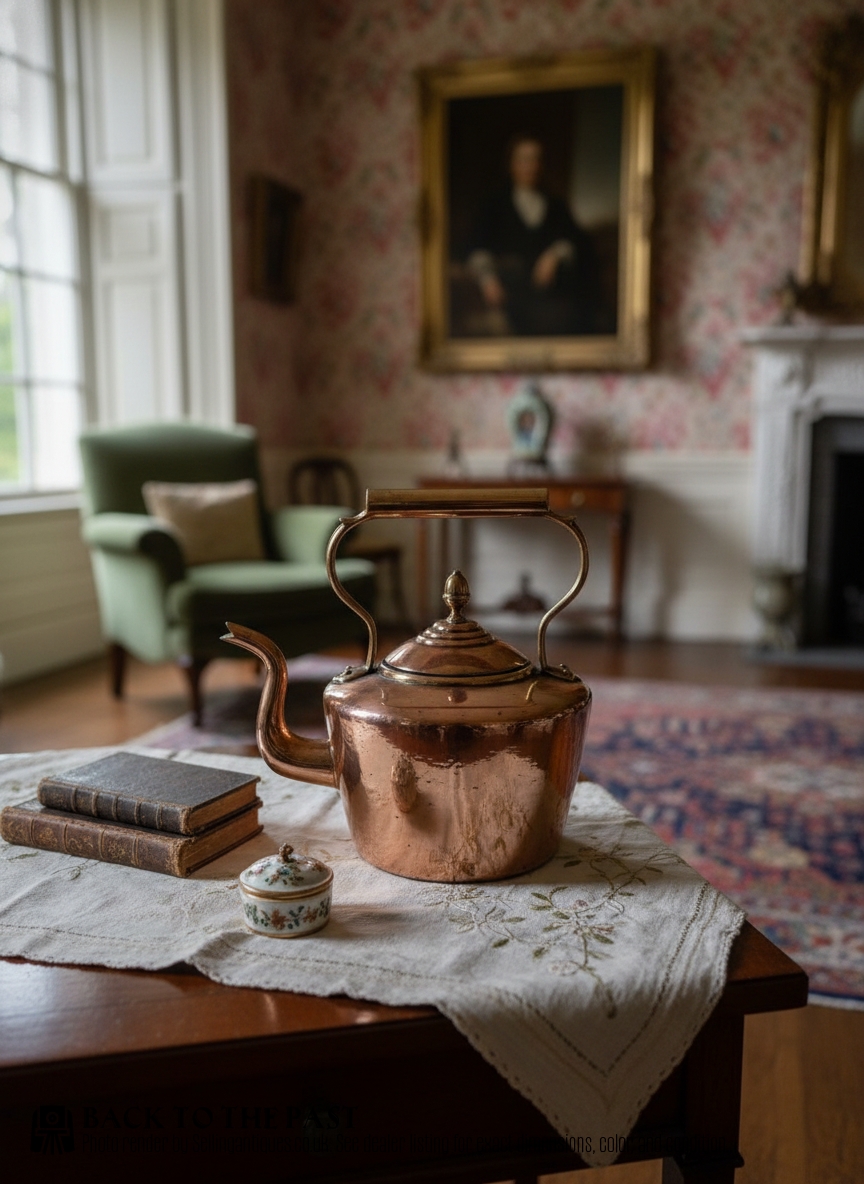
A vintage copper kettle brings substantial warmth and tactile presence to a kitchen, forged from durable metal to boil water with dependable style.

Vintage Copper Kettle
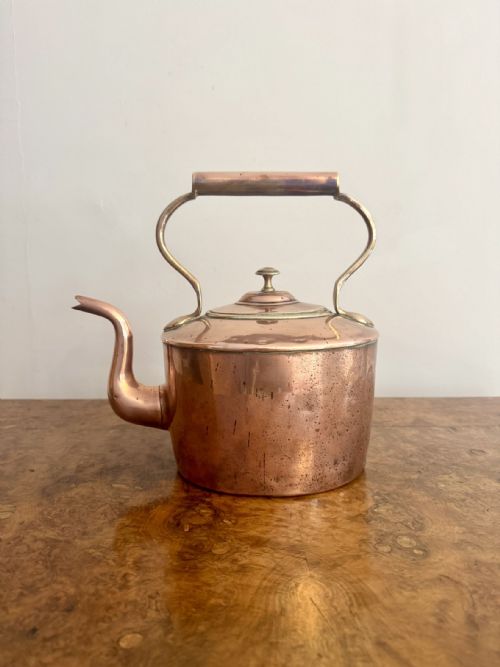
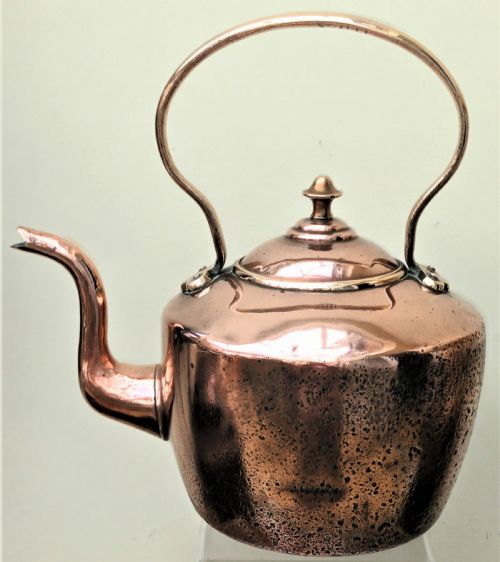
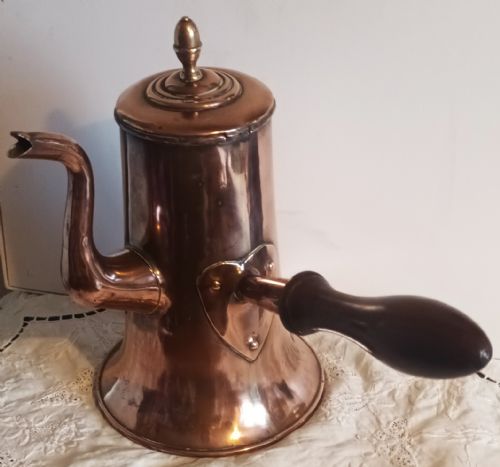
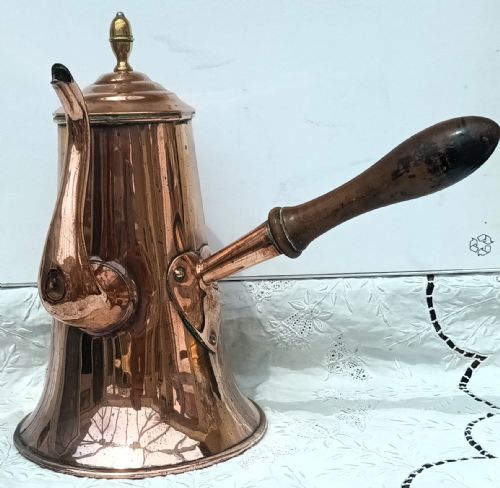
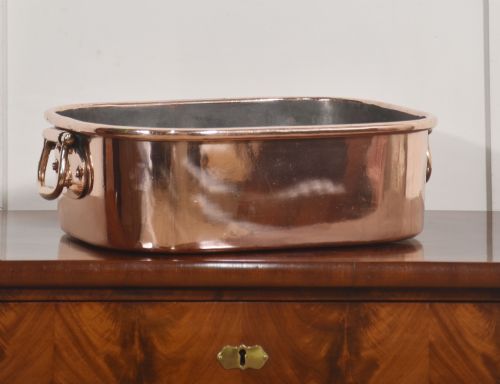
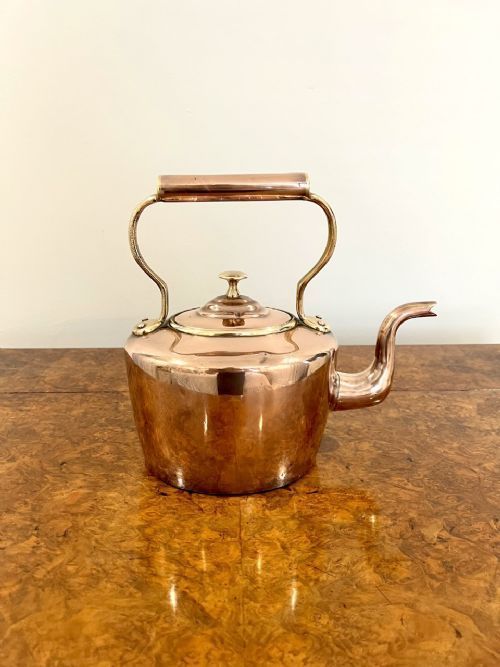
When you search for a vintage copper kettle, you encounter vessels shaped for hearth and stove use across multiple eras. These utilitarian pieces span Georgian, Victorian, and Arts and Crafts periods, appearing as tea kettles, spirit kettles, fish kettles, and samovars.
The most common examples on this page date from the George III and Victorian eras. They range from small tabletop designs to large oval shapes, often incorporating brass handles, iron fittings, or wooden insulators.

Materials and construction methods
Makers formed these vessels primarily from heavy gauge copper sheet, frequently hammering the metal to achieve rigidity and strength. Rivets join the seams and handles, while brass, bronze, and wrought iron contribute structural support and contrasting detail.
Internal surfaces typically feature a tin lining to prevent direct contact between water and copper. Wooden mounts on handles serve to insulate against heat during use on a fire or stove.
Vintage Copper Kettle Retail Price Guide 2026
Typical asking prices for vintage copper kettle among the pieces listed under this phrase on Sellingantiques today, from the lower quarter to the upper quarter. They describe what is for sale here now, not the wider market.
Some nineteenth-century makers evidently expected tea to be a serious expedition, supplying heavy bronze taps for stationary indoor brewing.
Judging build and design quality
Quality depends upon the weight of the metal and the precision of the hand-beaten seams. Heavier gauge copper retains its structural integrity better over centuries of heating and cooling.
Refined craftsmanship appears in balanced proportions, neatly turned wooden handle grips, and secure casting on brass taps and feet for samovars and spirit kettles.
William Soutter And Sons
The Vintage Copper Kettle Glossary
- Spirit kettle
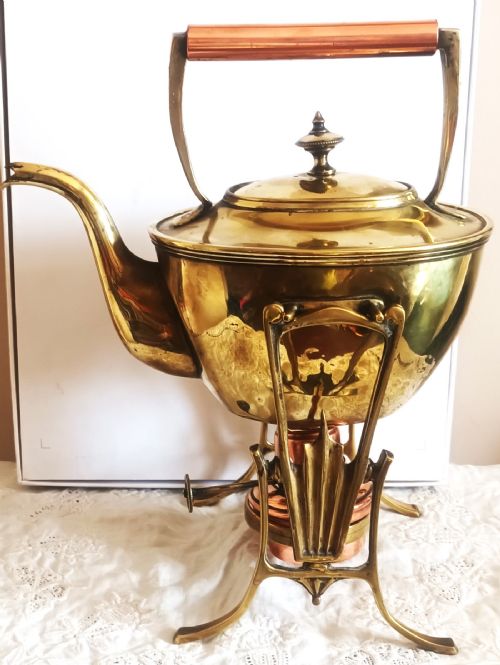
- A kettle suspended above a small burner or spirit lamp, designed for heating water at the table. These often sit within a dedicated metal frame or stand.
- Samovar
- A large heated urn used to boil and heat water for tea, traditionally featuring an internal vertical metal tube and a spigot. They frequently incorporate brass and bronze elements.
- Fish kettle
- An elongated oblong vessel with a tight-fitting lid and internal draining rack, designed for poaching whole fish. These require substantial copper sheets to maintain even heat distribution.
- George III
- A design period spanning the late eighteenth and early nineteenth centuries, characterised by clean classical proportions and robust utilitarian construction.
Vintage Copper Kettle: Frequently Asked Questions
Can I still use a vintage copper kettle?
Many of these vessels remain physically capable of boiling water on modern hobs, provided the internal tin lining remains intact and thick enough for safe use.
Collectors often prefer to treat older examples purely as decorative objects to preserve their historical surface patination and prevent wear.
How do I clean a copper kettle?
Routine maintenance requires only warm soapy water and a soft cloth to remove dust and grease without damaging the metal.
A gentle proprietary copper cleaner can restore brightness if you prefer a polished shine rather than a dark, aged patina.
How do I tell George III from Victorian kettles?
George III pieces often display simpler, heavier forms with clean lines and practical iron or brass mounts typical of the eighteenth century. Victorian examples frequently introduce more ornate handles, varied stand configurations, and stamped maker details.
Examining the construction of the seams and rivets also helps distinguish the earlier hand-beaten production methods from later nineteenth-century manufacturing.
What is a spirit kettle used for?
A spirit kettle allowed hosts to maintain a supply of hot water for tea service in a drawing room without returning to the kitchen hearth. The built-in burner used liquid fuel to keep the contents warm throughout the afternoon.
These pieces usually include a metal stand that elevates the vessel safely above the flame.