


Vintage Cookie Container
These vintage cookie container examples are charming biscuit barrels and jars in silver plate, cut glass, ceramic and stoneware, ready for the dining table.
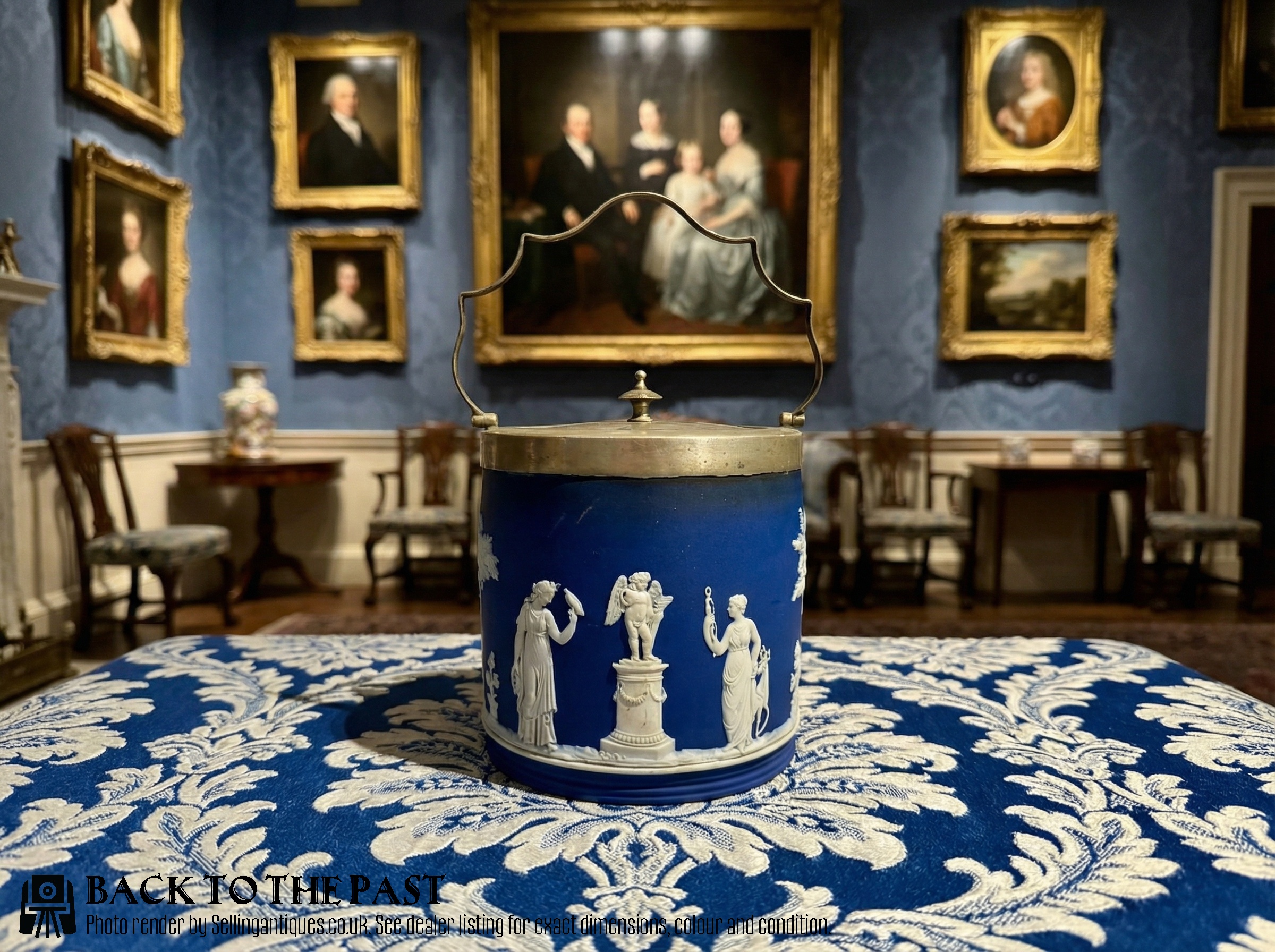
Vintage Cookie Container
When you search for a vintage cookie container, you are looking at nineteenth and early twentieth-century biscuit barrels, jars and novelty tins designed to keep baked goods dry. These lidded vessels served the Victorian and Edwardian parlour as elegant receptacles for dry biscuits.
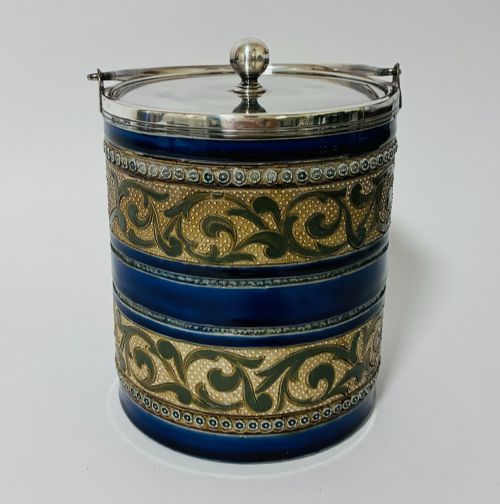
The pieces on this page span several decades, reaching from mid-Victorian earthenware and stoneware up to early twentieth-century silver-mounted glass and novelty tins. You will frequently encounter silver-plated frames holding cut glass bodies, alongside ceramic items decorated in flow blue or jasper ware.
How they were made
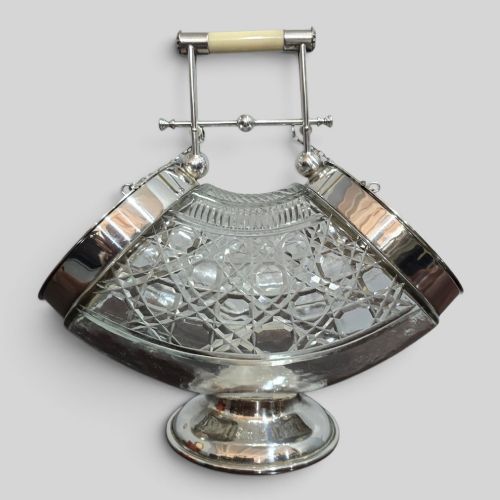
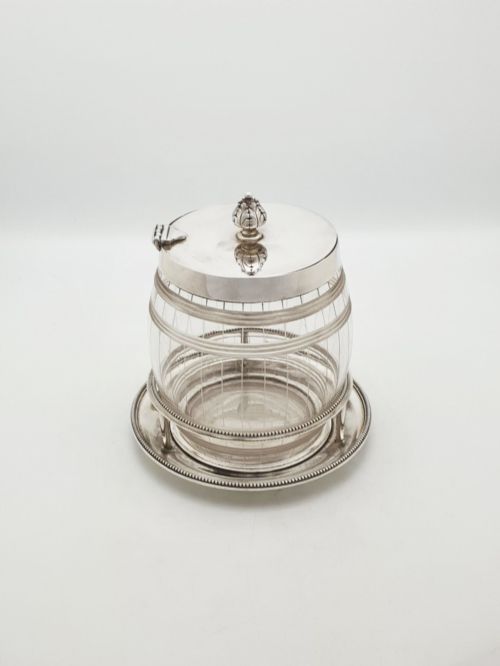
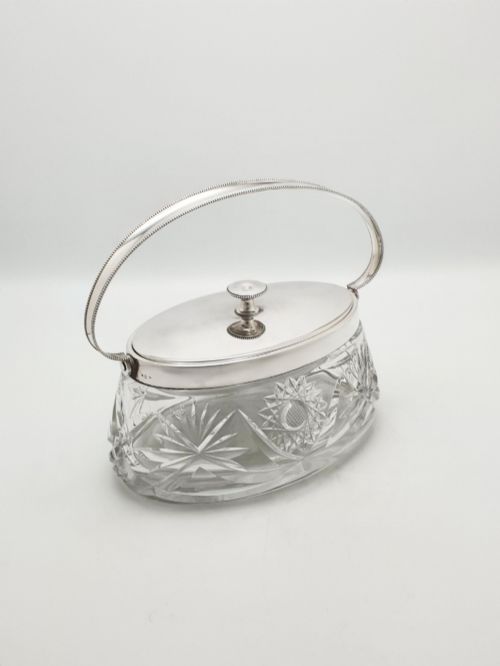
Maker's workshops combined heavy press-moulded or hobnail-cut glass with electroplated nickel silver mounts, swing handles and hinged lids. Ceramic bodies utilised stoneware, earthenware or jasper ware, occasionally finished with enamel decoration or gold leaf.
Metal components relied on silver plating over base metals or sterling silver frames, paired with specialised mounts for ceramic or glass bodies. Novelty forms shaped metal into realistic objects like weights or satchels.
Biscuit storage once required an actual leather satchel form, cleverly engineered in metal to keep tea-time treats safe from curious fingers.
What varies in quality
The distinction between standard utility vessels and superior pieces lies in the crispness of the glass cutting, the weight of the silver plate and the complexity of the ceramic body. High-grade examples demonstrate deeper hobnail cutting, crisper relief moulding on jasper ware and substantial metal mounts.
Artistry in design elevates certain items, particularly those featuring heraldic finials, specialised enamel work or inventive novelty forms by known makers. The harmony between the metal hardware and the glass or ceramic body dictates the overall success of the piece.
Doulton Lambeth·Elkington·WMF·Wedgwood·Peek Frean and Co·James Dixon and Sons
The Vintage Cookie Container Glossary
- Biscuit Barrel
- A covered ceramic, glass or metal jar designed for holding dry biscuits on the dining or drawing room table. These vessels became essential dining accessories during the Victorian period.
- Jasper Ware
- A fine-grained, unglazed stoneware developed by Josiah Wedgwood featuring applied white relief figures against a coloured ground. It remains instantly recognisable by its matte pastel shades.
- Hobnail Cut
- A raised geometric glass-cutting pattern resembling the iron nails on heavy country boots. This technique catches the light brilliantly across the body of a jar.
- Silver Plate
- A thin layer of silver fused or electroplated onto a base metal such as nickel or copper. It provided households with the visual splendour of solid silver at a lower cost.
- Flow Blue
- A style of cobalt blue transfer printing on earthenware where the colour blurred slightly into the glaze during firing. This effect created a soft, misty aesthetic popular in the late nineteenth century.
Vintage Cookie Container: Frequently Asked Questions
What is a biscuit barrel?
A biscuit barrel is a covered container traditionally used in British homes to store dry biscuits or crackers on the sideboard. They gained immense popularity in the Victorian era as formal dining and entertaining expanded.
Most examples feature a fitted lid and a swing handle for easy carrying between the pantry and the parlour.
How were these containers used?
Hosts placed these lidded jars on the table after dinner or during afternoon tea to keep biscuits crisp despite the damp British climate. The snug lids protected the baked goods from moisture and air.
Guests would lift the hinged lid to help themselves during social gatherings.
Are novelty containers common?
Novelty forms appear occasionally, shaped as everyday items like leather satchels or iron weights to amuse guests at the table. These whimsical pieces reflect the Victorian love for playful domestic objects.
Such designs required skilled metalwork to conceal the functional hinge and opening of the jar.
How do I care for silver plate?
Silver-plated mounts and lids require gentle cleaning with a specialised non-abrasive silver polish to maintain their brightness. Avoid harsh scrubbing that might wear away the thin layer of plating over the base metal.
Wash glass and ceramic bodies separately in warm soapy water without submerging fragile hinged lids.
How do I distinguish periods?
Victorian examples often feature heavy cut glass, elaborate silver plating and rich ceramic bodies like flow blue or stoneware. Edwardian and later pieces tend towards lighter frames, simpler glass facets and geometric Art Deco influences.
Maker's marks stamped on the metal base or ceramic underside provide the most reliable guide to dating.