

Vintage Condiment Pots
Vintage condiment pots bring functional elegance to the table, uniting glass and metal in compact vessels designed for salt, mustard, and pepper.
Vintage Condiment Pots
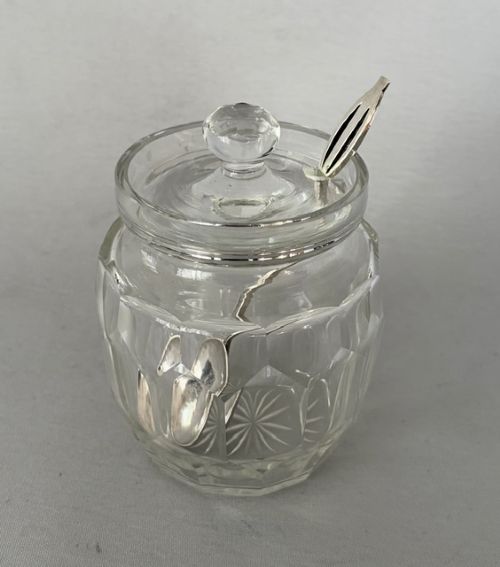
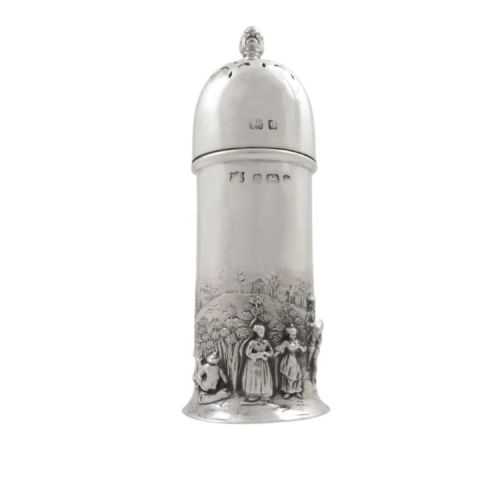
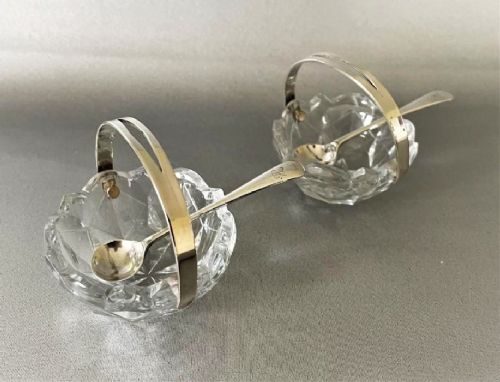
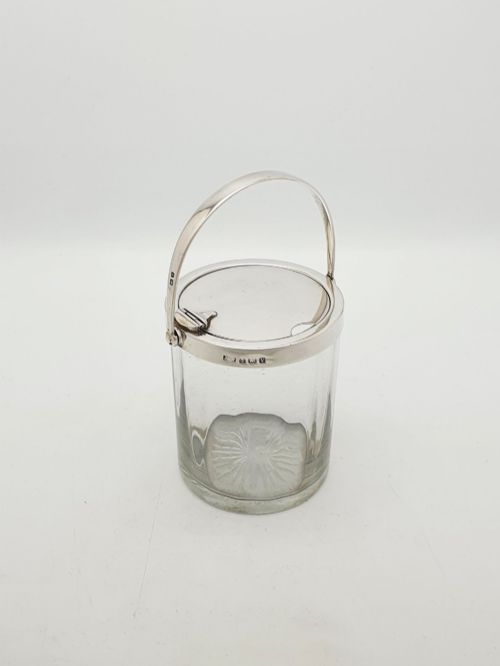
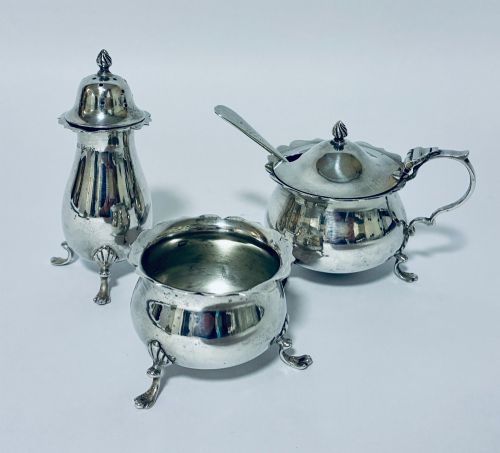
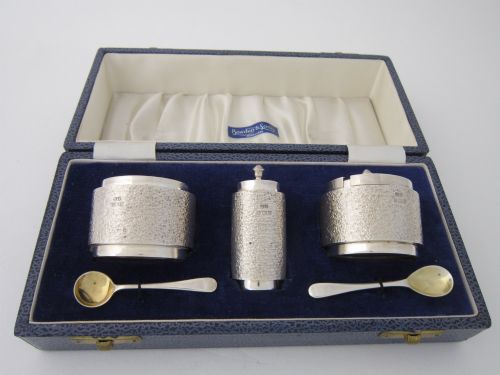
Vintage condiment pots encompass a diverse array of table vessels, ranging from individual salt cellars and mustard pots to multi-piece cruet sets and preserve jars. Buyers searching for these items encounter pieces intended for formal dining, designed to hold seasonings and preserves close at hand during meals.
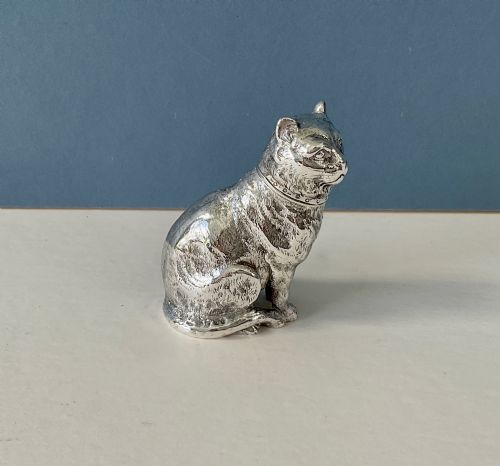
The selections span multiple decades and stylistic periods, with Edwardian silver-plated sets and 1920s sterling silver pieces appearing frequently alongside Victorian novelties and mid-century designs. Forms vary from simple glass tubs and crystal jars to novelty pepper pots shaped like cats and preserve pots styled as apples.
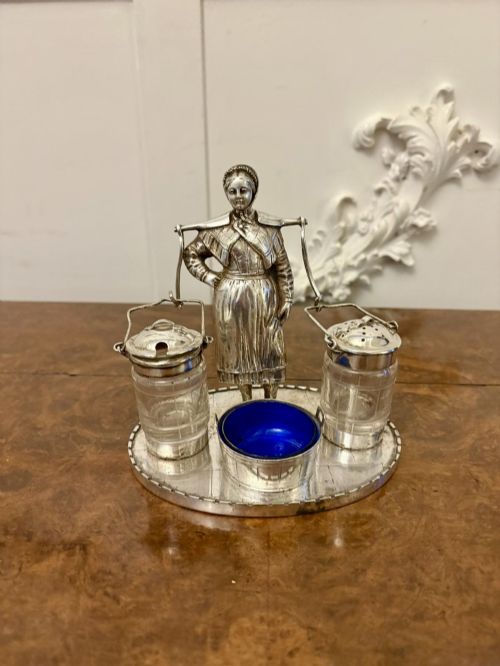
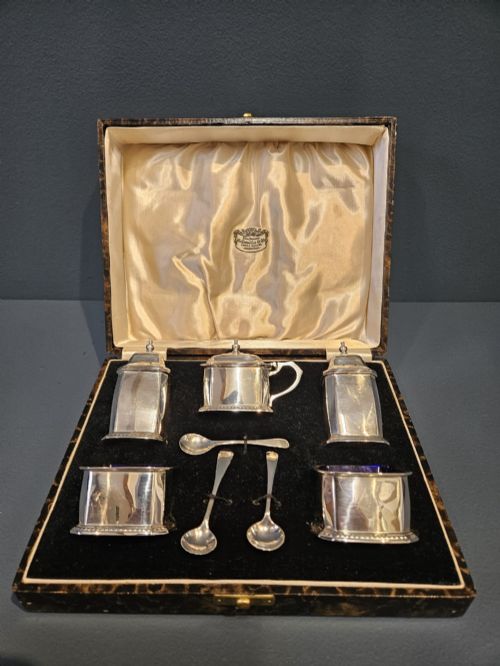
Comprising matching sets or standalone jars, these tableware items reflect the shifting domestic habits of the nineteenth and twentieth centuries. Many incorporate spoons or frames, providing a complete serving solution for the dining table.
Materials and construction methods
Makers combined sterling silver and silver plate with cut glass, cranberry glass, and cobalt glass to create contrast and visual texture. Metal components were shaped through casting, stamping, and plating onto base metals, while glass inserts were often moulded and cut.
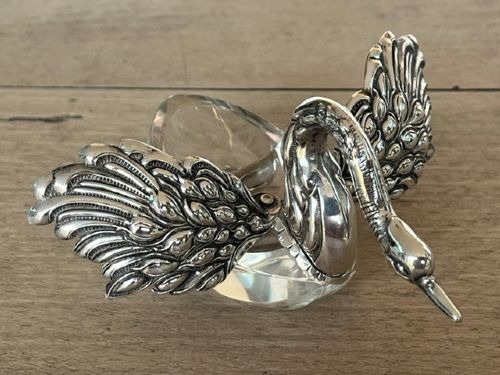
Specialised techniques enabled functional details, such as the movable wings on crystal swan salt cellars and the secure mountings on oak barrel cruet sets. Interiors frequently accommodated removable glass liners, protecting metal surfaces from acidic condiments like mustard and jam.
Vintage Condiment Pots Retail Price Guide 2026
Typical asking prices for vintage condiment pots among the pieces listed under this phrase on Sellingantiques today, from the lower quarter to the upper quarter. They describe what is for sale here now, not the wider market.
A crystal swan with movable wings swims across the table as a functional salt cellar.
Separating grades of quality
Quality in these pieces depends upon the crispness of the metalwork, the weight of the silver or plate, and the clarity of the cut glass. Substantial gauge silver and well-defined hallmarks indicate higher manufacturing standards, whereas thinner plating and softer glass cutting mark more utilitarian items.
Design ambition also distinguishes the range, moving from standard multi-bottle cruet frames to inventive novelty forms like carriage cruets or fruit-shaped preserve pots. The retention of original matched spoons, liners, and fitted stands further elevates a piece within its category.
Goldsmith and Silversmith's·Hukin and Heath·Bricks and Sons·William Neale and Son·WMF
The Vintage Condiment Pots Glossary
- Cruet set
- A matched collection of bottles, jars, or pots designed to hold condiments such as oil, vinegar, salt, pepper, and mustard, usually fitted into a metal frame or stand.
- Salt cellar
- A small open bowl or closed vessel used to hold salt at the dining table before the invention of the spring-loaded shaker.
- Mustard pot
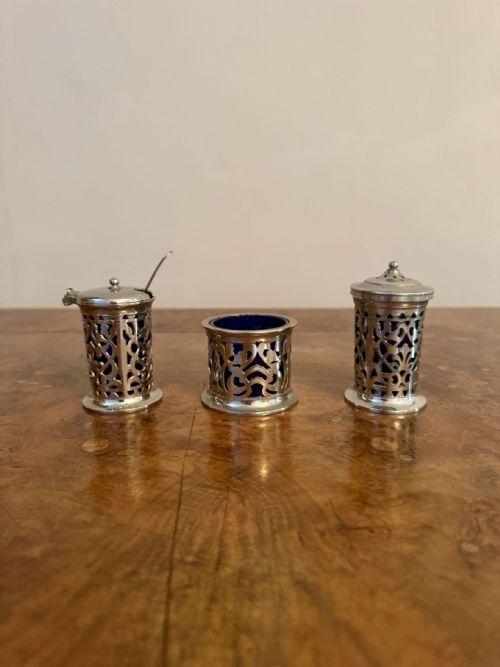
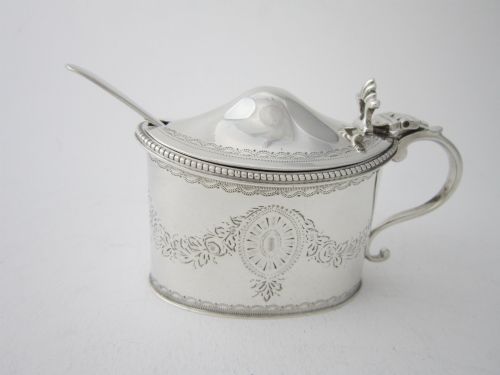
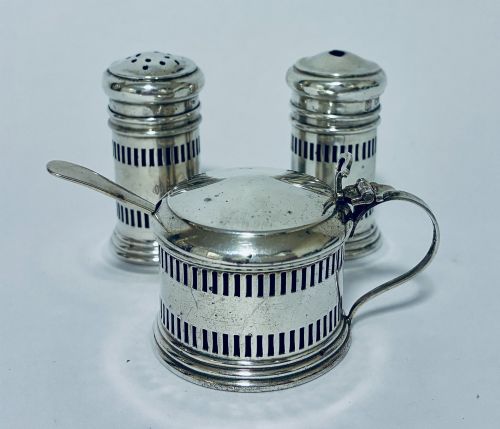
- A small covered jar, frequently lined with blue glass, designed specifically for prepared mustard and often accompanied by a tiny spoon.
- Cranberry glass
- A rich pinkish-red glass produced by adding gold chloride to the molten batch, popular in decorative tableware during the Victorian and Edwardian periods.
Vintage Condiment Pots: Frequently Asked Questions
What are vintage condiment pots used for?
These vessels held table seasonings, sauces, and preserves during formal and informal meals. Individual pots served salt, mustard, and pepper, while larger frames organised multiple condiments together on the dining table.
Today, they serve both decorative and practical functions in modern homes. Many collectors utilise them for holding small items or for serving relishes and jams during dinner parties.
How do I identify an Edwardian cruet set?
Edwardian cruet sets often feature extensive silver plating combined with cut glass bottles and frames that display exuberant Edwardian design traits. They frequently date from the early years of the twentieth century and emphasise decorative table presentation.
Examining the hallmarks or the style of the metalwork helps confirm the period. These pieces commonly accompany other Edwardian tableware such as open salts and jam pots.
What is a novelty pepper pot?
Novelty pepper pots are condiment containers shaped to resemble animals, figures, or objects rather than traditional pots. Examples include peppers formed as cats or barrels.
These whimsical pieces were popular conversation starters at the dining table. Makers utilised silver and silver plate to fashion detailed representations that combined utility with playful design.
Why do some mustard pots have blue glass liners?
Blue glass liners, often made of cobalt glass, protected the silver or silver-plated exterior from corrosion caused by acidic condiments like mustard. The bright glass also provided a pleasing visual contrast against the polished metal.
When inspecting these pieces, the presence of the original liner adds authenticity. They lift out easily for cleaning after use.