

Vintage Cocktail Cupboard
A vintage cocktail cupboard brings the glamour of the 1930s back into the living room, offering a dedicated home for glassware and bottles.
Vintage Cocktail Cupboard
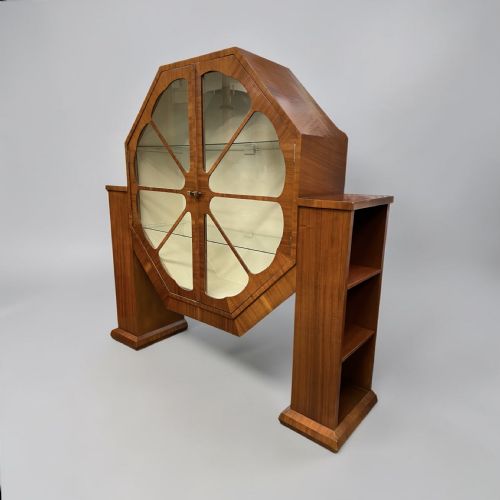
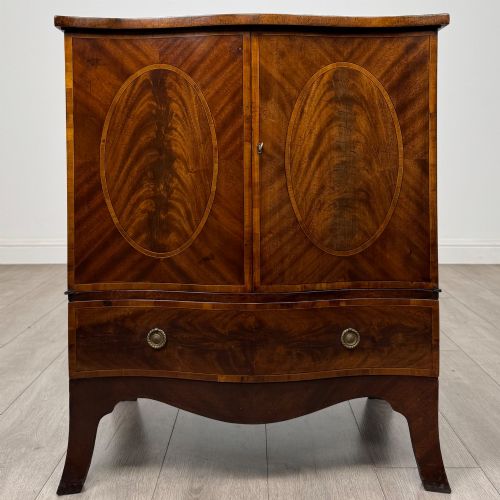
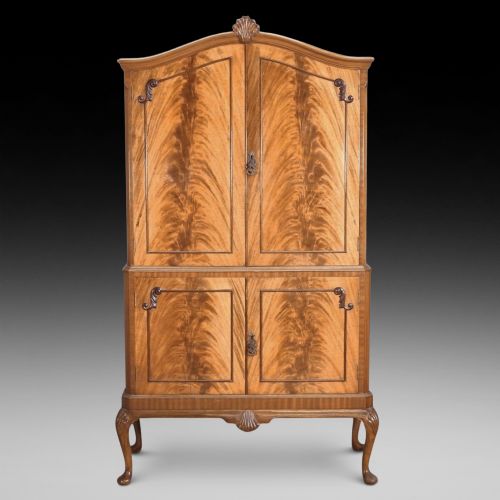
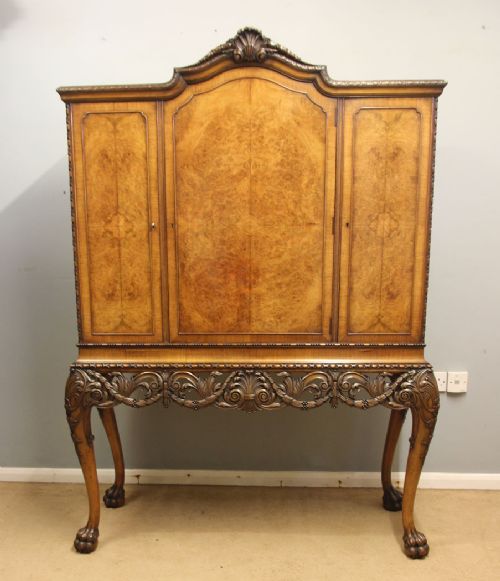
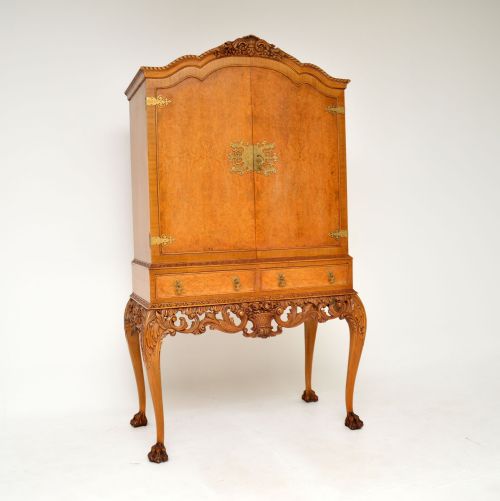
When you search for a vintage cocktail cupboard, you encounter dedicated drinks cabinets, side cabinets and display pieces primarily originating from the 1920s and 1930s, alongside earlier Edwardian and Victorian examples. These pieces serve as functional home bars designed specifically to house spirits, mixers and crystal glassware behind fitted doors.
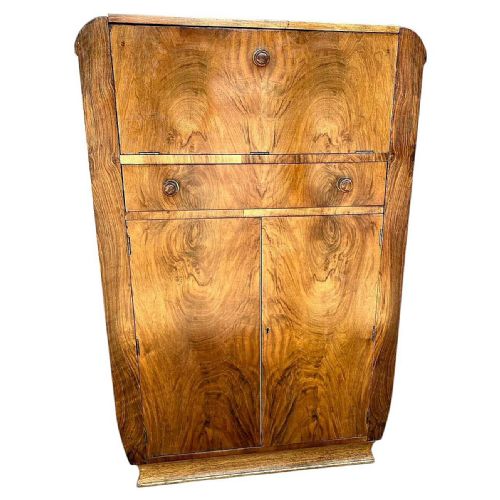
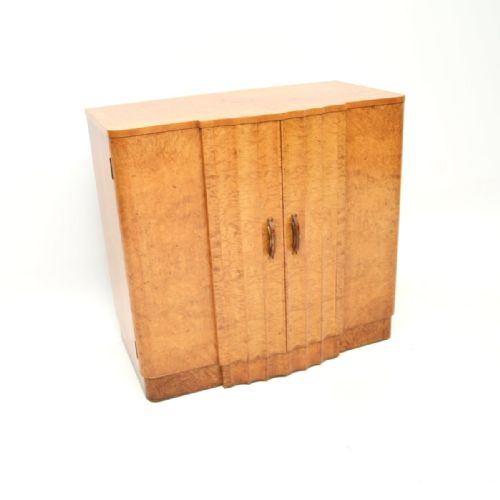
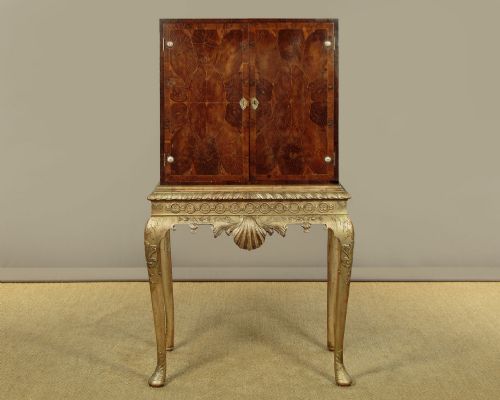
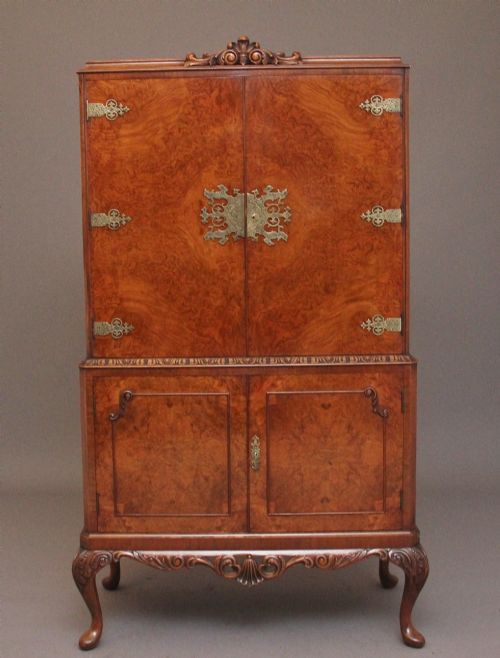
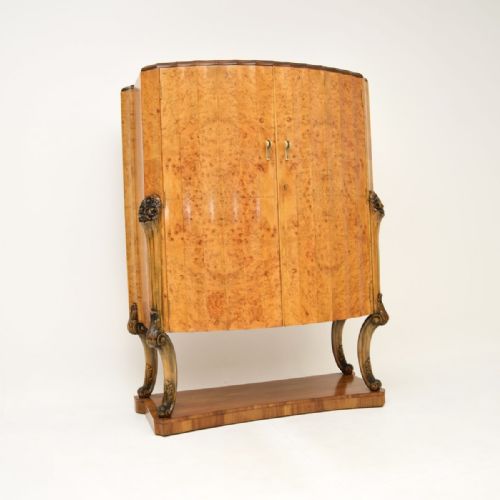
The version you are most likely to meet on this page is the Art Deco burr walnut cocktail cabinet from around 1930, often featuring double doors that open to reveal a mirrored interior, glass shelves and pull-out mixing trays. Alongside these, you will find occasional lacquered Chinoiserie finishes, mahogany sideboards and pieces raised on distinct stands.
How they were made
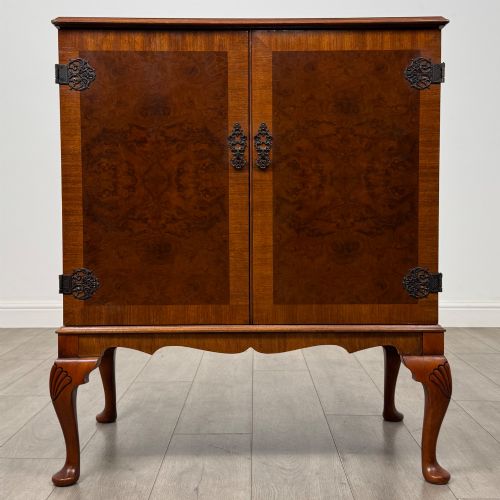
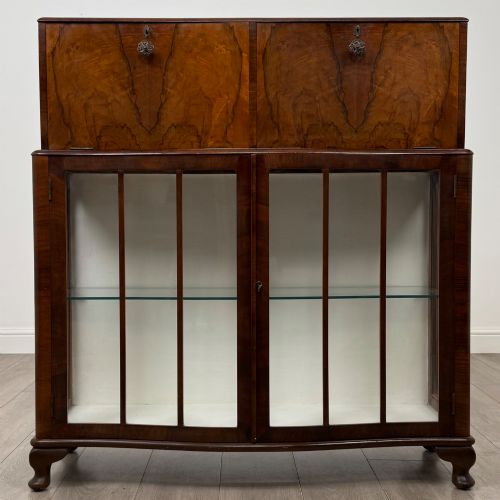
Cabinet makers utilised choice timber veneers such as burr walnut, figured walnut, mahogany and rosewood over solid wood foundations, frequently arranging the grain in symmetrical patterns to catch the light. Brass hardware, mirrored back panels and glass shelving complete the internal compartments.
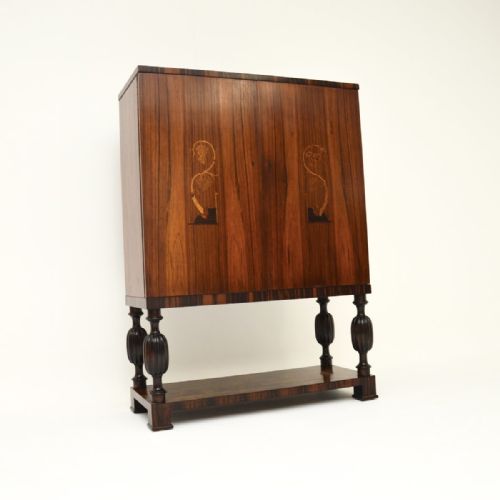
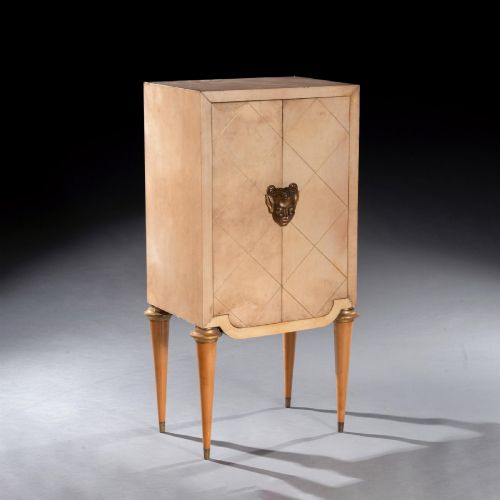
Surface decoration extends beyond natural wood grain to include hand-lacquered Chinoiserie scenes, parchment inlay and marquetry. Stands fashioned from metal, silver gilt or carved oak elevate the main storage body.
Listings feature walnut, mahogany, oak and rosewood alongside specialised brass and glass elements.
What varies in quality
The distinction between ordinary and exceptional vintage cocktail cupboards rests on the choice of veneers and the intricacy of the internal fittings. Cabinets exhibiting matched burr walnut or specialised lacquering stand apart from simpler mahogany or oak builds.
Design ambition dictates the upper range, where maker attribution, fitted lighting, specialist glass and fine marquetry elevate a standard drinks cabinet into a sculptural centrepiece.
Harry and Lou Epstein·Maurice Jallot·Epstein·Hille·Harrods
The Vintage Cocktail Cupboard Glossary
- Burr walnut
- A wood veneer taken from the burl growth of a walnut tree, prized for its swirling, highly figured grain patterns.
- Chinoiserie
- European decorative art imitating Chinese artistic styles, often featuring hand-painted lacquered scenes of figures and landscapes.
- Marquetry
- The art of applying pieces of veneer to a structure to form decorative patterns and pictures.
- Art Deco
- A design style characterised by streamlined forms, geometric patterns and rich materials, prominent during the 1920s and 1930s.
- Serpentine
- A furniture front shape that curves outward at the centre and inward at the sides, creating a gentle wave.
Vintage Cocktail Cupboard: Frequently Asked Questions
What is inside a vintage cocktail cupboard?
These cabinets typically feature mirrored interiors, glass shelves for glassware, and pull-out slides or shelves lined with glass or formica for mixing drinks. Many include built-in lighting or specialised racks for bottles.
Lower sections often provide closed storage for larger bottles, spare glassware and bar accessories.
How do I date a cocktail cabinet?
Dating relies heavily on stylistic markers, construction methods and timber choices. Pieces from the 1930s often display Art Deco geometric lines and burr walnut veneers, while earlier Edwardian or Victorian examples show more traditional revival styling.
Hardware, mirror types and internal construction details provide further clues to the decade of manufacture.
Where should I place a drinks cabinet?
A cocktail cupboard acts as a natural focal point in a dining room, sitting room or hallway. Because many feature finished backs or sit on decorative stands, they work well positioned against a primary wall where they can be fully opened during gatherings.
Keep them away from direct sunlight to protect delicate wood veneers and lacquered surfaces from fading.
Are these cabinets practical for daily use?
They were originally designed precisely for entertaining, making them exceptionally well-suited for holding modern glassware and bottles. The pull-out shelves provide a convenient surface for pouring drinks.
Care should be taken with moisture on older wood and mirrored surfaces, so using coasters and trays inside the cabinet helps preserve the interior.