
Vintage Coat Hooks
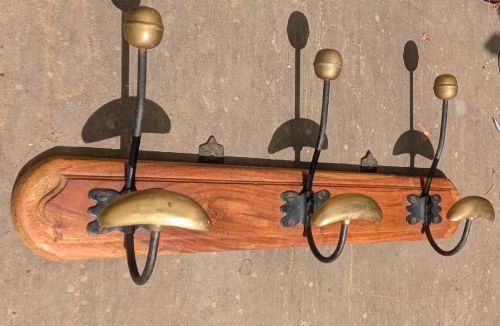
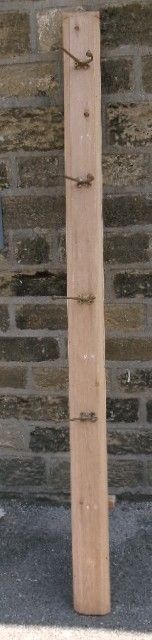
These vintage coat hooks combine practical hallway storage with period character, offering everything from brass-mounted oak boards to cast iron equestrian designs.
Vintage Coat Hooks
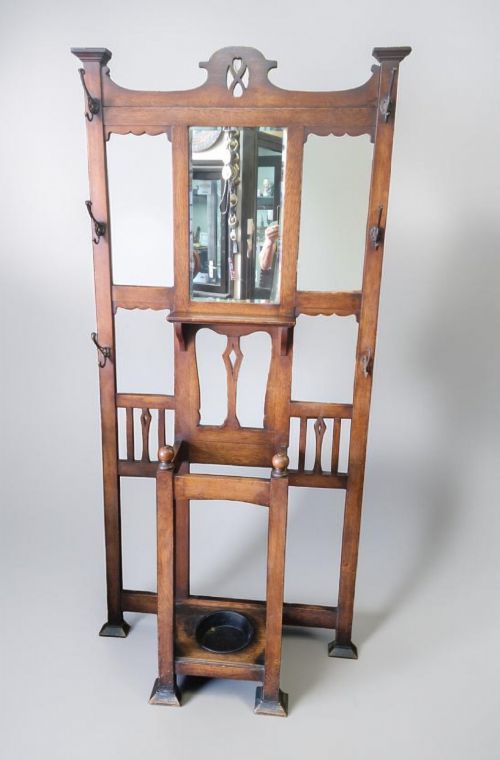
When you search for vintage coat hooks, you encounter a wide selection of hallway furniture and wall-mounted storage solutions. The pieces range from single sets of mounted hooks to substantial oak and mahogany hall stands incorporating mirrors and umbrella compartments.
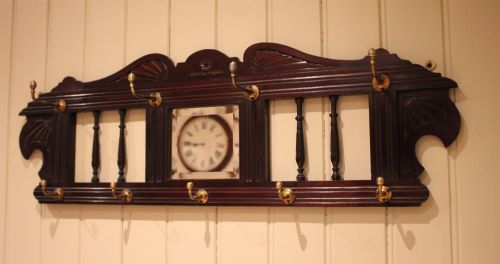
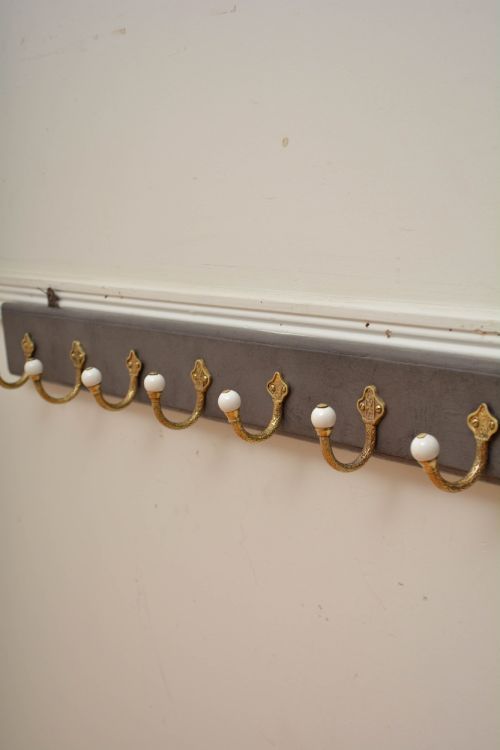
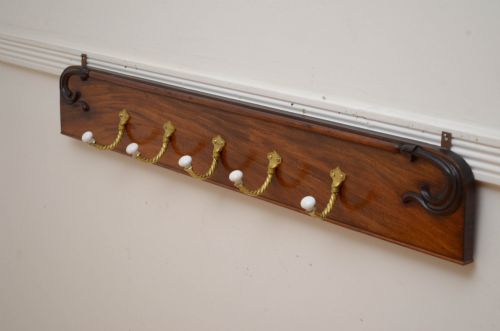
The options span the nineteenth and early twentieth centuries, drawing on Victorian, Edwardian, Art Deco and Arts and Crafts design movements. Wall-mounted racks with brass and ceramic fittings appear frequently alongside freestanding wooden coat stands.
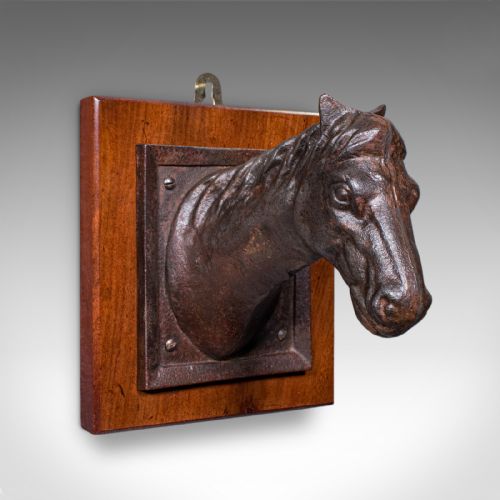
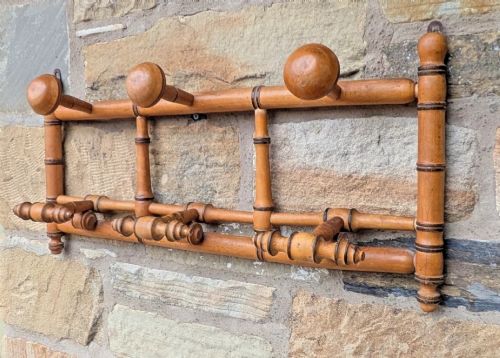
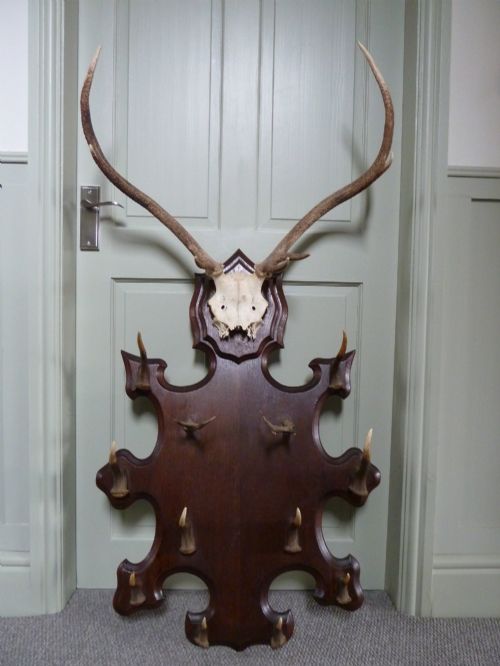
Origin and form vary according to period use, from British country house stags horn racks to French faux bamboo hangers and nickel-plated pieces. Buyers choose these items to bring authentic period materials and functional utility into an entrance hall or cloakroom.
Materials and construction
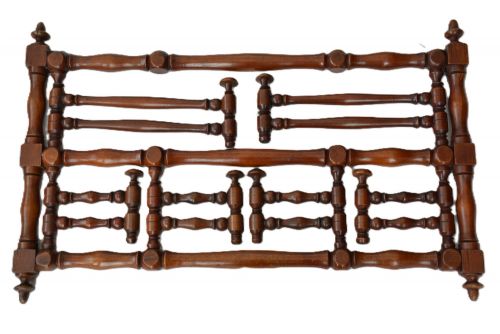
Makers utilised solid hardwoods including oak, mahogany, walnut, pine and ebonised wood to form the backing boards and structural frames. These timbers frequently show turned details, twisted rope carvings or faux bamboo shaping depending on the style.
Metalwork played a central role, with brass, cast iron, wrought iron, bronze and chromed or nickel-plated finishes used for the hooks, brackets and mounting plates. Ceramic inserts, glass elements and occasionally stags horn provided contrasting textures and visual interest on the functional points.
Listings feature solid oak, mahogany, and walnut timbers alongside brass, iron, and ceramic components spanning the Victorian to Art Deco periods.
Assessing quality and craftsmanship
Quality reveals itself in the weight and casting of the metal hooks and the selection of the timber backing board. Heavier brass elements with detailed moulding stand apart from lighter stamped alternatives.
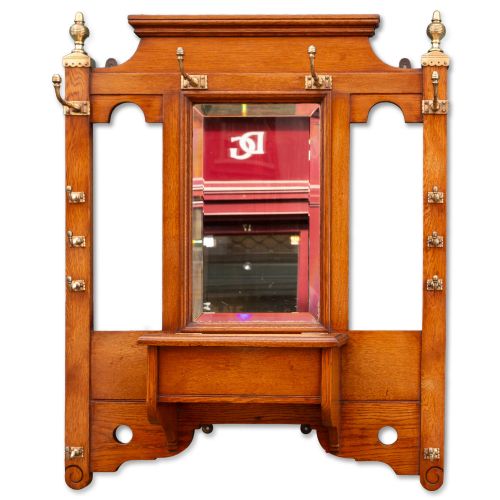
Construction methods also separate standard pieces from finer examples, such as solid oak boards with integrated bevelled mirrors or robust mortise and tenon joints on hall stands. The integration of original ceramic mounts and secure fixing plates indicates superior workshop production.
Jas. Shoolbred
The Vintage Coat Hooks Glossary
- Hall stand
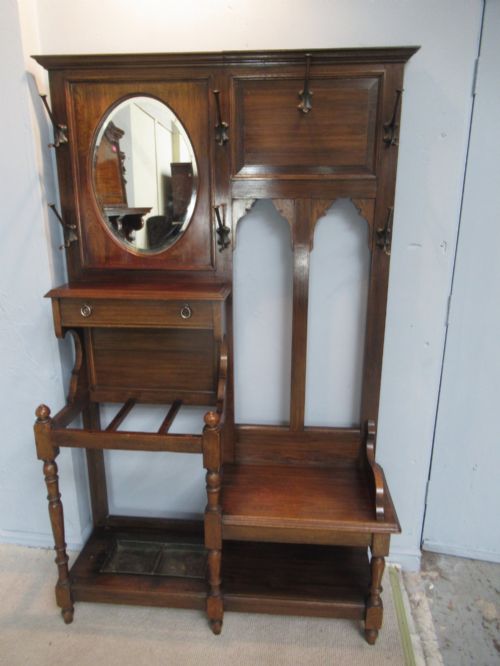
- A freestanding piece of hallway furniture combining coat hooks, a mirror, umbrella stands and often a glove drawer. It served as a central reception piece in traditional homes.
- Ebonised
- Timber treated with a finish to imitate ebony wood. This dark, polished surface was particularly popular during the Victorian period for contrast against brass hooks.
- Art Deco
- A design style emerging in the early twentieth century characterised by streamlined geometric forms, metal plating and stylized motifs. It appears in nickel-plated and wrought iron coat racks.
- Arts and Crafts
- A movement prioritising traditional craftsmanship and simple forms using solid woods like oak and walnut. Pieces from this tradition often emphasise natural timber grains.
Vintage Coat Hooks: Frequently Asked Questions
How do I install an antique coat rack?
Most wall-mounted racks use pre-drilled fixing holes or original mounting plates positioned along the wooden backboard. You should secure them directly into wall studs or use appropriate heavy-duty wall anchors to support the weight of heavy garments.
Ensure the fixings match the span of the original screw holes where possible to maintain the structural integrity of older timber boards.
What is the difference between a coat rack and a hall stand?
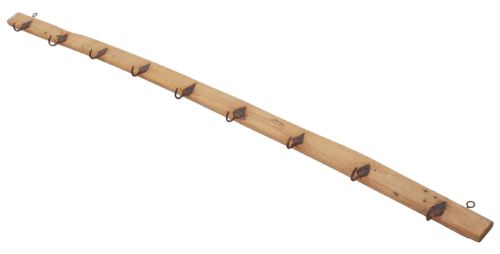
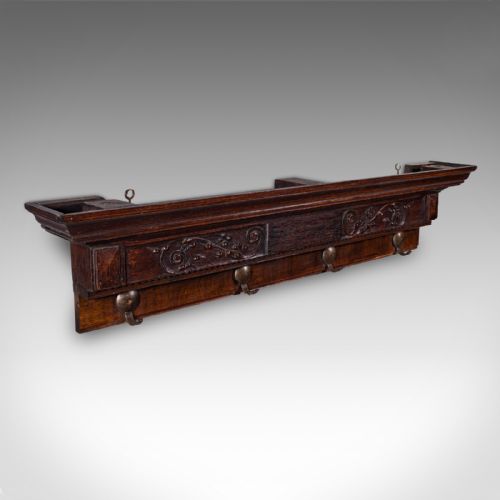
A coat rack is typically a horizontal wooden board fitted with hooks designed to mount directly onto a wall. They save floor space while offering straightforward hanging storage for daily outerwear.
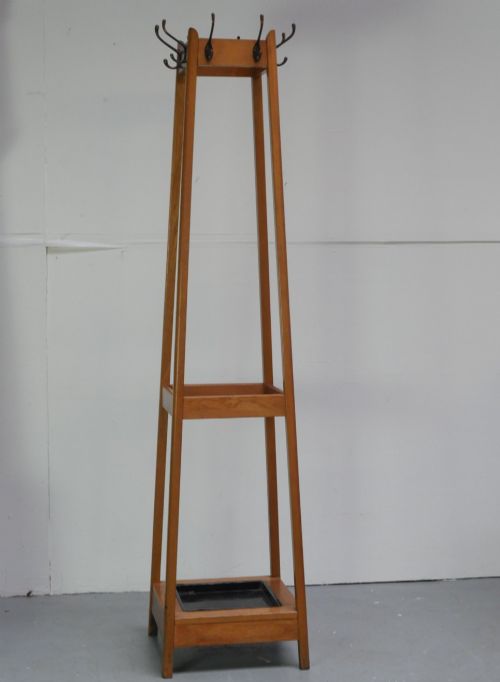
A hall stand is a larger, freestanding piece of furniture that usually incorporates a central mirror, umbrella wells, and multiple hanging tiers. They were designed for grander reception hallways to accommodate visiting guests.
How do I date a vintage coat hook?
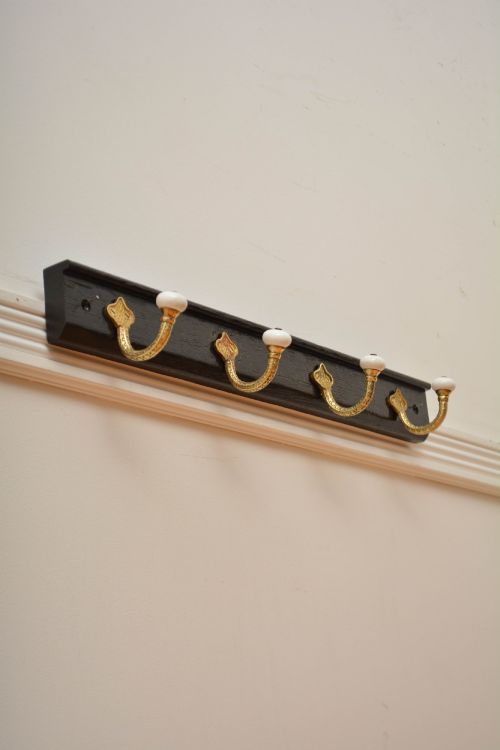
Dating relies on observing the combination of wood types, metal finishes, and fastening methods used in the construction. Ebonised oak with ceramic-tipped brass hooks often points to the Victorian era, while geometric metalwork and chromed finishes suggest the 1920s or 1930s.
Examining the screw types, backboard thickness, and any maker stamps or registration marks helps narrow down the manufacturing decade.
Are these pieces suitable for modern hallways?
Vintage coat hooks integrate well into contemporary interiors by adding texture, history, and reliable utility to entrance spaces. Their sturdy construction easily handles modern heavy coats, bags, and umbrellas.
Wall-mounted options work particularly well in compact apartments, while freestanding stands anchor larger entrance areas.