


Vintage Clock Set
A vintage clock set brings symmetry and utility to a mantelpiece, combining a central timepiece with matching side ornaments like candelabras or urns.
Vintage Clock Set
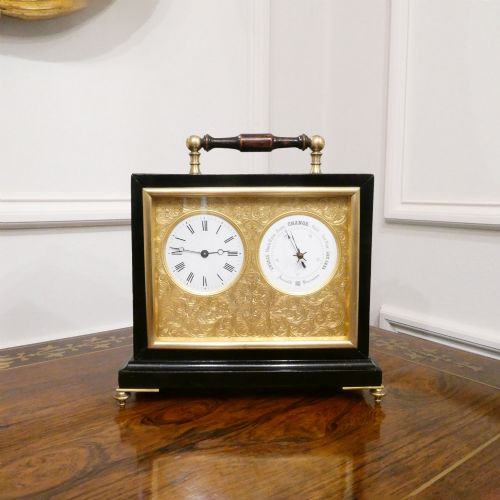
A vintage clock set comprises a main timekeeper accompanied by matching side pieces such as garnitures, barometers, or matching lamps. When searching for a vintage clock set, buyers encounter configurations ranging from elaborate Victorian marble portico designs to streamlined Art Deco pieces with animal sculptures. These arrangements traditionally decorated the principal reception rooms of homes, providing both precise timekeeping and balanced interior decoration.
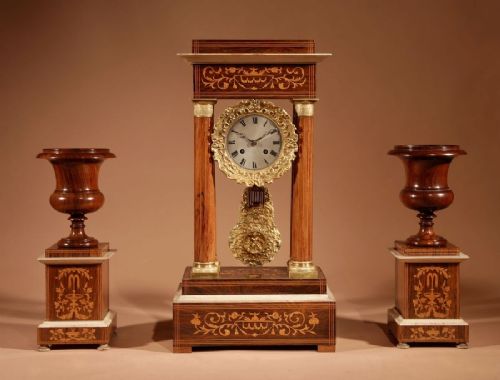
The materials and periods span the nineteenth and twentieth centuries, including Victorian marble, Edwardian silver, and 1930s onyx. French workshops feature prominently among these listings, alongside English pieces from the Edwardian era. Buyers frequently find three-piece ensembles pairing a central mantel clock with twin urns or matching side garnitures.
How they were made
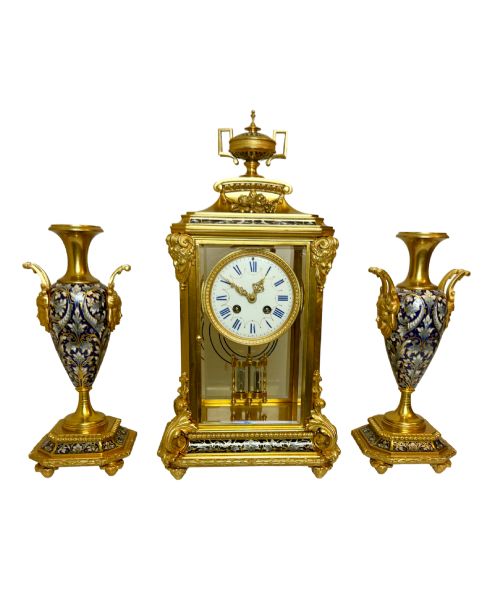
Casting methods shaped the metal components of these sets, utilising bronze, brass, or spelter for decorative mounts and sculptural figures. Ormolu and silver plating frequently finished these metal surfaces, adding metallic lustre alongside champlevé enamel detailing.
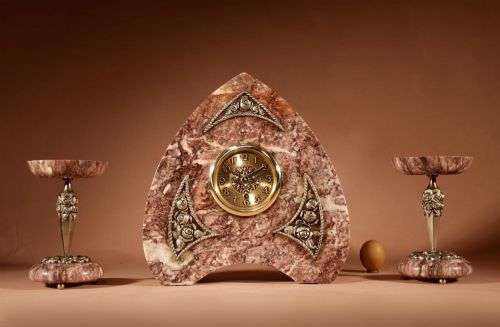
Stonemasonry and glasswork provided the architectural housing, employing white, pink, green, and breccia marble alongside onyx. Dials often featured delicate enamel paintwork protected beneath glass bezels, while movements were engineered to strike the hours over multi-day periods.
German Shepherds and elephants keep watch alongside the time.
What varies in quality
The refinement of the casting and carving dictates the standing of a piece, distinguishing mass-produced items from works by skilled modellers. Crisp chased details on gilt bronze or ormolu mounts and finely cut marble housing indicate superior craftsmanship.
Cohesion within the ensemble separates standard examples from exceptional ones. Sets where the side garnitures, barometer companions, or sculptural elements share identical material patination and design motifs represent the upper tier of production.
Michel Decoux
The Vintage Clock Set Glossary
- Garniture
- A set of matching ornamental vases or candelabras designed to sit alongside a central clock on a mantelpiece.
- Ormolu
- Gilded bronze, where a gold-mercury amalgam is applied to a bronze base, commonly found on French decorative pieces.
- Champlevé
- An enamelling technique where troughs are dug into a metal surface and filled with vitreous enamel before firing.
- Portico clock
- A mantel clock housed within a architectural frame supported by four or more columns.
- Spelter
- A zinc alloy frequently cast as a less expensive alternative to bronze for decorative figures.
Vintage Clock Set: Frequently Asked Questions
What is a clock garniture?
A clock garniture is a matched suite consisting of a central clock flanked by two complementary ornamental objects, such as urns or candelabras. These pieces were designed to create a balanced, symmetrical arrangement on a mantelpiece or sideboard.
The matching side pieces share the materials, styles, and decorative motifs of the main timepiece, often incorporating marble, bronze, or enamel details that unify the entire decorative display.
How do I identify Art Deco clocks?
Art Deco clocks are characterised by geometric forms, stylised animal sculptures, and materials such as onyx, chrome, and coloured marble. These pieces emerged around the 1920s and 1930s, replacing ornate nineteenth-century curves with streamlined silhouettes.
You will often find grey breccia marble paired with silver-plated bronze or figures of dogs and elephants integrated directly into the clock housing or accompanying garnitures.
Where were most antique clock sets made?
A large proportion of antique clock sets originate from French workshops, particularly from the nineteenth and early twentieth centuries. These French pieces often combine marble, ormolu, and champlevé enamel.
English makers also produced notable weather stations, desk compendiums, and architectural wooden cased clocks during the Edwardian period and the late nineteenth century.
What pieces come in a clock set?
Clock sets typically include a primary mantel clock alongside a pair of matching side objects, which might be candelabras, urns, or smaller garniture vases. Some sets substitute barometers, thermometers, or matched desk lamps into the ensemble.
These combined instruments allowed Victorian and Edwardian households to monitor atmospheric conditions alongside the time of day using matching desktop or mantel accessories.