



Vintage Circular Mirror Desk
These vintage circular mirror desk options combine practical surfaces with striking reflective glass, offering a distinctive focal point for any room.
Vintage Circular Mirror Desk
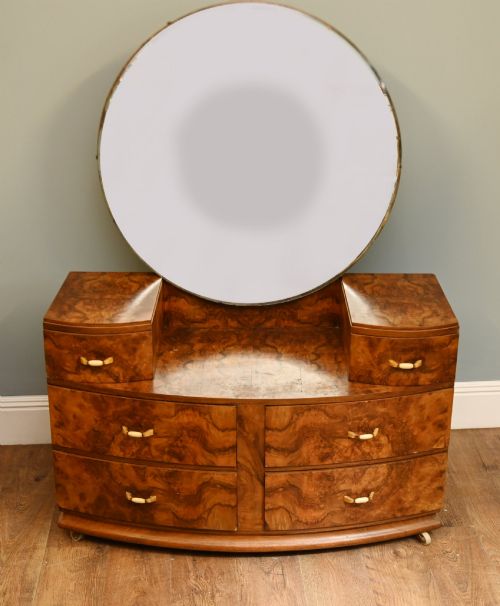
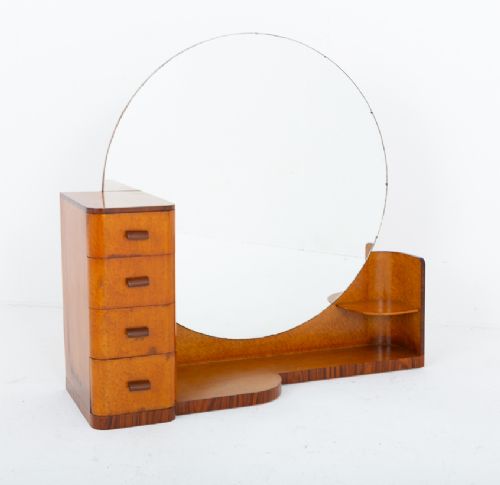
A vintage circular mirror desk brings together surface space and prominent reflective elements, drawing directly from dressing tables and vanity pieces seen in the evidence. These items primarily date from the Art Deco period of nineteen thirty, alongside earlier Victorian examples.
Most examples you encounter on this page take the form of dressing tables or vanity tables incorporating circular mirrors. The materials span walnut, burr walnut, birds eye maple, and glass, reflecting the distinct aesthetic choices of nineteen thirty.
How they were made
Craftsmen utilised figured and burr walnut, alongside birds eye maple, to construct the bodies of these tables. These woods provide strong natural grain patterns that define the surface appearance.
Mirror glass, chrome, brass, and occasional bakelite details were integrated into the construction. These materials deliver the metallic and reflective accents characteristic of the period.
Vintage Circular Mirror Desk Retail Price Guide 2026
Typical asking prices for vintage circular mirror desk among the pieces listed under this phrase on Sellingantiques today, from the lower quarter to the upper quarter. They describe what is for sale here now, not the wider market.
The listings on this page span two main periods: nineteen thirty for Art Deco furniture and clocks, and eighteen fifty for scientific optical pieces.
What varies in quality
The choice of timber veneer fundamentally separates standard examples from superior ones. Richly figured burr walnut and birds eye maple elevate the visual weight of a piece compared to plain walnut.
Integration of the mirror glass and metal fittings dictates the overall refinement. Well-executed combinations of brass, chrome, and coloured mirror glass demonstrate superior design execution.
Thomas Rubergall·Smiths Clock Company·Betty Joel
The Vintage Circular Mirror Desk Glossary
- Burr walnut
- A prized timber harvested from walnut tree growths, producing swirling and intricate grain patterns. It is frequently utilised on high-end Art Deco furniture surfaces.
- Art Deco
- A design style spanning the nineteen twenties and nineteen thirties characterised by sleek geometric forms and modern materials. This period accounts for the majority of the dressing tables listed.
- Birds eye maple
- A figured timber showing small swirling eyes disrupting the smooth grain. This wood creates a heavily patterned and decorative surface on period furniture.
- Bakelite
- An early form of synthetic plastic developed in the early twentieth century. It appears in vintage items for dials, trim, and electrical components.
Vintage Circular Mirror Desk: Frequently Asked Questions
What periods do these pieces come from?
The listings span the Art Deco era around nineteen thirty, alongside earlier pieces from the eighteen fifties. Art Deco examples dominate the selection.
Design characteristics shift noticeably between these eras, moving from nineteenth-century scientific optical work to twentieth-century domestic dressing tables.
What materials are commonly used?
Construction relies heavily on walnut, burr walnut, and birds eye maple for the wooden frames. Mirror glass, brass, and chrome provide the reflective and metallic details.
Bakelite also appears in smaller components like clocks, adding distinct early plastic textures to the mix of materials.
How do dressing tables and vanity tables differ?
Both terms describe functional furniture designed for personal grooming, often incorporating integrated mirrors and surface drawers. In these listings, they share similar Art Deco forms.
The inclusion of circular mirrors unites these furniture pieces under the broader search category.
How do I identify Art Deco pieces?
Art Deco items from nineteen thirty display streamlined silhouettes, geometric lines, and modern industrial materials like chrome and coloured mirror glass. The focus rests on bold visual impact.
Timber choices like burr walnut and birds eye maple further define the luxurious surface finishes typical of this design movement.