




Vintage Chrome Lamp
A vintage chrome lamp brings industrial polish and geometric edge to a room, catching the light in a way painted metal cannot.
Vintage Chrome Lamp
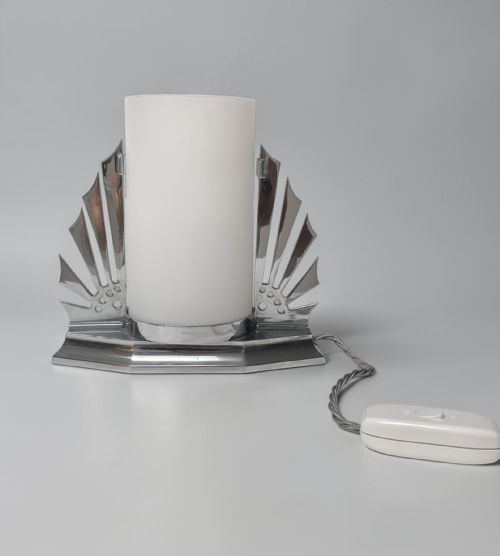
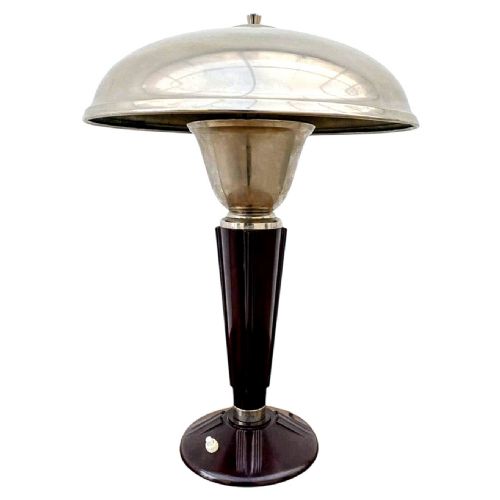
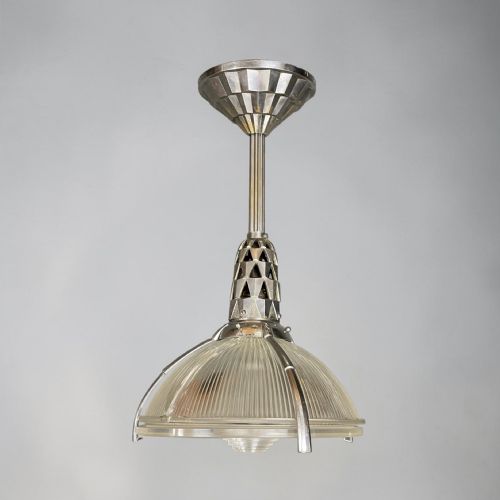
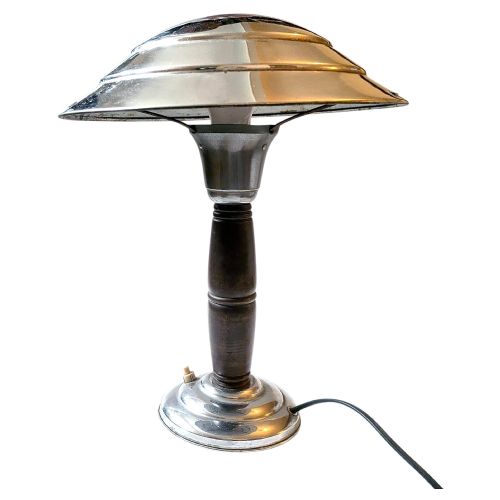
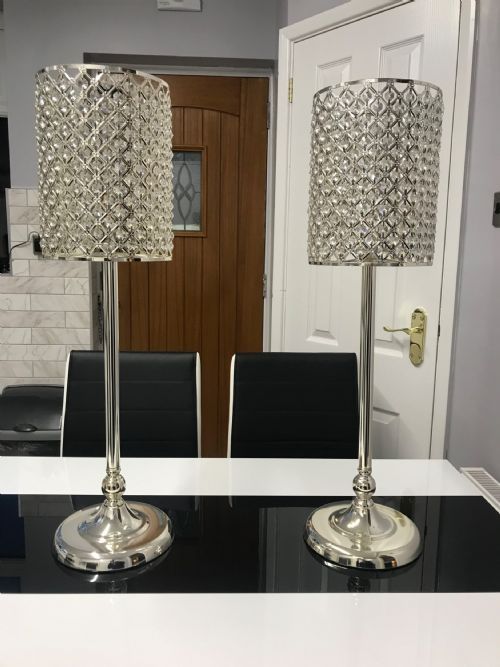
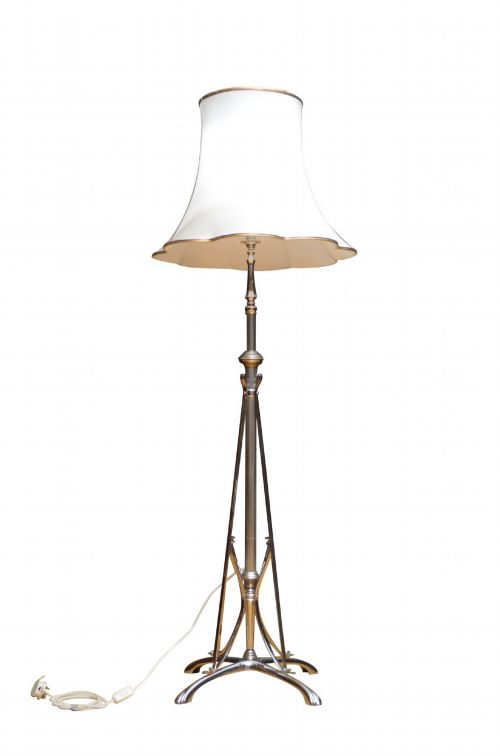
When you search for a vintage chrome lamp, you encounter lighting fixtures originating primarily from the Art Deco and Machine Age periods, alongside mid-century and Edwardian examples. The selection spans table lamps, desk lamps, floor standards, wall lights, and pendant fixtures designed to illuminate workspaces and living areas.
You are most likely to meet pieces pairing polished chrome with frosted or clear glass, often shaped into tubular sconces, uplighters, and adjustable desk lights. These domestic objects reflect the modernist appetite for clean metallic surfaces and functional illumination during the early decades of the twentieth century.
How they were made
Makers built these lamps using structural bases of steel, brass, or white metal, finished with an electroplated layer of bright chrome to resist tarnish and catch ambient light. Diffusers and shades utilised moulded frosted glass, opaline glass, or cut crystal, frequently secured with metal galleries.
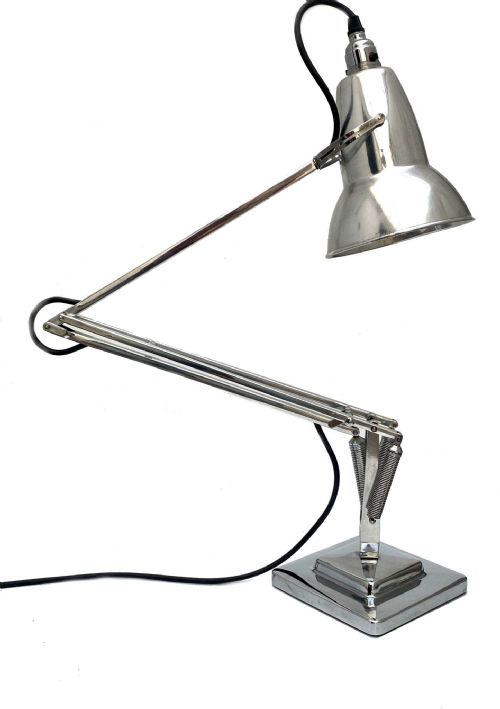
Articulated desk lamps and floor standards incorporated mechanical joints, adjustable arms, and heavy cast bases to maintain balance during daily use. Specialised pieces combined the metallic framework with contrasting elements such as bakelite switches, parchment leather, or mirrored glass.
Vintage Chrome Lamp Retail Price Guide 2026
Typical asking prices for vintage chrome lamp among the pieces listed under this phrase on Sellingantiques today, from the lower quarter to the upper quarter. They describe what is for sale here now, not the wider market.
Table lamps, wall lights, desk lamps, and pendant lights represent the most frequent object types found in this category.
What varies in quality
The distinction between standard commercial output and superior design lies in the weight of the metal gauge and the precision of the mechanical joints. Higher-tier pieces exhibit substantial casting, heavy weighted bases, and robust plating that retains its reflective depth across decades of handling.
Design sophistication also separates the range, with workshop-attributed models showing considered proportions in their glass shades and balanced geometry in their frames. Simpler production pieces rely on basic press-formed components and standard electrical fittings without the sculptural detail found in marked examples.
Eileen Grey·Émile-Jacques Ruhlmann·Herbert Terry·Pirouette
The Vintage Chrome Lamp Glossary
- Chrome
- An electroplated coating of chromium applied over a base metal such as steel or brass to provide a bright, corrosion-resistant finish. This process became central to modernist manufacturing.
- Bakelite
- An early form of synthetic phenol formaldehyde resin used for electrical components, switches, and decorative accents on mid-century and Art Deco lighting. It offers a dense, durable alternative to natural materials.
- Torchiere
- A tall floor lamp designed to direct light upwards toward the ceiling, creating ambient illumination. These fixtures frequently utilise frosted or moulded glass bowls.
- Sconce
- A wall-mounted lighting fixture attached via a bracket, often housing tubular or clam shell glass shades. They provide directional or atmospheric illumination along corridors and living spaces.
- Opaline glass
- A milky, semi-translucent white glass used in pendant lights and shades to soften and diffuse bulb glare. The material gained popularity for its clean, uniform glow.
Vintage Chrome Lamp: Frequently Asked Questions
How do I wire an old lamp?
Rewiring typically involves replacing perished textile or rubber cords with modern insulated flex that meets current safety standards. Many collectors retain original lampholders where possible while updating the internal wiring.
Qualified professionals should handle the electrical restoration to ensure proper earthing, particularly on metal-bodied fixtures that lack double insulation.
What is a Machine Age lamp?
Machine Age lighting draws aesthetic inspiration from industrial technology, locomotives, and urban infrastructure during the interwar years. These pieces emphasise aerodynamic lines, unadorned metal surfaces, and functional articulation.
Common forms include adjustable desk lamps with exposed fasteners and heavy steel or chrome components designed for utilitarian workspaces.
How do I clean chrome?
Maintenance requires gentle cleaning with a soft microfiber cloth to remove dust and fingerprints without scratching the electroplated surface. Avoid abrasive scouring pads or harsh chemical cleaners that can strip the thin metallic layer.
Specialist non-abrasive metal polishes help maintain the reflective shine on pieces that show minor surface dullness from age.
Where should I place a torchiere?
A torchiere functions best in corners or beside seating areas where upward illumination can bounce off white ceilings to light a room softly. Their height allows them to anchor empty wall space without crowding floor areas.
Positioning them away from heavy foot traffic protects the tall standard and any delicate glass shades from accidental knocks.