



Adjustable Desk Light
An adjustable desk light puts the beam precisely where you need it, bringing brass, chrome and toleware together with practical articulation.
Adjustable Desk Light
When you search for an adjustable desk light, you encounter metal and brass lamps designed for focused illumination across several centuries. The selection spans the nineteenth century through the art deco era, incorporating Edwardian designs, French industrial items, and arts and crafts pieces.
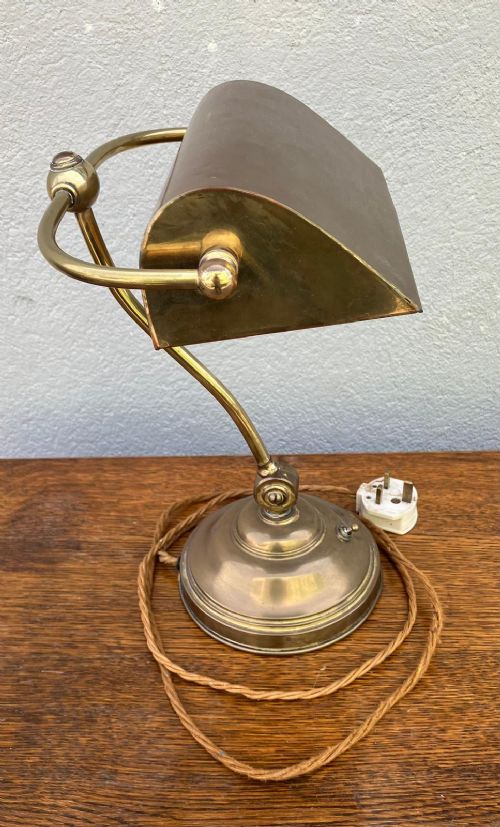
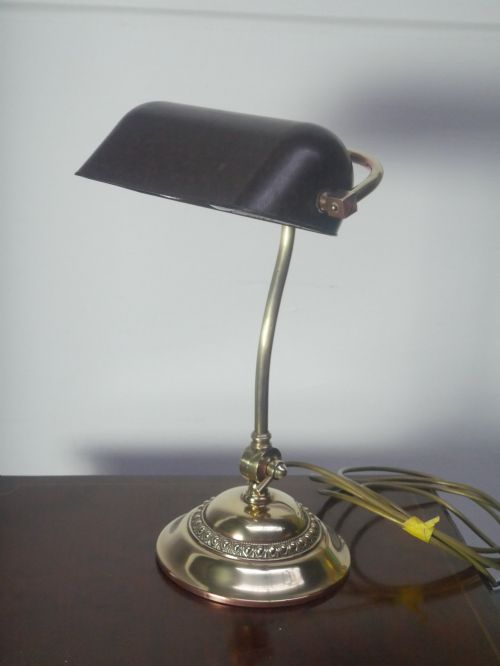
The most common forms on this page include bankers desk lamps, bouillotte lamps with tole shades, swan neck lights, and articulated chrome or brass desk lamps. Makers ranged from standard workshops to named designers, utilising materials built for daily study and work.
How they were made
Makers built these pieces primarily from brass, chrome, and steel, often combining cast iron for weighted bases with spun or sheet brass for shades. Toleware and painted metal provided coloured conical or cylindrical shades, while specialised scientific and study lights incorporated glass elements.
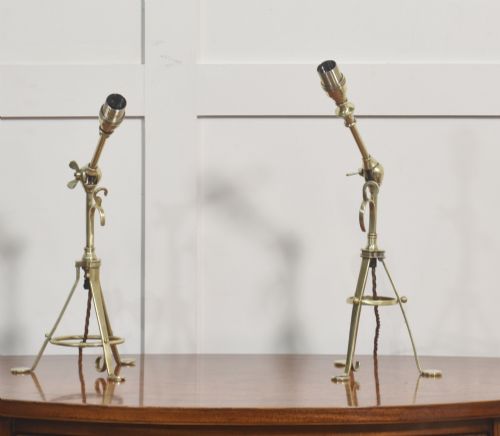
Articulation relied on mechanical joints, gimbles, telescopic stems, and flexible arms that allowed the user to alter the height and angle of the beam. Surface finishes ranged from polished gilt and silver plating to painted green and gold toleware.
Listings feature 19th Century, Edwardian, and Art Deco periods, employing brass, chrome, toleware, and cast iron across desk lamps and bouillotte forms.
What varies in quality
Quality rests in the precision of the mechanical joints and the weight of the metal used in the base and stem. Superior examples maintain smooth articulation without loose pivots, utilising heavy cast brass or solid chrome components.
The distinction between standard commercial output and finer pieces appears in the finish of the metalwork and the originality of components like tole shades, gimble rings, and screw keys.
W.A.S. Benson·Herbert Terry·Wild and Wessel·M Pillischer of London·Pirouette·Tiffany Studios NYC
The Adjustable Desk Light Glossary
- Bouillotte lamp
- A traditional adjustable desk lamp featuring a central column, a candle or bulb cluster, and a vertically sliding tole shade. This form originated for use during the French card game of the same name.
- Toleware
- Painted or lacquered sheet metal items produced in France and England, frequently utilised for lamp shades in green, red, or black with gilt decoration.
- Swan neck lamp
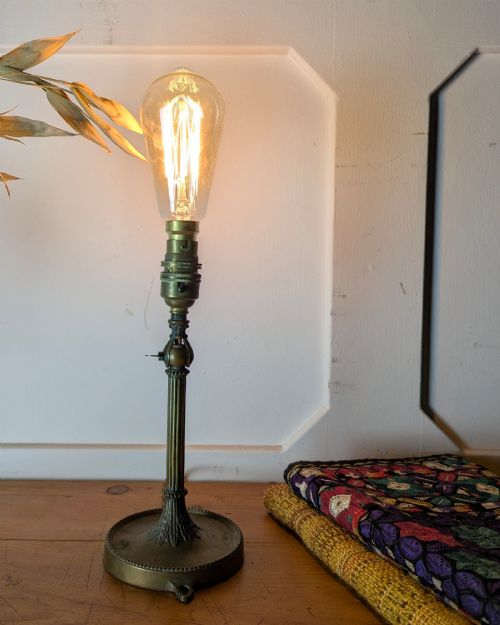
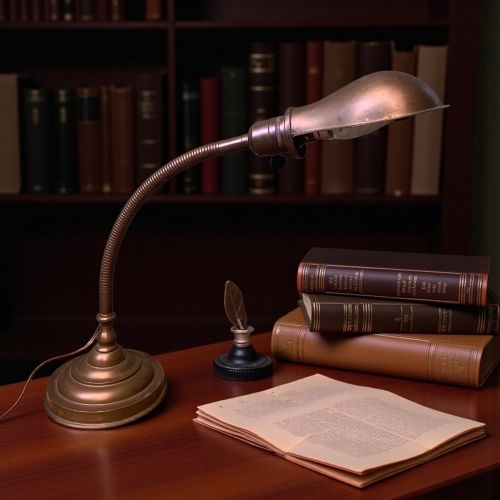
- A lighting fixture with a curved, tubular brass or metal arm resembling a bird's neck, permitting direct adjustment of the shade position.
- Gimble lamp
- A lighting device mounted on pivoting rings that keeps the lamp level regardless of the motion of a ship or train.
- Anglepoise
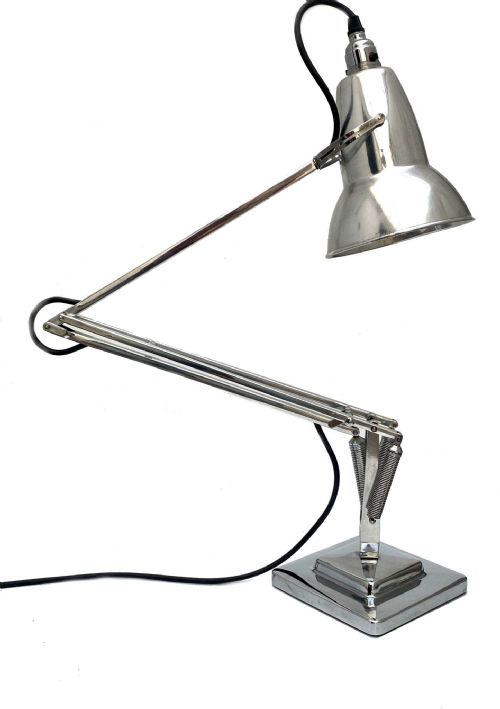
- An articulated spring-balanced mechanical desk lamp design that holds its position at any angle through tension springs.
Adjustable Desk Light: Frequently Asked Questions
What is an adjustable desk light?
An adjustable desk light is a functional lamp featuring movable joints, telescopic stems, or flexible arms designed to direct illumination onto a specific workspace.
These pieces utilise materials like brass, chrome, and painted toleware, emerging from periods spanning the Victorian era through Art Deco.
How do I date an antique desk lamp?
Dating relies on stylistic markers such as Art Deco geometric lines, Arts and Crafts hand-worked brass, or Edwardian swan neck forms. Manufacturing techniques, including cast construction methods and wiring styles, also indicate the period.
Makers' marks, stamps, and patent details stamped into the metal provide precise chronological reference points.
Were bouillotte lamps used for writing?
Bouillotte lamps served primarily as card table lighting in France before becoming standard accessories for desks and writing tables. The sliding metal shade allowed readers to lower the light as candles burned down.
Their adjustable height made them practical for focused illumination in studies and libraries.
How do I care for antique brass and chrome?
Preserving metal surfaces requires gentle dusting with a soft cloth and avoiding abrasive chemical cleaners that strip patination. Brass benefits from occasional neutral wax application to protect the finish from tarnishing.
Chrome surfaces simply require dry wiping to maintain their polished industrial appearance.