


Brass Gooseneck Lamp
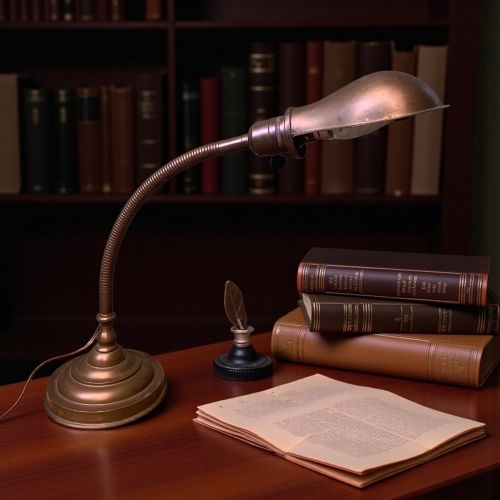
A brass gooseneck lamp provides targeted illumination with industrial grace, uniting functional metalwork with period charm.
What a brass gooseneck lamp is
A brass gooseneck lamp is an adjustable task light designed for focused reading and desk work. The pieces on this page span the Edwardian era, 1900, and the 1920 to 1930 decades, functioning primarily as desk lamps.
The most common form met here is the adjustable reading lamp featuring a flexible arm and a weighted or stable base. Makers of these pieces utilised brass, bronze, and cast iron to build robust desk furniture that accommodated shifting illumination needs.
Examples on this page include student reading lamps and flexible desk models, occasionally incorporating contrasting elements like cranberry glass shades. These desk lamps reflect the utilitarian demands of early twentieth-century workspaces paired with domestic elegance.
How they were made
Construction relies heavily on brass and bronze, often paired with cast iron bases to provide stability for the movable arm. Metal components are shaped and jointed to allow the flexible positioning characteristic of the form.
Retail Price Guide 2026
Typical UK retail prices for brass gooseneck lamp, calculated from the Sellingantiques database of over a million retail prices indexed since 2003. This retail price guide relies exclusively on Sellingantiques data; no external sources or auction records are used, so the figures do not describe the wider market.
A good gooseneck lamp bends to your every whim, stubbornly holding its pose like a well-trained metal serpent.
What varies in quality
Quality across these desk lamps rests in the engineering of the adjustable arm and the substance of the metalwork. Heavier gauge brass and solid cast iron bases separate substantial pieces from lighter, less resilient alternatives.
The integration of original components, such as specialised glass shades or fabric flex, elevates the character of an individual lamp. Refined finishing on the bronze and brass surfaces distinguishes standard utility pieces from more decorative examples.
The Brass Gooseneck Lamp Glossary
- Gooseneck
- A flexible metal tubing arm that bends and holds position to direct light where required. This mechanism defines the primary utility of the lamp.
- Cranberry Glass
- A rich pinkish-red glass produced by adding gold chloride to the molten batch. It appears on period lamp shades to cast a warm glow.
- Fabric Flex
- Traditional cloth-covered electrical cord used to wire period lighting. It offers an authentic visual texture compared to modern plastic insulation.
- Student Lamp
- A multi-arm or adjustable desk light originally designed for prolonged study sessions. These pieces prioritise focused illumination over ambient room lighting.
Frequently Asked Questions
What is a brass gooseneck lamp?
A brass gooseneck lamp is a flexible desk or reading light dating from the early twentieth century. It uses a bendable metal tube to direct illumination precisely where needed for tasks.
These pieces combine brass, bronze, and cast iron to create durable work lights. They reflect the functional requirements of studies and offices from the Edwardian period through the 1930s.
How do I use a vintage desk lamp?
Position the lamp on a desk, table, or reading surface where focused light is beneficial. Adjust the flexible neck to direct the beam away from direct view and onto reading material.
Ensure the electrical components, including the wiring and fabric flex, suit modern safety standards before plugging the lamp in. Many period pieces are updated with rewiring while retaining their original metalwork.
How do I date a brass reading lamp?
Dating relies on stylistic markers, materials, and construction techniques associated with periods like the Edwardian era or the 1920s. Details such as cast iron bases and cranberry glass shades point directly to early twentieth-century manufacturing.
Examining the type of metal finishing and the style of the flexible arm helps place the piece within a specific decade. Comparing the design to known student and desk lamp forms clarifies the timeline.
Are these lamps adjustable?
Yes, the defining feature of these lamps is the flexible arm that bends into various shapes. This adjustability allowed nineteenth and twentieth-century writers and readers to move the light source without shifting the heavy base.
The flexibility comes from wound metal tubing that holds its set angle during use. This mechanism remains the central functional attribute across the available desk models.