





Vintage Chocolate Display Case
A vintage chocolate display case brings the authentic charm of the Edwardian and Victorian sweet shop straight onto a modern countertop.
Vintage Chocolate Display Case
When you search for a vintage chocolate display case, you are looking at glazed shopfitting cabinets and countertop display units originally used by confectioners. These pieces originate from the Victorian and Edwardian eras through to the Art Deco period of the 1920s and 1930s.
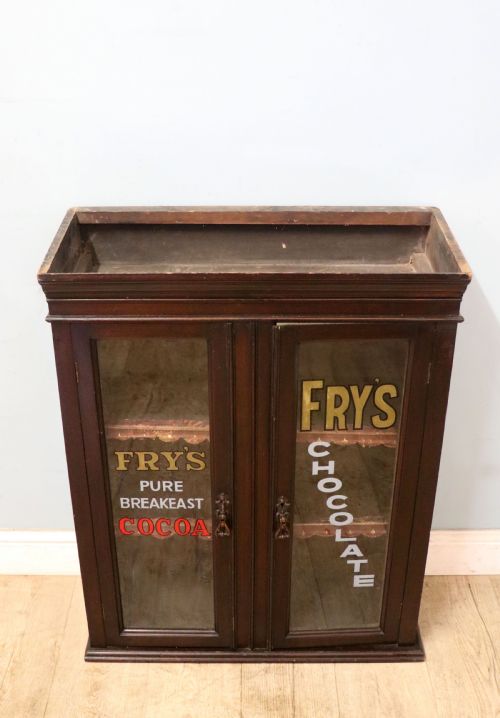
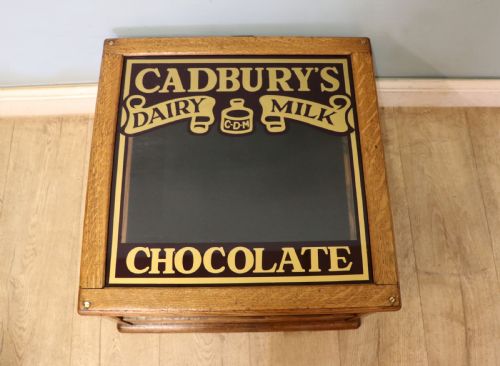
The versions you are most likely to meet on this page include mahogany, oak, and hardwood framed cabinets designed for commercial retail. Many feature hand sign-written advertising for confectionery makers such as Fry's, Cadbury's, Rowntree's, and Terry's of York.
These items primarily function as tabletop or counter top display cabinets with glass panels to showcase sweets and chocolates. They survive as both original commercial shopfittings and later sign-written examples.
How vintage chocolate display cases were made
These cabinets were constructed using timber frames of mahogany, oak, walnut, and other hardwoods to withstand daily retail use. Glazed panels allowed customers to view the confectionery inside while keeping goods protected on the shop counter.
Metal hardware such as brass and nickel-plated metal formed hinges, latches, and framing details. Decorative elements occasionally incorporated gold leaf alongside hand-painted sign-writing for chocolate brands.
Materials recorded across the inventory include glass, mahogany, brass, gold leaf, oak, nickel-plated metal, mirror, and general metal.
What varies in quality
Quality in these shop display cabinets rests upon the choice of timber and the crispness of the original construction. Hardwood frames of solid mahogany or oak sit at a different level of craftsmanship compared to simpler utility framing.
The character of the glass and the execution of any sign-writing heavily influence the appeal of each piece. Original commercial lettering differs from later sign-written additions, changing the historical profile of the cabinet.
Fry’s Chocolate·Cadbury’s·Rowntree’s Chocolates·Terry’s of York
The Vintage Chocolate Display Case Glossary
- Countertop display cabinet
- A glazed box or showcase designed to sit upon a shop counter for customer viewing. These pieces usually feature hinged doors at the back for the shopkeeper.
- Shopfitting
- The trade and fixtures involved in outfitting the interior of a retail shop. Cabinets from this category were built specifically for commercial merchandising.
- Sign-writing
- The traditional craft of hand-painting lettering and commercial graphics onto surfaces. In these listings, it refers to the brand names applied to the glass or timber.
- Art Deco
- A design style popular in the 1920s and 1930s characterised by sleek geometric forms. This style appears in select sweet shop cabinets from the later period of production.
Vintage Chocolate Display Case: Frequently Asked Questions
Where were these cabinets used?
These glazed display units stood upon the counters of late nineteenth and early twentieth century confectioners and sweet shops. Shopkeepers utilised them to tempt customers with chocolates while keeping stock clean.
Today, collectors place similar glass cabinets in domestic kitchens, living rooms, and retail spaces to display small collections.
Are the advertisements original?
Some cabinets preserve their original commercial lettering from the Victorian, Edwardian, or Art Deco periods. Others feature later hand sign-written advertising applied to period frames.
Examining the relationship between the paint surface and the timber helps determine the history of the sign-writing.
What woods were used?
Cabinet makers built these retail fixtures from sturdy timbers capable of enduring heavy shop use. Mahogany, oak, walnut, and various hardwoods form the primary structures.
Glass panels and metal fittings such as brass or nickel-plated metal complete the construction.
How do I date a cabinet?
Dating relies upon the overall style, construction methods, and materials present in the framework. Pieces span from heavy Victorian walnut designs to streamlined Art Deco models from the 1930s.
Associated brand names and Edwardian commercial styling also provide clear chronological markers.