


Vintage Chinese Urn Stand
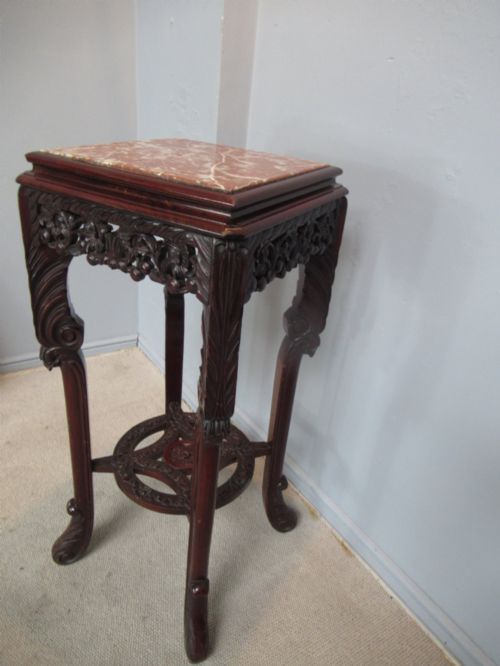
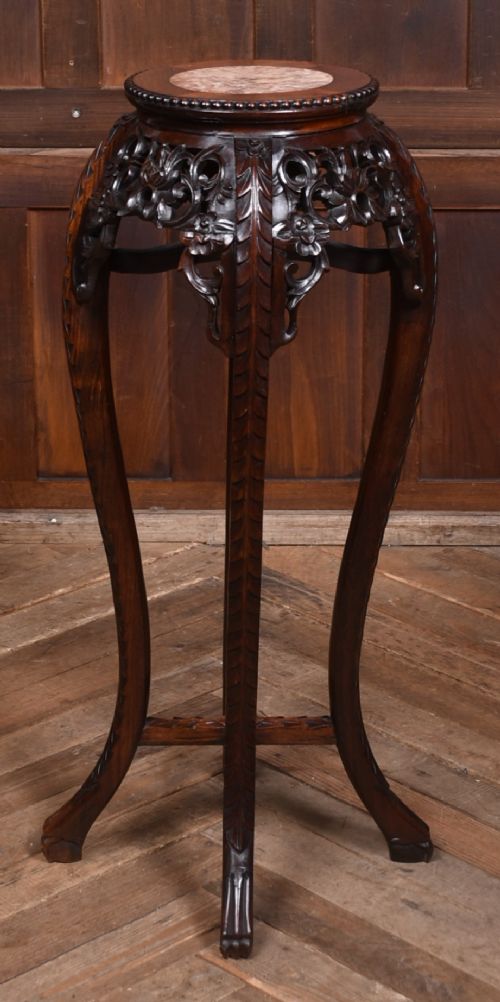
These vintage chinese urn stand pieces are sturdy small tables designed to elevate heavy vases and planters, bringing carved timber and inset stone into a room.
Vintage Chinese Urn Stand
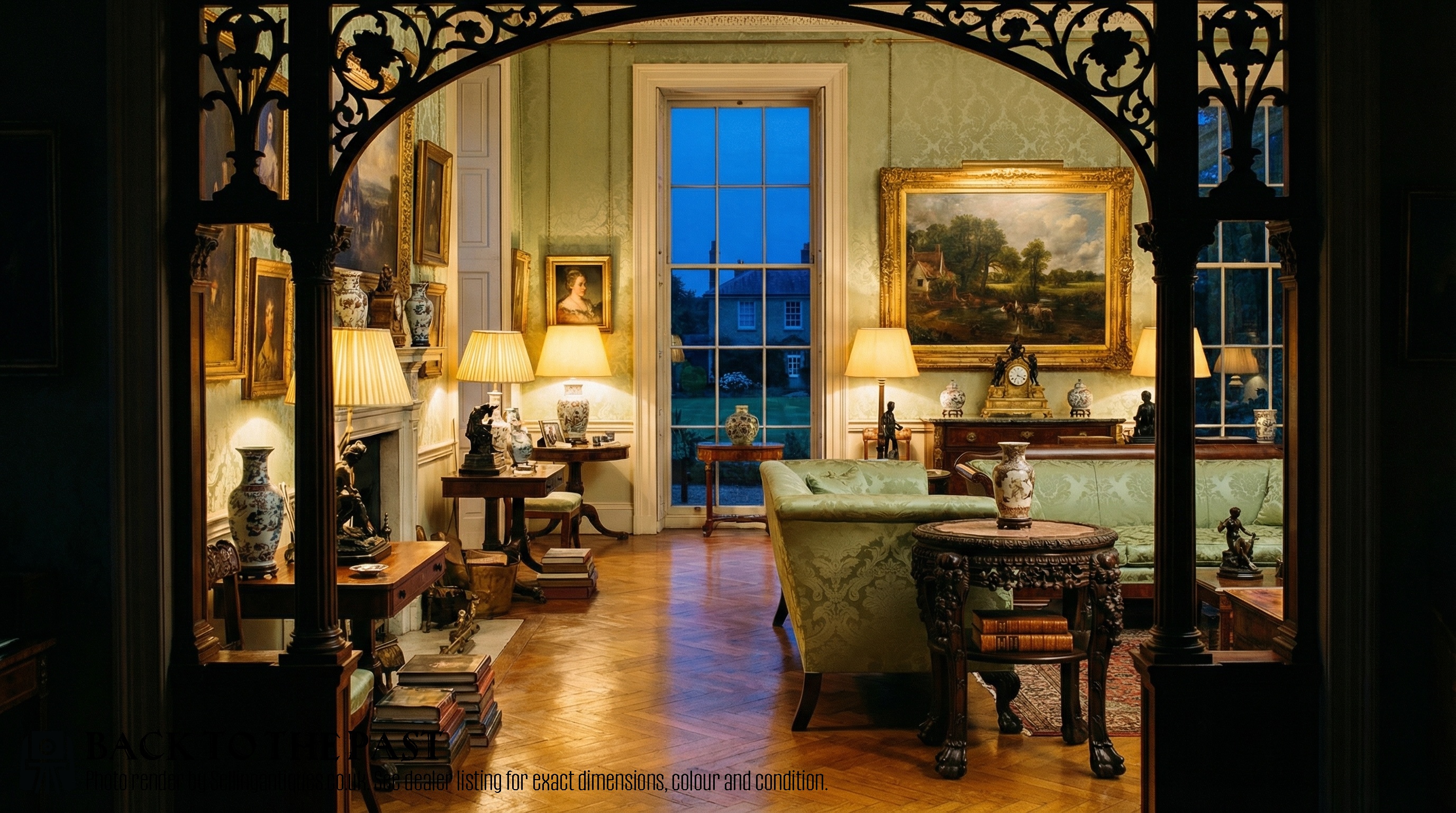
When you search for a vintage chinese urn stand, you are looking at small tables and pedestals designed to support heavy decorative vessels, jardinières, and lamps. These items serve multiple functions across domestic spaces as plant stands, occasional tables, side tables, and lamp tables. The selection ranges from compact lamp tables to taller pedestals intended for display.
The versions you are most likely to meet on this page date from the nineteenth century up through the nineteen-thirties, reflecting Victorian and early twentieth-century acquisition periods. Common forms include low coffee tables and tall plant stands alongside specific vase and urn supports. These pieces emerge from Chinese export, Qing Dynasty, and Republic Period traditions, alongside later Chinoiserie interpretations.
The physical design of a vintage chinese urn stand focuses on stability and display, often featuring a raised top surface suited for round vessels. Many examples use inset stone or marble panels to provide a stable, heat-resistant surface for heavy items. Their proportions remain compact to fit corners, window bays, and hallway landings without dominating the floor space.
What varies in quality
The quality of a vintage chinese urn stand is measured by the density and choice of hardwood, with heavier timbers like rosewood commanding greater respect than lighter woods. The depth and crispness of the hand-carved relief work on the aprons and legs also distinguish finer pieces from simpler workshops. Superior examples exhibit tight joinery that remains rigid without relying on modern metal fasteners.
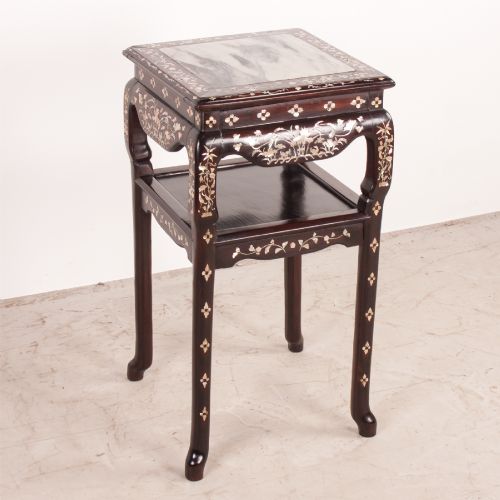
The integration of the marble or stone top into the wooden frame indicates the maker's standard of precision. A well-fitted stone sits flush with the surround and shows no excessive gaps or shims. Additionally, the condition and completeness of mother-of-pearl inlay or brass elements play a major role in the overall execution of the piece.
Listings feature periods from the nineteenth century through the nineteen-forties, spanning Victorian and Republic eras.
The Vintage Chinese Urn Stand Glossary
- Hardwood
- Dense timber such as rosewood or hongmu used for durable furniture frames. It provides the weight and strength necessary for supporting heavy stone inserts and large vessels.
- Jardiniere stand
- A tall or low table specifically built to hold a ceramic flower pot or plant bowl. These stands protect domestic flooring and furniture from dampness and soil.
- Rouge marble
- A reddish ornamental limestone often used for tabletop inserts in nineteenth-century furniture. Its varied iron oxide veining adds a rich contrast to dark timber frames.
- Mother of pearl inlay
- Iridescent inner shell material set into carved recesses within the wood surface. This technique creates delicate floral or geometric patterns that catch the light.
- Hongmu
- A traditional Chinese hardwood category translating to red wood. It encompasses several dense, dark timbers prized for their stability and fine grain.
Vintage Chinese Urn Stand: Frequently Asked Questions
What is a vintage chinese urn stand used for?
These stands were originally built to elevate large ceramic vessels, jardinières, and heavy bronze urns off the floor for better viewing.
Today, they function well as small side tables, lamp tables, or independent plant stands in domestic interiors.
How do I identify a nineteenth-century piece?
Nineteenth-century examples typically rely on dense hardwoods like rosewood and feature hand-carved joinery without modern fasteners.
Look for traditional construction methods and natural material wear that indicate age rather than later reproduction work.
How do I clean and maintain hardwood stands?
Dust the carved surfaces regularly with a soft, dry cloth to prevent dirt accumulation in the intricate relief work.
Avoid using harsh chemical polishes and keep the wood away from direct heat sources to prevent timber splitting.
Where should I place an urn stand at home?
These compact pieces fit easily into hallway corners, beside armchairs, or beneath windows as display surfaces.
Their sturdy construction allows them to support lamps, ceramics, and small indoor plants with complete stability.