
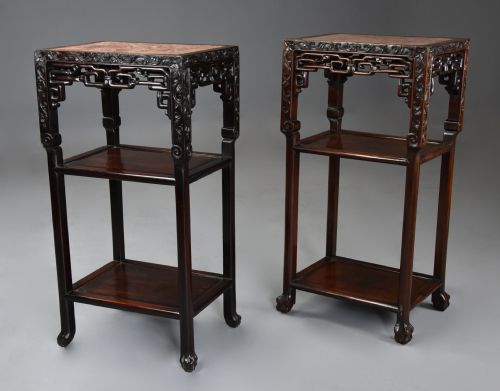


Carved Floral Urn Stand
A carved floral urn stand elevates a prized jardiniere or vase, bringing Victorian and Chinese craftsmanship into the room.
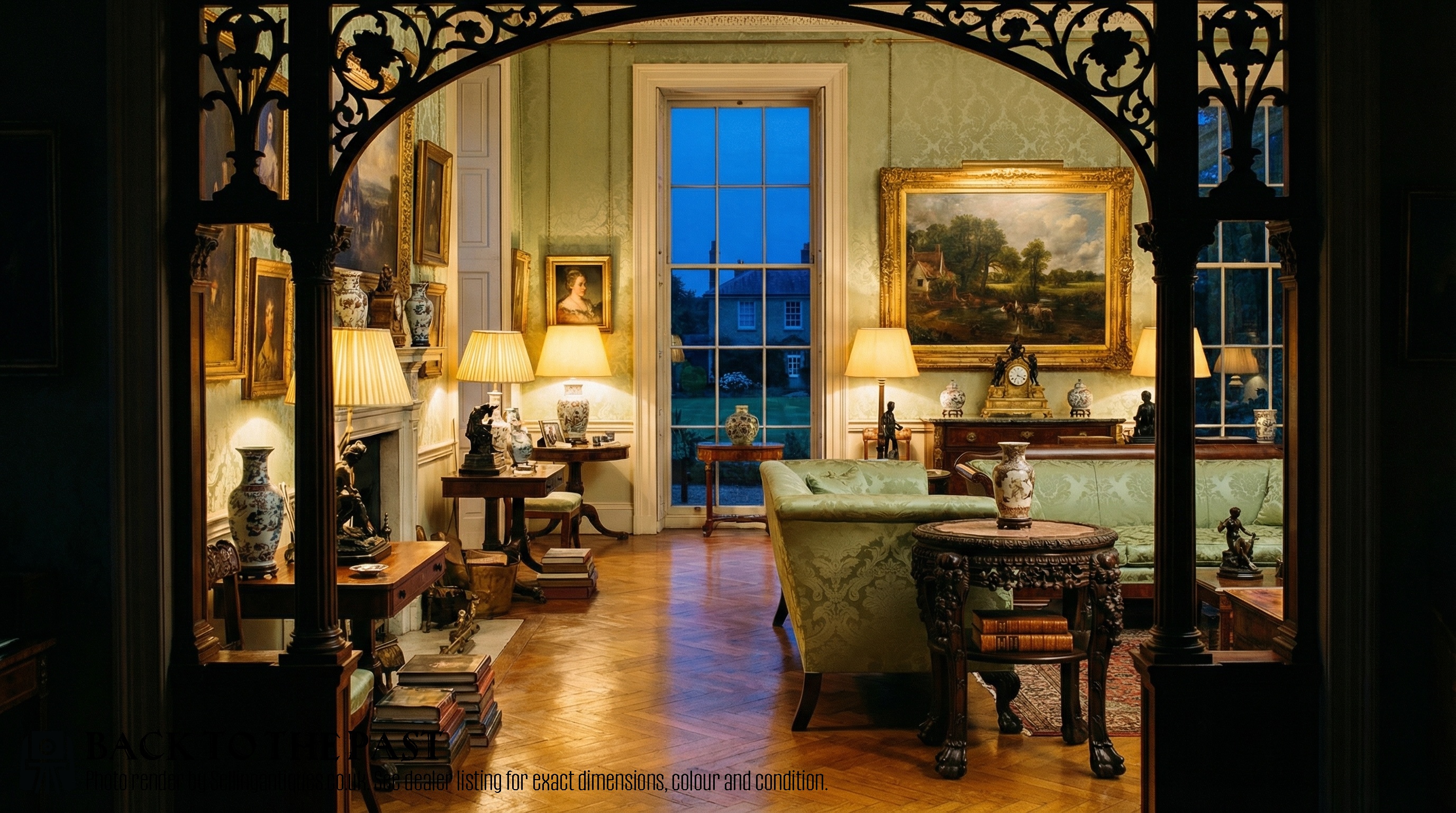
Carved Floral Urn Stand
When you search for a carved floral urn stand, you are looking at sturdy domestic furniture designed to elevate heavy vessels, vases and plants. The pieces found here span the nineteenth century and Victorian eras, alongside Chinese export and Qing dynasty works.
You are most likely to meet Chinese hardwood, rosewood, mahogany and ebonised timber examples featuring inset marble tops. These low tables and tall stands serve equally well as lamp tables, wine stands and occasional display pieces.
The forms range from matched pairs of freestanding pot stands to single vase stands and jardiniere holders. They combine British Victorian domestic utility with intricate Oriental carving traditions.
How they were made
The makers utilised dense hardwoods such as hongmu, rosewood and mahogany, often applying ebonised finishes to mimic heavier exotic timbers. These sturdy frames support heavy inset marble tops designed to resist moisture from plants and urns.
Joinery traditions draw on nineteenth-century British workshop methods and Chinese export techniques. Artisans carved floral and foliage motifs directly into the timber frames, pairing the woodwork with enamel and copper details on select jardiniere vessels.
Listings feature nineteenth-century and Victorian pieces alongside Chinese export and Qing dynasty works in rosewood, mahogany and marble.
What varies in quality
The depth and crispness of the floral carving separate standard utility tables from finer display pieces. Sharp, undercut foliage and balanced proportions indicate skilled handwork rather than mass production.
The quality of the inset marble top and the density of the hardwood influence the overall substance of the stand. Matched pairs and pieces retaining their original ebonised or polished finish hold greater visual harmony.
The Carved Floral Urn Stand Glossary
- Jardiniere
- An ornamental pot or stand for holding plants or flowers. These vessels often sit atop dedicated wooden pedestals.
- Hongmu
- A dense, dark Chinese hardwood prized for heavy furniture and display stands. It takes a fine polish and supports intricate carving.
- Ebonised
- Timber treated to resemble ebony, typically through staining or painting. This finish was common on nineteenth-century occasional furniture.
- Qing Dynasty
- The final imperial dynasty of China, spanning from sixteen forty-four to nineteen twelve. Pieces from this era often feature traditional floral motifs.
Carved Floral Urn Stand: Frequently Asked Questions
What is a carved floral urn stand used for?
These pieces were built to elevate heavy ceramic pots, urns and floral arrangements off the floor. They protect interior surfaces while displaying decorative objects at a comfortable viewing height.
Today, buyers utilise them as lamp tables, occasional wine stands or dedicated plant pedestals in living spaces and halls.
How do I date a Victorian urn stand?
Dating relies on timber choice, construction marks and the style of the carved decoration. Victorian pieces often combine British domestic forms with stylistic influences from global trade.
Examining the underside and joints reveals whether the stand uses nineteenth-century hand tools or later industrial methods.
Are marble top stands fragile?
The inset marble slabs are heavy and solid, providing a stable, cool surface for plants and water pots. While the stone itself resists moisture and heat well, the supporting wooden frame requires careful handling.
Moving these stands safely involves lifting them by the frame rather than pulling against protruding carved aprons or legs.
How do Chinese export stands differ from Victorian ones?
Chinese export and Qing dynasty pieces utilise dense tropical hardwoods like hongmu and rosewood, often featuring pierced floral carving and inset marble tops. Victorian equivalents made in Britain tend to use ebonised mahogany with simpler turned or carved legs.
Both traditions served the nineteenth-century demand for elegant plant display, though their regional joinery and timber selections distinctively separate them.