

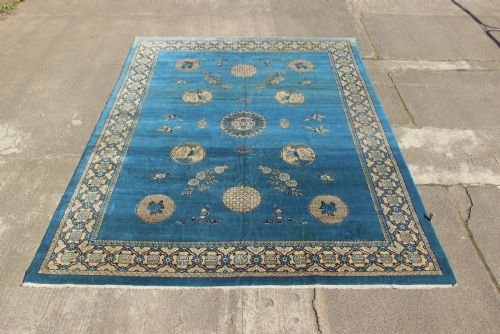


Vintage Chinese Carpet
A vintage chinese carpet brings grounding texture and geometric or floral motifs to a room, drawing on traditions of the Qing Dynasty and Art Deco eras.
Vintage Chinese Carpet
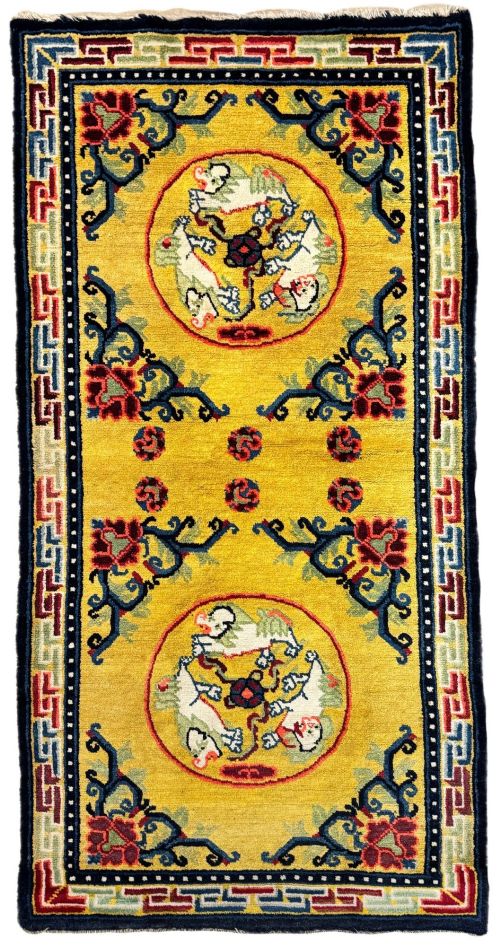
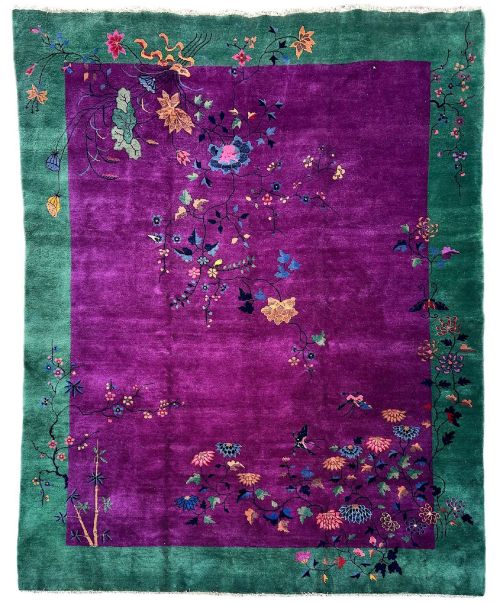
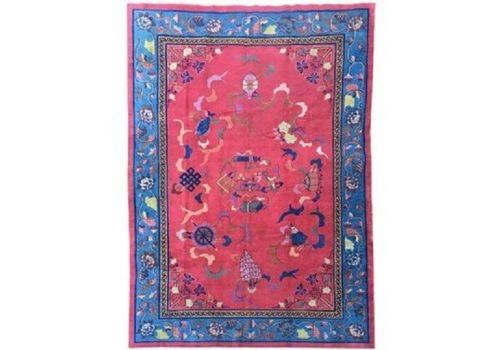
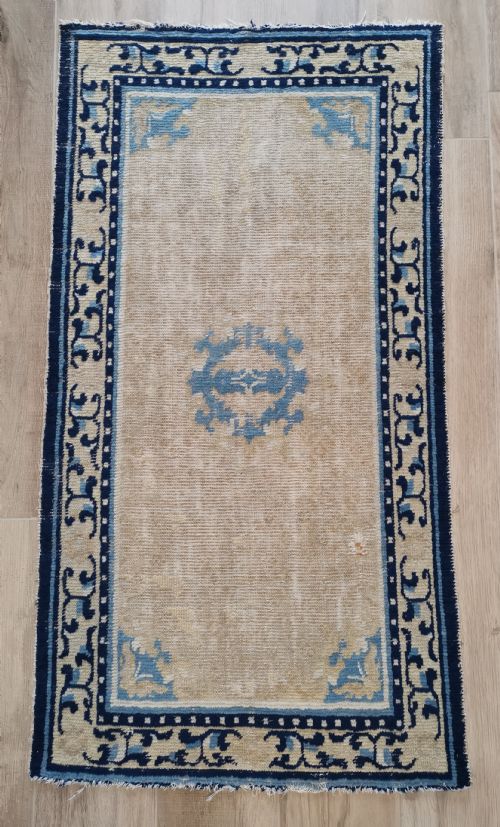
When searching for a vintage chinese carpet, buyers encounter floor coverings originating from the mid nineteenth century through the early twentieth century. The selection spans traditional regional styles including Ningxia, Peking, and Pao Tao, alongside distinct later Art Deco pieces.
Most examples appearing here date from the early twentieth century, particularly the 1920s, combining classical Chinese iconography with modern decorative sensibilities. Buyers also find regional variations such as Khotan rugs originating from East Turkestan, reflecting broader Asian textile traditions.
How they were made
These carpets are constructed using natural fibres with wool being the predominant material, occasionally accompanied by fine silk in specific decorative rugs. The foundations typically rely on sturdy cotton to support the pile.
Weavers employed traditional hand-knotting techniques to execute distinct regional designs, ranging from sparse Qing Dynasty compositions to bold Art Deco patterns.
Vintage Chinese Carpet Retail Price Guide 2026
Typical asking prices for vintage chinese carpet among the pieces listed under this phrase on Sellingantiques today, from the lower quarter to the upper quarter. They describe what is for sale here now, not the wider market.
Current listings span the nineteenth and twentieth centuries, featuring wool, cotton, and silk materials across Qing Dynasty and Art Deco styles.
What varies in quality
Quality in these textiles rests upon the density of the knotting and the fineness of the chosen materials, with silk examples representing a different tier of production compared to standard wool. The integrity of the original pile and the crispness of the drafted design determine the visual impact of each piece.
Age and regional attribution also influence desirability, as pieces originating from specific centres like Ningxia or Peking carry distinct weaving traditions that dictate their overall character.
The Vintage Chinese Carpet Glossary
- Ningxia
- A northern Chinese weaving region known for producing distinctive carpets with traditional religious and symbolic motifs. These rugs often feature muted palettes and classical floral arrangements.
- Peking
- A term for carpets produced in and around the capital, typically characterised by open fields and disciplined framing borders. They frequently employ soft blue and neutral tones.
- Pao Tao
- A style originating from the Inner Mongolian border region, recognised for strong geometric framing and bold use of medallions. These rugs often utilise deep indigo and warm yellows.
- Khotan
- A classification for carpets from East Turkestan featuring Central Asian and Chinese design influences. They frequently incorporate pomegranate or vase motifs within structured borders.
- Art Deco
- A twentieth century style marked by stylised floral elements, asymmetrical layouts, and solid colour fields. In Chinese carpets, this aesthetic merges Western modernism with Eastern motifs.
Vintage Chinese Carpet: Frequently Asked Questions
How do I clean a vintage chinese carpet?
Gentle surface vacuuming without a beater bar removes loose dirt from the wool or silk pile. Professional specialist cleaning remains essential for addressing deeper stains.
Water saturation must be avoided to prevent dye bleeding across the cotton foundation and wool fibres. Specialist restorers understand the specific chemical and structural needs of antique Asian textiles.
Can I place these carpets in high traffic areas?
Sturdier wool carpets from the early twentieth century handle moderate foot traffic when protected by a quality underlay. Placing them in lower traffic zones preserves the pile and structural integrity.
Delicate silk pieces require careful placement away from heavy movement and direct sunlight. Rotating the rug periodically ensures even wear across the surface.
How do I date a Chinese carpet?
Dating relies on stylistic shifts visible in the design vocabulary, transitioning from Qing Dynasty symbolism to streamlined Art Deco layouts. Material analysis of the wool and cotton foundation also aids chronological assessment.
Comparing knot counts and regional weaving characteristics provides further clues to the period of origin. Exact dating requires examining the dye palette and structural wear patterns.
What is the difference between Ningxia and Peking rugs?
Ningxia rugs often display older religious iconography, muted tones, and traditional symbolic elements derived from Qing Dynasty culture. They tend to have a simpler, more rustic construction.
Peking carpets typically feature more expansive open fields with minimal central decoration and refined floral sprays. Their production aligns closely with urban workshops catering to twentieth century export markets.