
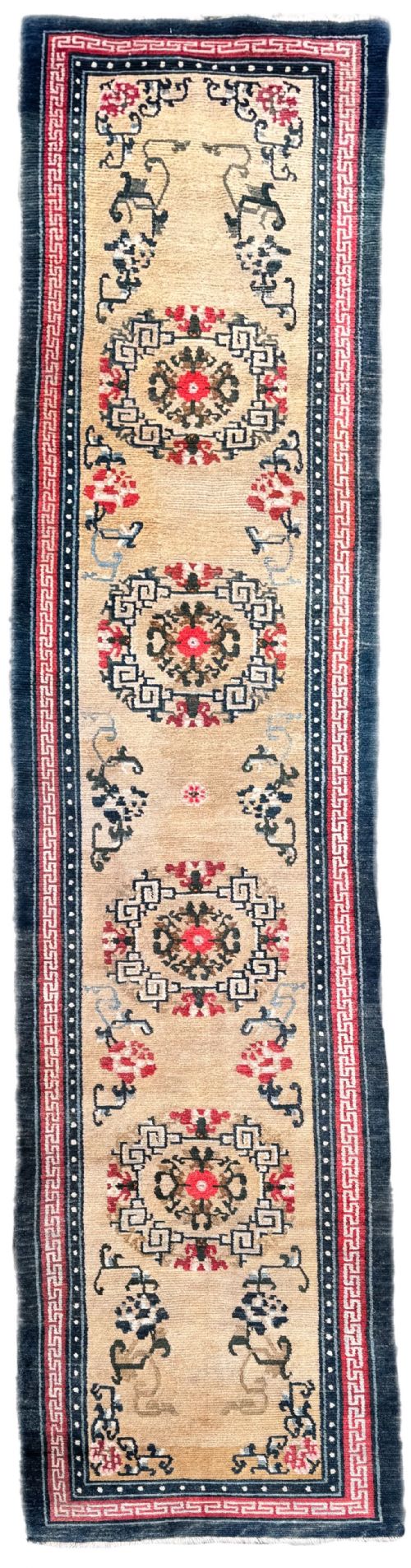
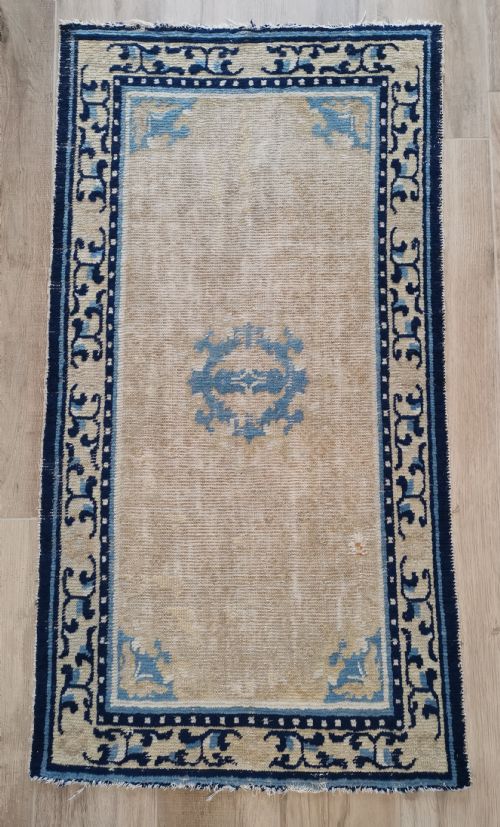
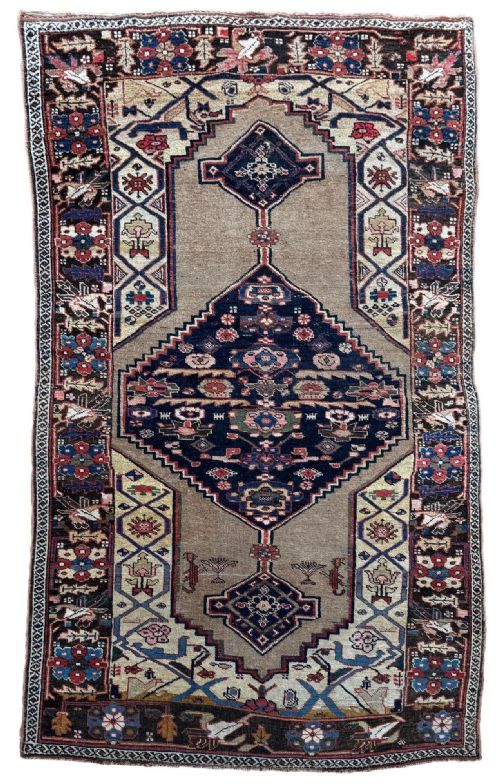
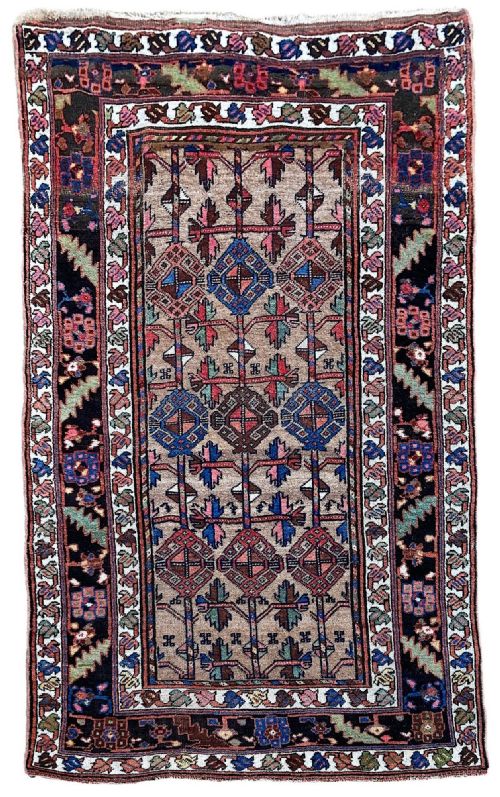


Blue and Beige Carpet
These blue and beige carpet examples bring quiet earthen and indigo tones into a room through traditional woven work.
Blue and Beige Carpet
A blue and beige carpet covers floor space using natural palettes found across Persian tribal, Chinese Art Deco, and Tibetan traditions. Buyers encounter various formats on this page, including large carpets, narrow runners, and room-size rugs.
The periods span the nineteenth century through the 1930s, showing regional patterns from workshops and villages alike. Pieces arrive from centres such as Tabriz, Kirman, Bidjar, and Ushak alongside Chinese outputs from the Qing period onward.
How they were made
Weavers utilised wool, cotton, and hand-spun wool for foundations and pile construction. These natural materials provide the structure and durability seen in the nineteenth-century and early twentieth-century survivals.
Dyes derived from natural sources interact with the fibres to create the characteristic blue and beige colourways. Hand-knotting techniques secure the pile, producing the dense surfaces recorded in the village and workshop pieces.
Some antique runners retain the distinct footprint of the village loom where the weaver sat.
What varies in quality
Knot density and the precision of the design execution distinguish finer village works from standard utility weaving. Wool quality also differs, influencing the handle and the way the pile wears over generations.
The complexity of the palette and the preservation of the original borders indicate the level of craftsmanship invested by the weaver. Faded abrasions and structural integrity reflect the history of each rug rather than a standard factory finish.
The Blue and Beige Carpet Glossary
- Pile
- The upright loops or cut ends of yarn that form the usable surface of the carpet. This layer bears the direct foot traffic.
- Runner
- A long, narrow carpet format designed for hallways, corridors, or staircases. These pieces measure significantly longer than they are wide.
- Warp
- The vertical threads stretched tightly on the loom before knotting begins. The fringe of the carpet typically consists of these extended foundation threads.
- Weft
- The horizontal threads passed alternately over and under the warp threads to bind the knots in place. This structure stabilizes the woven fabric width.
Blue and Beige Carpet: Frequently Asked Questions
Where were these carpets made?
The pieces originate primarily from Persian village and workshop centres, alongside Tibetan and Chinese looms. Different regions developed distinct weaving structures and regional motifs.
Production spans from the nineteenth century into the 1930s, reflecting diverse cultural weaving practices.
How do I clean an old carpet?
Professional specialist cleaning is essential to protect natural wool fibres and traditional dyes. Domestic washing methods can damage the foundation.
Gentle surface vacuuming without a rotating brush helps maintain the pile between professional treatments.
Can I put a runner in a hallway?
Narrow formats suit hallways and corridors perfectly, providing floor coverage where standard rectangular rugs do not fit. Underlay prevents slipping on hard floors.
Check the dimensions of the specific runner against your hallway space before purchasing.
What materials make up the pile?
Most pieces feature wool or hand-spun wool pile knotted onto cotton foundations. These natural fibres respond well to traditional maintenance.
Older examples often show subtle variations in wool texture due to hand-carding and local spinning methods.