



Vintage Child Seat
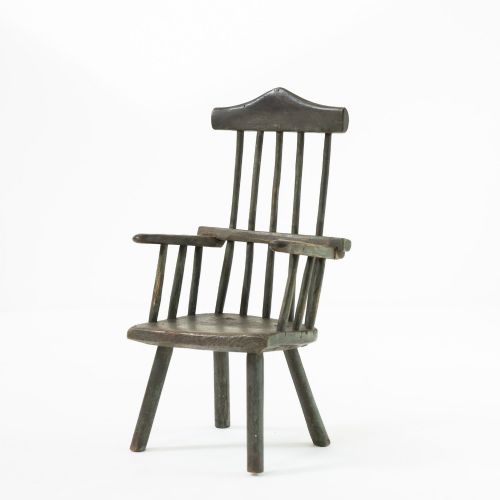
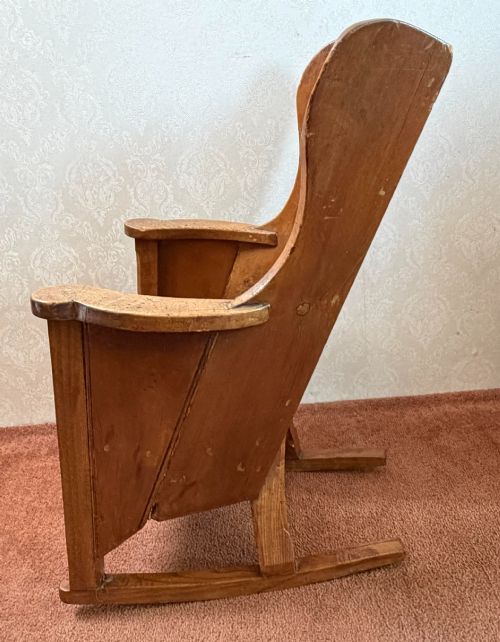
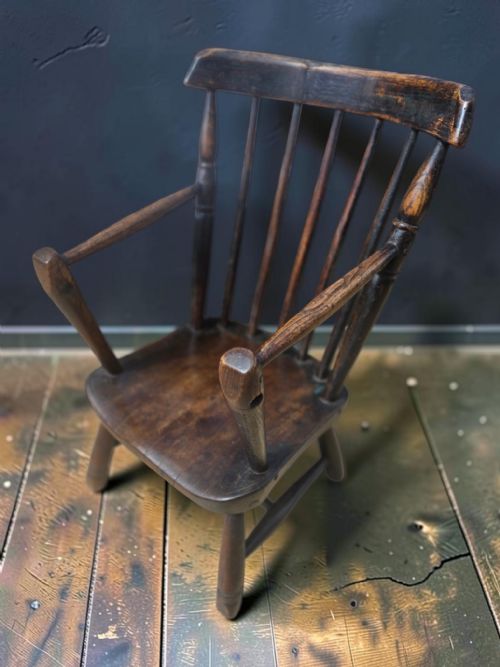
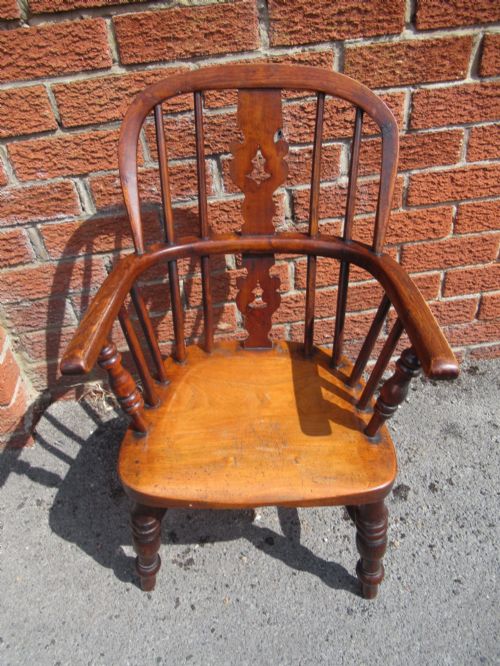
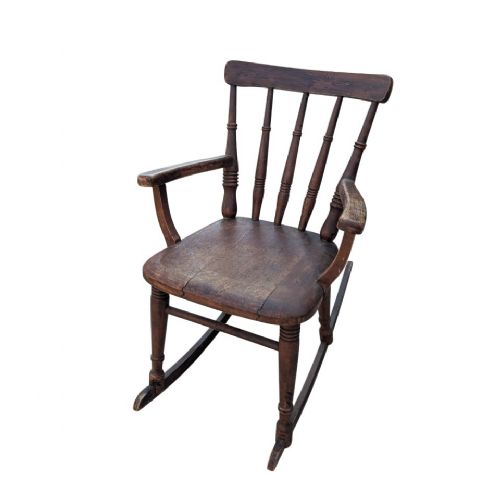
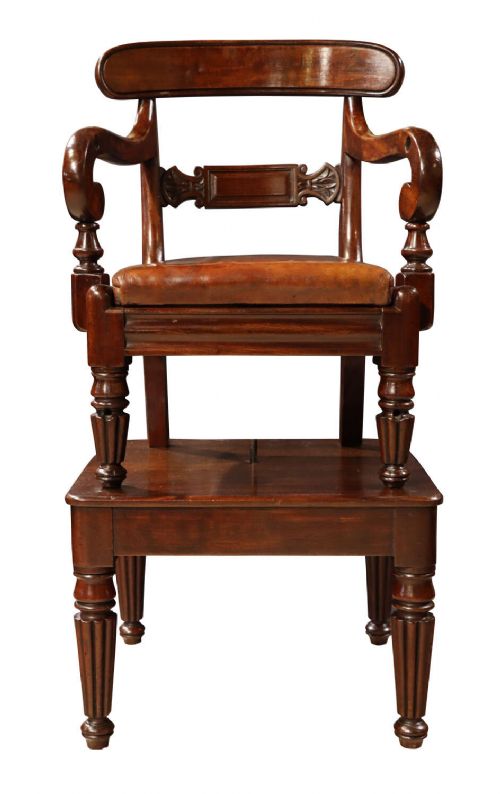
These vintage child seat selections include Windsor armchairs, high chairs, and rocking chairs spanning Georgian to early twentieth-century periods.
Vintage Child Seat
A vintage child seat encompasses diminutive seating forms designed for young occupants across the Georgian, Victorian, Edwardian, and early twentieth-century periods.
The selections on this page appear predominantly as Windsor armchairs, high chairs, rocking chairs, and ladderbacks built in domestic timber.
Makers shaped these utilitarian domestic objects for everyday use in nurseries and parlours, following the prevailing styles of English and European country vernacular.

Materials and construction methods
Craftsmen built these chairs using native hardwoods such as mahogany, elm, oak, ash, beech, and walnut, often combining timber species within a single frame.
Seating areas frequently utilise woven cane, rush, or bergere panels inserted into sturdy wooden chassis, alongside solid wood seats shaped for comfort.
Joinery methods rely on traditional stick-back, Windsor, and ladderback construction, creating durable frames designed to withstand domestic childhood use.
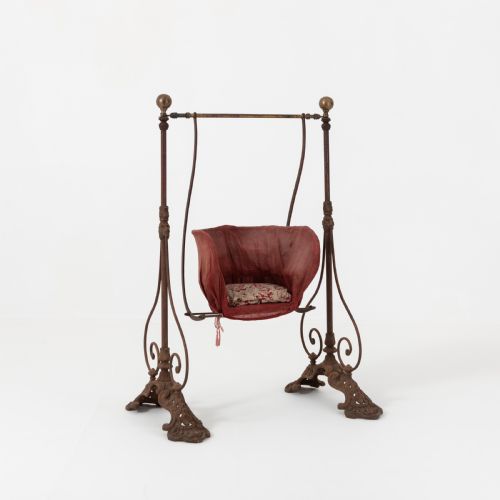
A tiny cast iron swing lets miniature occupants catch a very gentle Victorian breeze indoors.
Distinctions in quality and execution
Quality separates simple utilitarian workshop pieces from finer examples through the crispness of turning on spindles and the selective choice of figured timbers like mahogany and walnut.
The survival of original surface treatments, such as early painted finishes or rich patinated polish, elevates an example above items stripped or heavily restored in later decades.
Structural integrity depends upon the preservation of original joinery without excessive replacement of turned legs, arm supports, or woven seating panels.
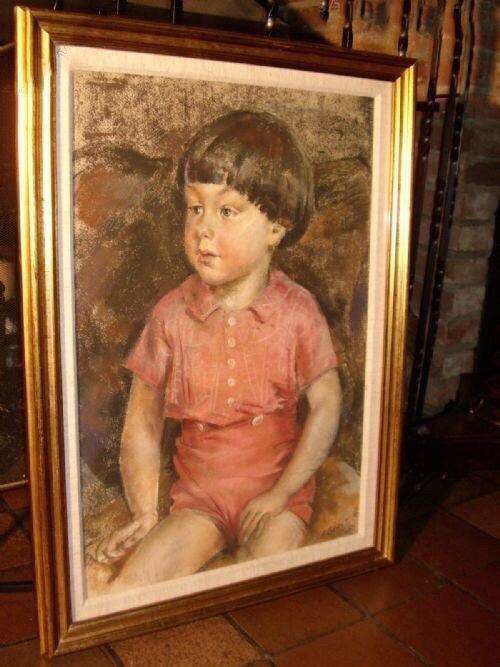
Berthe Savigny
The Vintage Child Seat Glossary
- Windsor
- A chair constructed with a solid wooden seat into which the legs and back spindles are directly socketed. This method provides robust structural stability.
- High chair
- An elevated seating form designed to raise a young child to table height. These often feature integrated footrests or protective safety rails.
- Bergere
- A upholstered armchair featuring woven cane panels on the back and sides. The technique provides a light yet supportive enclosure.
- Stick back
- A minimalist chair design where plain upright spindles form the backrest. It represents a traditional country vernacular approach.
- Potty chair
- A specialised enclosed chair featuring a cut-out seat designed to accommodate a chamber pot. They date predominantly to the Georgian and Victorian eras.
Vintage Child Seat: Frequently Asked Questions
How were vintage high chairs used?
These elevated seats allowed young children to sit safely at family dining tables during meals. Many incorporate footrests and enclosing arms to keep occupants secure.
Over time, some metamorphic examples were designed to convert from high chairs into low play chairs or push carts as the child grew.
How do I date a child chair?
Dating relies upon examining the timber species, joinery techniques, and prevailing stylistic influences such as Georgian cabriole legs or Victorian turned spindles.
Tool marks, fixings, and wear patterns also offer clues to whether a piece originates from the eighteenth, nineteenth, or early twentieth century.
Are these chairs safe for children?
While historic child seats remain charming decorative items, their original safety standards do not match modern nursery regulations. Many lack contemporary harnesses or stability widths.
Collectors generally acquire them for display, doll placement, or gentle domestic styling rather than heavy daily use by toddlers.
What is country vernacular furniture?
Country vernacular describes unpretentious domestic items made by regional craftsmen using locally available materials rather than following strict urban academic designs.
These pieces prioritize sturdy construction and practical utility over formal ornamentation, resulting in honest regional variations.
How should I care for antique wood?
Maintain timber frames by dusting regularly with a soft dry cloth and avoiding placement near direct heat sources or strong sunlight. Excessive dryness causes wood to split.
Apply a microcrystalline wax sparingly if the surface appears dry, avoiding modern silicone polishes that damage historic finishes.