


Vintage Chess Board
These vintage chess board examples range from travelling folding sets to inlaid rosewood tables, offering both decorative presence and playable utility.
Vintage Chess Board
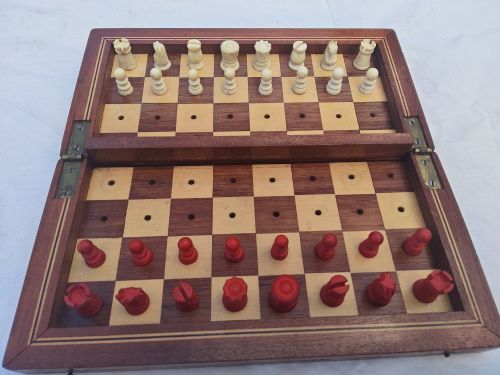
A vintage chess board represents centuries of craftsmanship, functioning as both an entertaining pastime and a decorative surface. When exploring this selection, buyers frequently encounter items originating from the nineteenth century, alongside Victorian and Edwardian examples. These objects appear in various formats, ranging from portable folding boards and compendium boxes to integrated games tables.
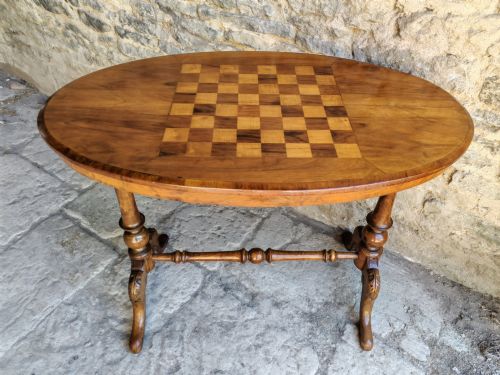
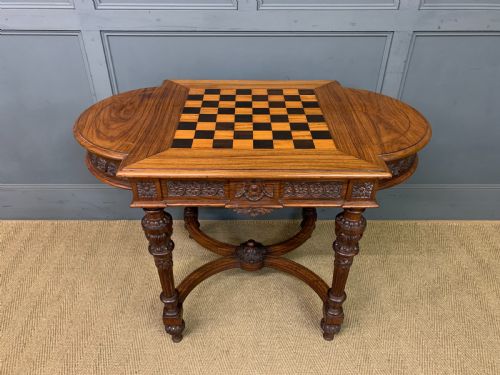
Originating across different periods including Swedish Biedermeier and Ottoman Revival influences, these objects demonstrate diverse regional workshops. Whether selecting a miniature travelling set or a substantial walnut chess top table, collectors engage with tangible domestic history.
How they were made
Cabinetmakers constructed these boards using dense hardwoods such as rosewood, mahogany, walnut, and satinwood, frequently employing intricate wood veneers and marquetry techniques. Contrasting squares were created by combining darker timbers with lighter materials like boxwood, sycamore, or birch.
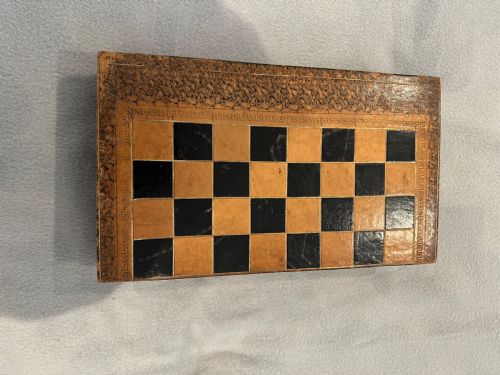
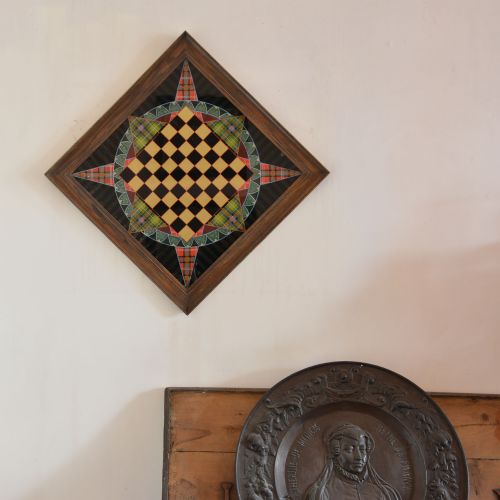
Specialist items incorporate alternative mediums, utilising bone for carved playing pieces, brass fittings for travelling hinges, and mother of pearl inlay for decorative surface detailing. Certain pieces feature specialised manufacturing methods, including reverse glass painting and leather binding.
Listings feature items built from rosewood, mahogany, walnut, boxwood, bone, and brass across nineteenth-century and Edwardian periods.
What varies in quality
Distinction across these boards relies upon the precision of the woodwork, the complexity of the veneer work, and the integrity of the integrated materials. Superior examples demonstrate exact alignment in inlaid squares and stable structural construction across folding mechanisms and table joints.
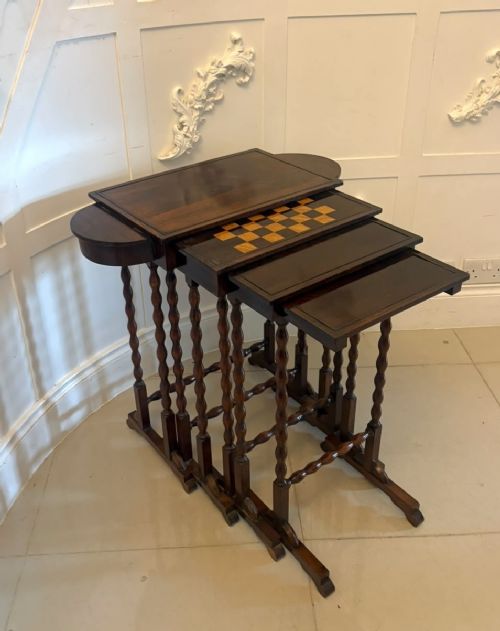
Artistic execution further defines the piece, visible in the hand-carved detail of bone or boxwood sets and the preservation of painted glass surfaces. The integration of multi-functional elements, such as combined backgammon interiors and nesting table designs, adds complexity to the craftsmanship.
A British Chess Company
The Vintage Chess Board Glossary
- Staunton Style
- The standard design for chess pieces introduced in the mid-nineteenth century, characterised by conventionalized, highly recognizable shapes. This style remains the benchmark for tournament and collector sets.
- Compendium
- A fitted box containing equipment for multiple board games, such as chess, backgammon, and draughts. These multi-use items often feature elaborate internal compartments.
- Marquetry
- The art and craft of applying decorative veneer pieces to a structure to form ornamental designs. Artisans utilise contrasting wood types to create geometric playing grids.
- Biedermeier
- A central European style from the nineteenth century emphasising utilitarian function and clean lines. Furniture from this tradition utilises domestic timbers like birch.
- Anglo-Indian
- Descriptive of items produced in the Indian subcontinent during the British colonial period, frequently utilising indigenous rosewood and intricate carved detailing.
Vintage Chess Board: Frequently Asked Questions
What periods do these boards come from?
The available selection spans the nineteenth and early twentieth centuries, including Victorian, Edwardian, and Regency eras.
Craftsmanship from these periods reflects traditional workshop methods and historical timber usage.
Are pieces included with the boards?
Some listings offer complete sets including carved bone, boxwood, or Staunton style chess pieces alongside the board.
Other entries provide standalone boards, folding travelling cases, or multi-game compendiums with integrated storage.
How were travelling boards designed?
Travelling boards frequently utilised folding wooden cases, leather bindings, or compact box formats to secure pieces during transit.
Many incorporate internal storage compartments or peg-in-board systems to maintain piece placement while moving.
Can these boards be used for other games?
Several examples function as multi-purpose items, featuring backgammon interiors, draughts pieces, or nested table configurations.
Companionship boxes and games compendiums combine multiple pastimes into single decorative wooden enclosures.