
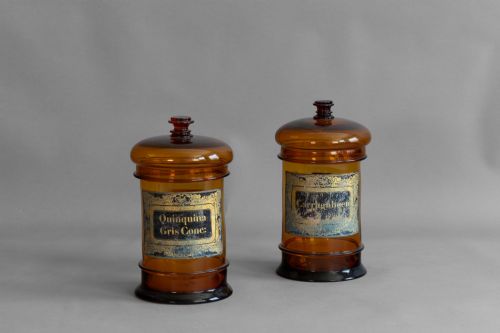


Vintage Chemist Storage Jar
These vintage chemist storage jar pieces bring distinct medical history into the home, offering heavy glass and ceramic forms made to hold old apothecary ingredients.
Vintage Chemist Storage Jar
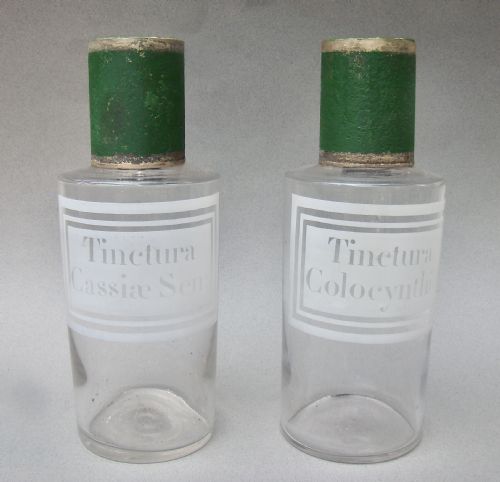
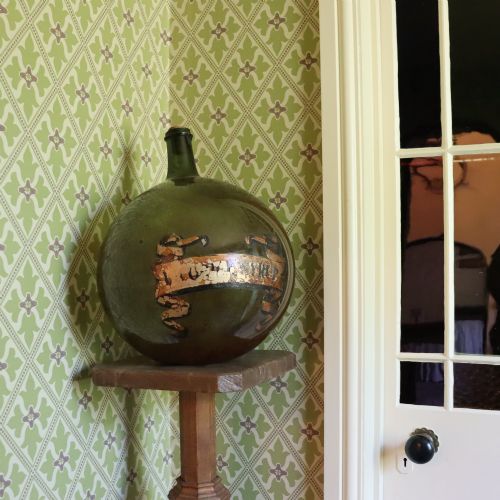
A vintage chemist storage jar combines utilitarian medical history with robust display qualities, serving as a container originally used in pharmacies and dispensaries. Buyers seeking a vintage chemist storage jar encounter items ranging from large glass carboys to lidded vessels meant for substances like arrowroot, honey, or gelatine.
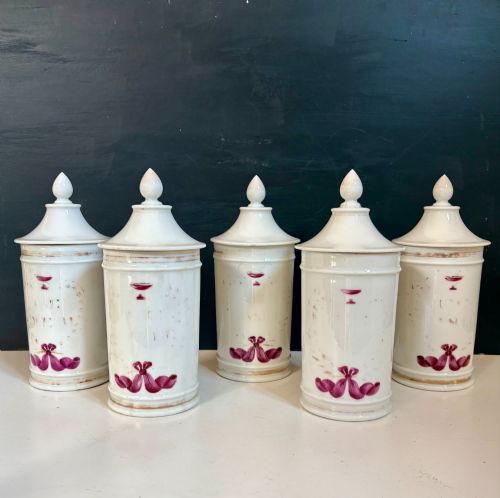
The selections span the 19th Century and Victorian eras alongside 1930s Scandinavian examples, showing both French origins and British maker marks. Forms vary from single large display pieces to pairs and larger sets.
Glass is the dominant medium across these objects, appearing alongside ceramic, porcelain, paint, gold leaf, glaze, brass, and mercury glass. Labels and contents markers often distinguish individual vessels by their specific stored goods.
How they were made
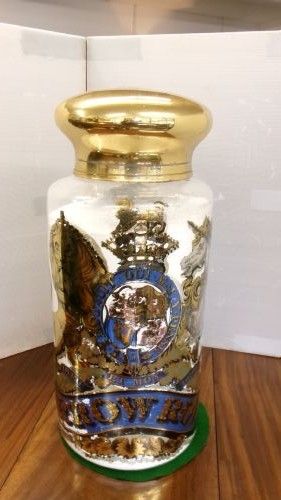
Makers shaped these containers using heavy glass and ceramic materials, often forming large display bodies and matching covers by hand or mould. Techniques include etching glass surfaces and applying paint, glaze, or gold leaf for lettering.
Vessels from the Victorian period and the 19th Century utilise amber or clear glass, while ceramic and porcelain examples rely on fired clay bodies with protective glazes. Brass fittings occasionally appear on specific components.
Listings feature items from the 19th Century, Victorian period, and 1930s, utilising glass, porcelain, ceramic, paint, and gold leaf.
What varies in quality
Quality rests in the clarity and weight of the glass, the crispness of any etched lettering, and the preservation of original painted or gold leaf details. Sets display a higher degree of uniformity when all matching covers and vessels survive together.
The presence of specific contents labels, such as those naming arrowroot or honey, alters the character of the piece compared to unmarked versions. French and Scandinavian examples introduce distinct regional aesthetics through their glass colour and painted finishes.
Samuel Alcock and Co
The Vintage Chemist Storage Jar Glossary
- Carboy
- A large glass bottle or vessel with a narrow neck, traditionally used for holding liquids in bulk. These large pieces often served as prominent window displays in nineteenth-century apothecaries.
- Mercury glass
- A type of blown double-walled glass that is silvered on the inside to create a mirror-like finish. This material reflects light brightly within a room.
- Apothecary
- An early practitioner who prepared and sold medicines and drugs to physicians and patients. Their shops required numerous specialised vessels for dry and liquid contents.
- Glaze
- A vitreous coating fused to ceramic or porcelain bodies through firing. It provides a smooth, impervious surface suitable for medical and chemical storage.
Vintage Chemist Storage Jar: Frequently Asked Questions
What were chemist storage jars used for?
These vessels held dry ingredients, herbs, and medical preparations in nineteenth-century pharmacies and dispensaries.
Their heavy construction kept contents protected from moisture and air before modern packaging existed.
How do I clean a glass chemist jar?
Wash the glass gently with warm water and mild soap, avoiding harsh scrubbing on any painted or gold leaf labels.
Old labels on glass are delicate and can lift if soaked for too long.
Are these jars safe for food?
Many nineteenth-century vessels were manufactured to hold medical substances rather than food products.
It is wise to treat them as display objects rather than kitchen storage for consumption.
How do I date a Victorian apothecary jar?
Dating relies on glass manufacturing marks, pontil scars on the base, and the style of any painted labels.
Victorian pieces often feature thicker glass walls and distinct stylistic lettering compared to later twentieth-century items.