

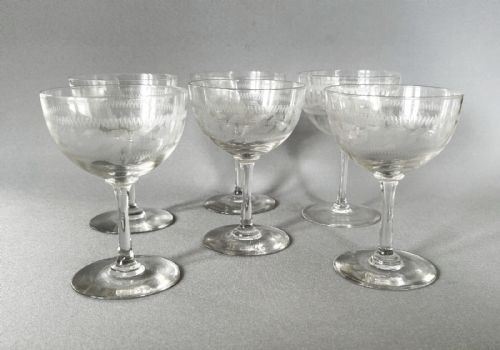


Vintage Champagne Glasses
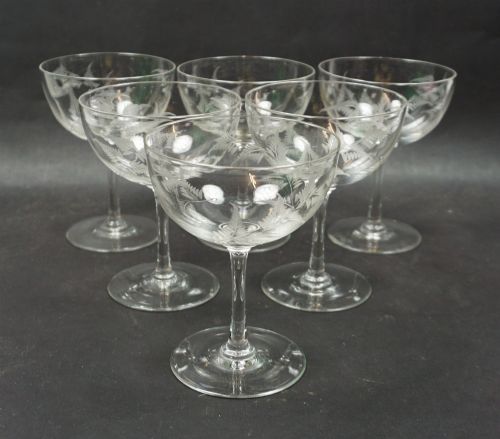
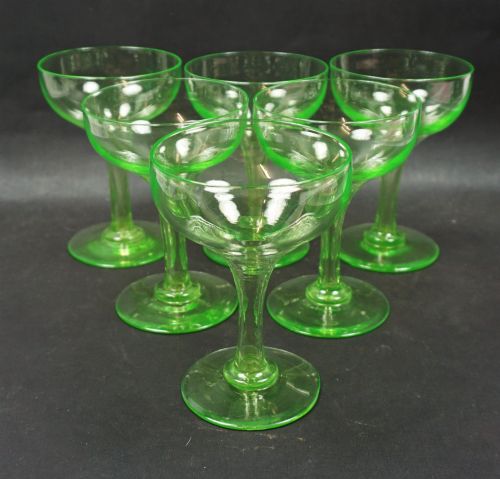
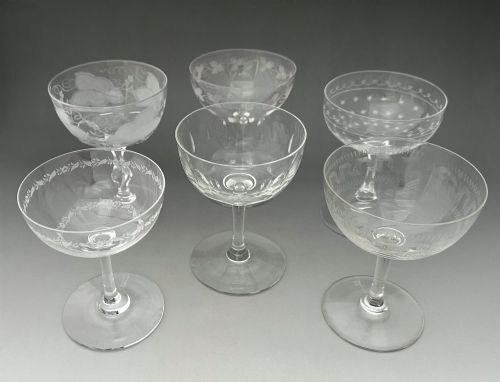
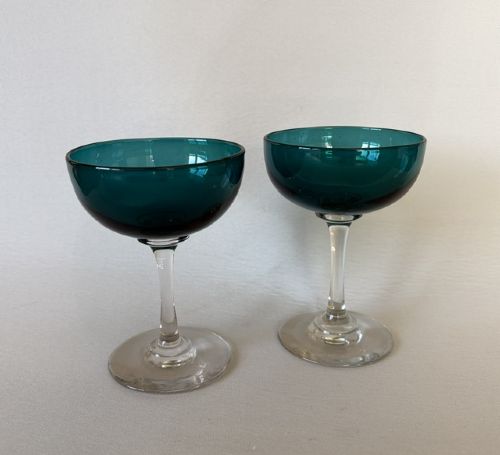
These vintage champagne glasses span ornate Victorian bowls and geometric Art Deco coupes designed to hold bubbles in style.
Vintage Champagne Glasses
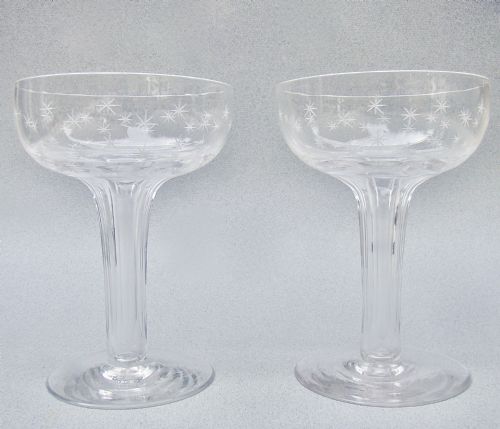
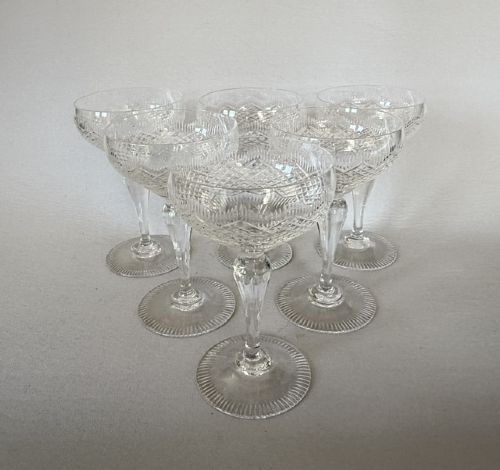
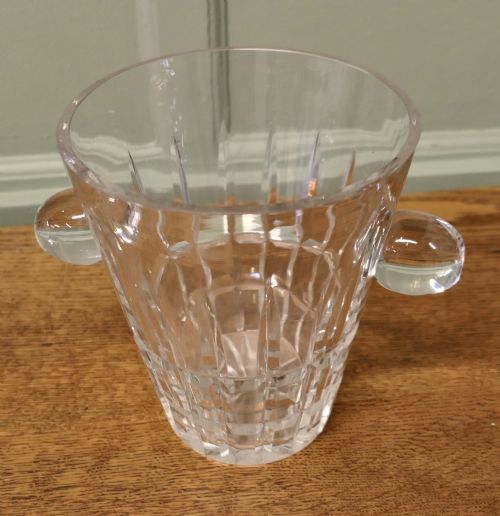
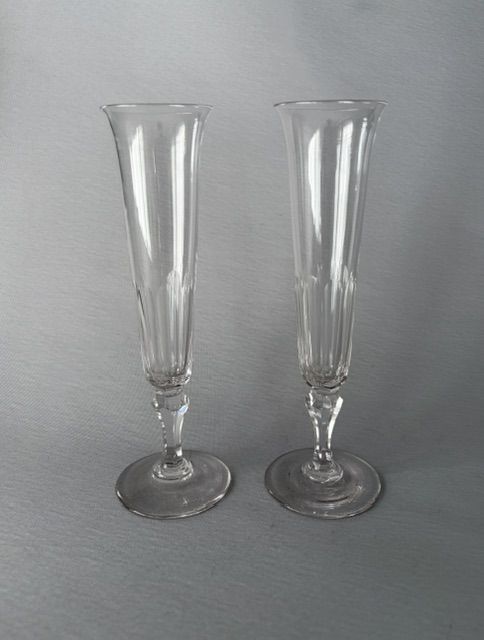
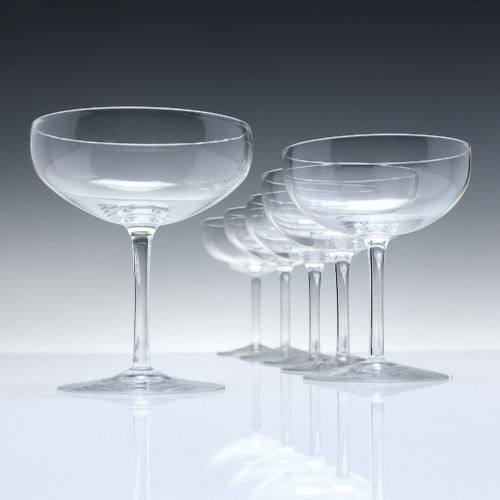
Vintage champagne glasses encompass a wide range of forms from the nineteenth and twentieth centuries, including low bowls, shallow coupes, tall flutes and matching ice buckets. Buyers seeking vintage champagne glasses will encounter matching sets of six alongside pairs and individual statement pieces spanning the Victorian, Edwardian and Art Deco periods.
Forms transition from the heavy, deeply engraved lead crystal bowls of the mid-nineteenth century to the sleek geometric lines of Art Deco production in the 1920s and 1930s. Sets often survive in matched configurations, offering practical service for gatherings as well as decorative display.
Materials and Craftsmanship
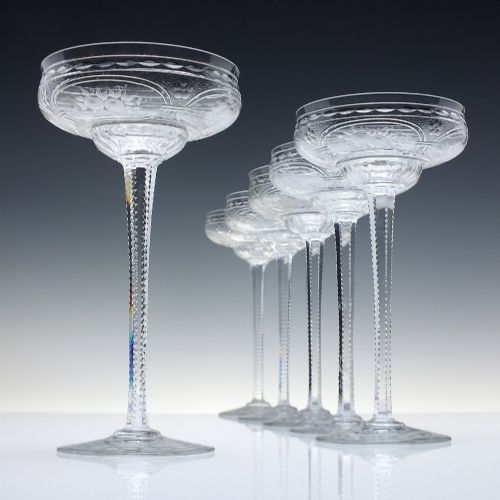
Glassmakers utilised clear glass, lead crystal and layered coloured glass overlaid on crystal, employing heavy wheel-cutting, delicate acid-etching and hand-blown techniques. Coloured overlays in cranberry, green and red reveal the clear glass beneath when cut, creating striking contrast.
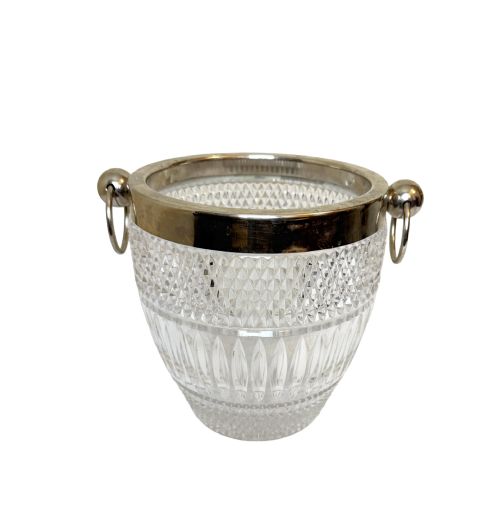
Metal mounts in silver plate, brass and gilt bronze appear on ice buckets and wine coolers, combining heavy glassware with durable hardware. Engraving techniques range from naturalistic fruiting vines and dolphins to strict geometric Greek key patterns.
Vintage Champagne Glasses Retail Price Guide 2026
Typical asking prices for vintage champagne glasses among the pieces listed under this phrase on Sellingantiques today, from the lower quarter to the upper quarter. They describe what is for sale here now, not the wider market.
Among the glassware sits a giant advertising sparkling wine bottle, ready to anchor the most ambitious celebration.
Judging Quality
Quality rests in the crispness of the wheel-cut facets, the depth and precision of surface engraving, and the weight and clarity of the crystal itself. Superior pieces show hand-polished facets without ripples or optical distortion in the glass body.
The sophistication of the design and the harmony between metal mounts and glass components separate standard utilitarian wares from exceptional studio and factory productions. Rim thickness, stem pulling and the resonance of the crystal when flicked indicate superior manufacturing standards.
Richardsons·Moser·Otto Prutscher·Riihimaki·Adelbert Niemeyer
The Vintage Champagne Glasses Glossary
- Champagne coupe
- A shallow, broad-bowled glass designed for sparkling wine, popular from the Victorian era through the Art Deco period. The wide bowl allows the aromas of the wine to open quickly.
- Lead crystal
- Glass containing a significant percentage of lead oxide, which increases weight, refractive index and brilliance. This material permits deeper, sharper wheel-cutting.
- Overlay glass
- A technique where a layer of coloured glass is fused over a clear crystal body and selectively cut away to expose the base layer. This creates strong two-tone visual effects.
- Wheel-cutting
- A cold-working decoration technique where glass is held against rotating stone or metal wheels to carve facets and patterns. Deeper cuts indicate higher skill and time investment.
- Etched glass
- Glass decorated by applying acid to eat away exposed areas, creating frosted designs. This method produces fine, intricate surface patterns that contrast with polished clear spaces.
Vintage Champagne Glasses: Frequently Asked Questions
What is the difference between coupes and flutes?
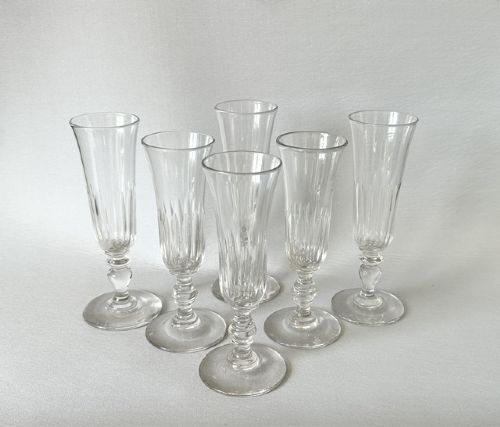
Coupes feature a wide, shallow bowl that developed popularity in the nineteenth and early twentieth centuries, encouraging rapid release of bubbles. Flutes present a tall, narrow profile designed to preserve carbonation and direct the effervescence upward.
Both forms appear across different stylistic periods, allowing buyers to choose based on historical aesthetic preferences or functional serving styles.
How do I care for antique crystal glassware?
Antique crystal requires careful hand washing in lukewarm water with mild detergent, avoiding sudden temperature changes that can crack the material. Drying immediately with a lint-free cloth prevents water spots on cut and engraved surfaces.
Storage should involve adequate spacing between pieces to prevent rim chipping, particularly with fragile etched bowls and hollow stems.
Can I use these glasses for modern sparkling wine?
These historical glasses function well for modern champagne, prosecco and sparkling wines, offering tactile historical connection during use. Shallow coupes suit sweeter styles or cocktails, while flutes accommodate drier sparkling wines.
Careful handling during toasts is essential, given the thinner rims and delicate stems found on period examples.
How do I identify Victorian champagne glasses?
Victorian examples frequently display deep wheel cuts, star-etched bases, hollow stems and heavy lead crystal composition. Motifs lean toward naturalistic flora, ferns and classical architectural elements.
Later Edwardian and Art Deco pieces transition toward lighter proportions, geometric patterns and stylised floral motifs like Greek keys.