


Vintage Ceramic Teacup
A vintage ceramic teacup brings morning tea or coffee to life with hand-painted detail and history across centuries.
Vintage Ceramic Teacup
A vintage ceramic teacup connects morning routines to centuries of craftsmanship, often arriving paired with matching saucers or as part of larger breakfast and tea services. When searching for a vintage ceramic teacup, buyers encounter examples stretching from the eighteenth century through the Georgian, Victorian, and Edwardian eras into the nineteen-thirties.
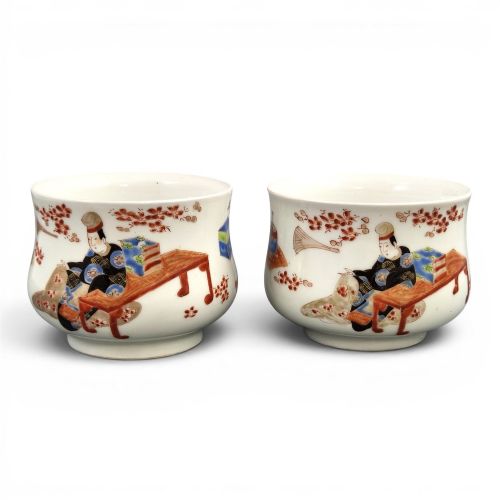
The pieces on this page span English, European, and Asian origins, showing forms from simple tea bowls to elaborate demitasse and afternoon tea sets. English bone china and porcelain sit alongside Chinese export porcelain, Japanese Imari, and German wares from factories such as KPM Berlin and Royal Worcester.
Most entries combine cups with saucers, and some extend to full trios including side plates or multi-piece tea services. Buyers find both individual pairs for daily use and matched sets suited for ten or twenty-one people.
How they were made
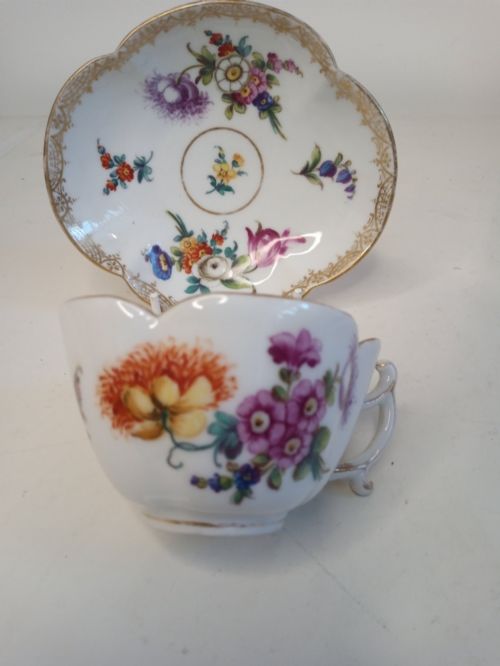
Makers shaped these pieces from porcelain, bone china, and ironstone, firing the ceramic bodies before applying detailed hand-painting and enamel decoration. Many items display intricate brushwork, such as floral motifs, figural scenes, and patterned borders applied by skilled artisans.
Gilding played a central role in finishing these wares, with artisans adding gold leaf, gold gilt, and painted glaze highlights to rims, handles, and motifs. Techniques like transfer printing and hand-gilding created the distinctive bat wing patterns and gilded details seen on pieces from Coalport, Royal Worcester, and Shelley.
A nineteenth-century tea set featuring fence and doves pattern proves that pigeons have long inspired fine art.
What varies in quality
The caliber of a vintage ceramic teacup rests on the fineness of the paste, the precision of the potter's throw or mould, and the crispness of the glaze. Early eighteenth-century porcelain and nineteenth-century bone china demonstrate varying weights and translucency, with superior pieces showing thin, even walls and delicate handles.
Artistic execution dictates the upper tier of the range, separating standard factory output from pieces bearing fine hand-painted miniature work or signed artist details. The complexity of the enamel palette, the richness of the gold leaf application, and the preservation of hand-painted scenes determine the distinction between ordinary wares and exceptional collector pieces.
Ginshōtei Gyokushi·Royal Worcester·Royal Albert Crown China·Doric China Longton Stafford·Moscow Factory Gardner·KPM Berlin·Wileman Foley Shelley·Hutschenreuther Saxonia·Gladstone potteries
The Vintage Ceramic Teacup Glossary
- Bone china
- A type of soft-paste porcelain containing animal bone ash, producing a strong, translucent ceramic body used extensively in English teacups.
- Demitasse
- A small cup used for serving espresso or Turkish coffee, typically accompanied by a matching saucer.
- Gilding
- The application of gold leaf or gold paint to decorate ceramic surfaces, often highlighting rims and handles.
- Tea bowl
- A handleless drinking vessel used for tea in early ceramic traditions before western-style handles became standard.
- Trio
- A matching set consisting of a teacup, saucer, and matching tea plate.
Vintage Ceramic Teacup: Frequently Asked Questions
How do I date an old teacup?
Dating relies on factory marks stamped or painted on the base, stylistic clues such as Victorian or Art Deco motifs, and the composition of the ceramic body. Examining the glaze and manufacturing technique helps narrow the period of origin.
Matching the pattern name, such as bat wing or star flower, against known production dates provides further accuracy.
Can I use these cups every day?
Many sturdy bone china and porcelain cups withstand careful daily use, provided they are washed by hand rather than placed in a dishwasher. Older or heavily gilded pieces warrant gentler treatment to preserve the enamel and gold leaf.
Avoiding extreme temperature shifts prevents thermal shock to aged ceramics.
What is the difference between a tea bowl and a teacup?
Tea bowls lack handles and derive from early Asian and eighteenth-century western drinking vessels designed to be held in two hands. Teacups incorporate fitted handles for single-handed holding.
Both forms frequently appear alongside matching saucers across various centuries.
How should I store my vintage teacups?
Store teacups on stable shelves away from direct sunlight, placing them upright rather than stacking them too high to protect fragile rims and handles. Using padded shelf liners cushions the bases against sudden impacts.
Keeping saucers separated with felt dividers prevents surface scratching on gilded borders.