
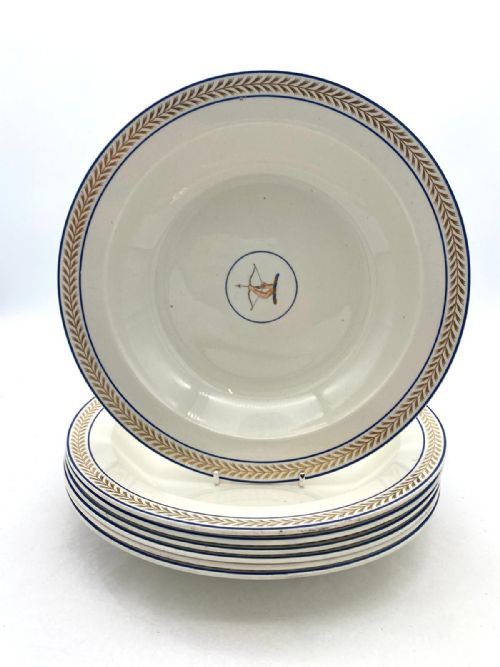


Vintage Ceramic Soup Dish
A vintage ceramic soup dish brings heft and genuine historical character to the table.
Vintage Ceramic Soup Dish
When you search for a vintage ceramic soup dish, you uncover a rich selection of historical tableware ranging from grand tureens with ladles to individual bowls and stands. These pieces span the eighteenth and nineteenth centuries, taking in Georgian, Regency, and Victorian eras.
The inventory on this page leans heavily toward nineteenth-century earthenware and ironstone, alongside fine porcelain examples. You will find English manufactories represented by transfer-printed blue and white designs, armorial creamware, and vibrant enamel detailing.
How they were made
Potters shaped these items from durable earthenware, heavy ironstone, and delicate porcelain, applying fluid glazes to seal the porous clay. Many surfaces display intricate blue and white transfer printing, a technique that allowed for crisp, repeatable imagery.
Higher-end tablewares received hand-painted enamel colours and lavish applications of gilding or gold leaf. Potters often combined these decorative methods with moulded reliefs, particularly on tureens and sauce dishes featuring bamboo patterns or neoclassical motifs.
Listings feature items from the eighteenth and nineteenth centuries, encompassing Georgian, Regency, and Victorian styles.
What varies in quality
Quality rests upon the crispness of the transfer print and the precision of any hand-applied enamel or gilding. Finer pieces display well-defined moulded details and balanced proportions that reflect the skill of the original ceramic house.
The presence of matching lids, ladles, or stands elevates a vessel significantly. Maker marks stamped or painted to the base also distinguish standard domestic wares from prestigious commissions destined for affluent dining rooms.
Wedgwood·Coalport·Coalbrookdale·Grainger and Co Royal Worcester·Mason·Ridgways·Copeland and Garrett
The Vintage Ceramic Soup Dish Glossary
- Creamware
- A refined earthenware with a pale yellowish straw-coloured glaze, developed in the eighteenth century. Wedgwood mastered this versatile ceramic body for both everyday and armorial tableware.
- Ironstone
- A dense, durable type of earthenware patented in the early nineteenth century to rival true porcelain. Mason's ironstone became particularly famous for resisting chips while taking bright transfer-printed designs.
- Transfer print
- A decoration method where an engraved copper plate transfers a design onto tissue paper, which is then pressed onto the ceramic body. This technique revolutionised pottery production in the nineteenth century.
- Tureen
- A large, deep serving bowl with a lid, designed for holding soup at the dining table. They frequently sit upon matching ceramic stands and accompany matching ladles.
- Armorial
- Decorated with a coat of arms or family crest. Such bespoke services were commissioned by wealthy families during the eighteenth century.
Vintage Ceramic Soup Dish: Frequently Asked Questions
How do I date a soup dish?
Examine the base for maker marks, registration diamonds, or impressed numbers that point to specific decades. Stylistic clues such as Regency neoclassical shapes or Victorian transfer patterns also help narrow down the period.
Material composition provides further evidence, as heavier ironstones became common in the nineteenth century while creamware dominated the eighteenth. Comparing the potting technique with known factory timelines secures a reliable date.
Are these dishes safe for food?
While historic ceramics were made for dining, many older glazes contain lead and delicate enamels can degrade with modern machine washing. It is wise to treat antique tableware with care.
Most collectors prefer to display these pieces or use them strictly for dry presentation rather than serving hot, acidic soups. Hand washing in tepid water preserves the historic surface.
What is ironstone?
Ironstone is a heavy, robust earthenware patented to provide a cheaper, tougher alternative to imported Chinese porcelain. It dominated nineteenth-century dining rooms for its durability.
Factories like Mason utilised this dense body to create sturdy tureens and dishes that withstood heavy daily use. Despite the name, it contains no iron, deriving its moniker from its stone-like strength.
How were tureens used?
Soup tureens sat centrally on the dining table, used by the host to ladle portions into individual soup dishes for guests. Their lids kept the broth hot between courses.
Matching stands caught drips and protected fine dining tables from heat. Smaller sauce tureens served gravies and liquid condiments in a similar fashion.