


Edwardian Porcelain Tableware
Edwardian porcelain tableware brings refined table settings home, offering hand-painted detail and classic ceramic forms that collectors prize.
Edwardian Porcelain Tableware
When you search for edwardian porcelain tableware, you encounter a selection of formal dining and tea pieces originating from the late nineteenth and early twentieth centuries. These items range from expansive dinner services and dessert sets to individual coffee services and soup dishes.
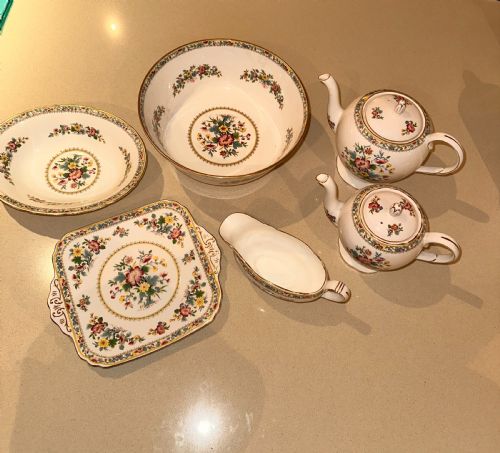
The objects combine traditional English manufacturing with the decorative sensibilities of the Edwardian period, often alongside Victorian and Arts and Crafts influences. You will frequently find pieces featuring hand-painted motifs and gilded accents across dinnerware and decorative dishes.
The selection on this page reflects varied production dates stretching from the nineteenth century into the interwar era. Ceramic forms include specialised items such as egg cups and loving cups alongside comprehensive table services.
Materials and Manufacture
Makers utilised fine porcelain and bone china as the primary ceramic base for these services. Potters shaped the clay into traditional vessel forms before applying glazes and decorative finishes.
Artisans applied hand-painted enamel designs directly to the ceramic surface. Many pieces received gold leaf or gilding to accentuate rims and handles.
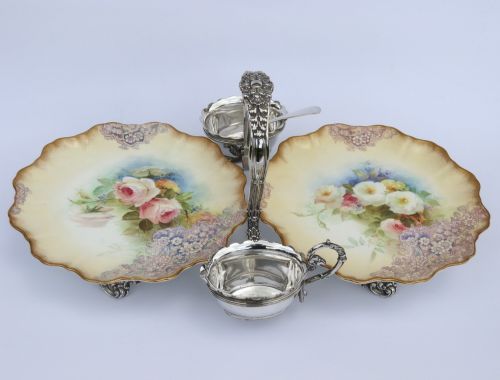
Certain serving pieces incorporated silver plate mounts alongside the ceramic bodies to provide structural support and decorative contrast.
Listings feature porcelain, bone china, ceramic, and silver plate alongside gold leaf and enamel.
Judging Quality and Execution
The distinction between standard table sets and exceptional pieces rests upon the execution of the hand-painted decoration. Skilled brushwork and precise enamel placement elevate the visual appeal of the service.
The application of gold leaf and gilding indicates the standard of production. Even and well-preserved metallic highlights suggest careful manufacture and handling over time.
The reputation of the pottery influences the standing of the work. Established manufacturers applied rigorous standards to shape and glaze, resulting in balanced ceramic forms.
Walker and Hall·Doulton Burslem·Coalport·Royal Worcester·Picards·Wedgwood·Copeland Spode·Gladstone potteries
The Edwardian Porcelain Tableware Glossary
- Bone China
- A type of porcelain containing bone ash that produces a strong, translucent ceramic body.
- Gilding
- The application of gold leaf or gold paint to ceramic surfaces for decoration.
- Enamel
- Opaque glass-like material fused to pottery to create coloured painted designs.
- Soup Dish
- A shallow vessel designed for serving liquid courses at the dining table.
- Loving Cup
- A large drinking vessel featuring multiple handles, traditionally passed among guests.
Edwardian Porcelain Tableware: Frequently Asked Questions
What pieces form a standard dinner service?
Dinner services typically comprise numerous matching plates and serving dishes designed for formal dining.
Larger configurations can include specialised items like soup dishes to accommodate multiple courses.
How do I care for gilded porcelain?
Gilded porcelain requires gentle hand washing with mild soap to preserve the delicate metallic decoration.
Avoid abrasive cleaners or modern dishwashers that can wear away gold leaf and enamel over time.
Can I use these items daily?
Antique ceramic tableware can serve functional roles during meals if handled with appropriate care.
Many collectors prefer to reserve delicate hand-painted services for special occasions to protect the glaze.
How do I identify Edwardian styles?
Edwardian tableware often displays lighter, more restrained decorative motifs compared to heavy Victorian designs.
Hand-painted floral patterns and subtle gilding characterise the aesthetic of this period.