


Vintage Ceramic Pitcher Set
These vintage ceramic pitcher set pieces bring period craft and utility together, offering daily practicality and robust charm for the modern home.
Vintage Ceramic Pitcher Set
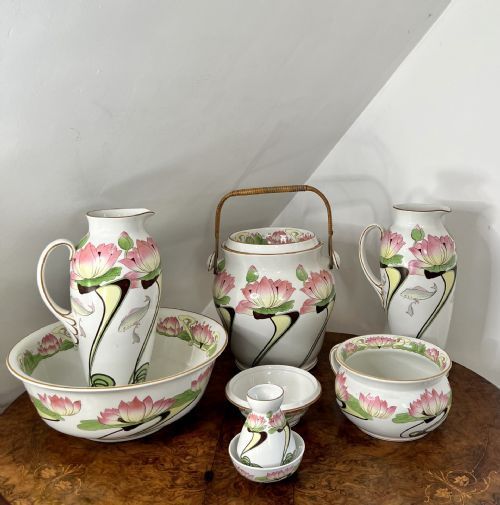
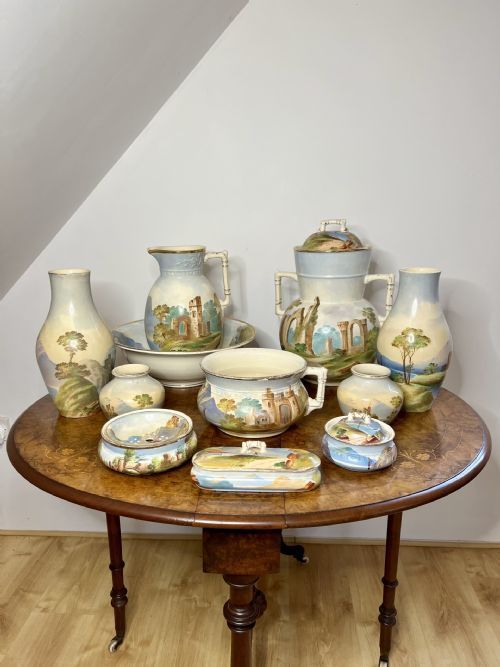
A vintage ceramic pitcher set typically comprises a large wash jug paired with a matching basin, designed for nineteenth and early twentieth century domestic hygiene before modern indoor plumbing became universal. These vessels range from grand Victorian washstand suites to Edwardian bathroom collections and smaller graduated sets.
The pieces appearing on this page span the nineteenth century through the 1930s, featuring earthenware, ironstone, and porcelain constructions. Buyers will frequently encounter comprehensive wash sets alongside decorative jugs and smaller utilitarian groupings originating from various English potteries.
How they were made
Potters utilised durable ironstone, earthenware, and fine porcelain, shaping the jugs and basins either by hand-throwing or utilising moulds for octagonal and graduated forms. Ironstone provided a robust, heavy body suited to daily washing routines, whilst porcelain allowed for finer, more delicate tea service vessels.
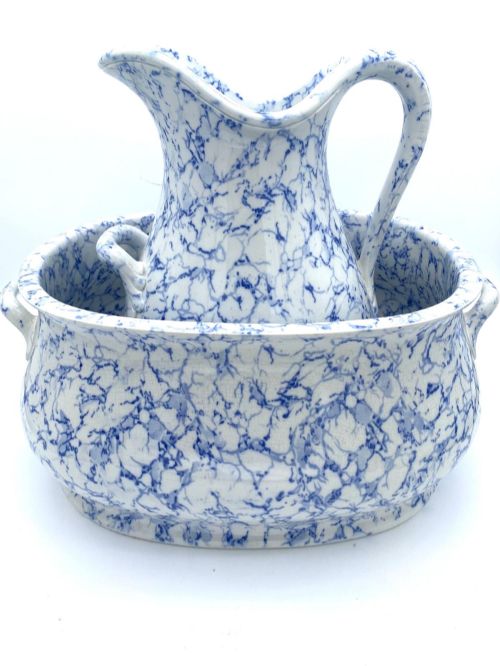
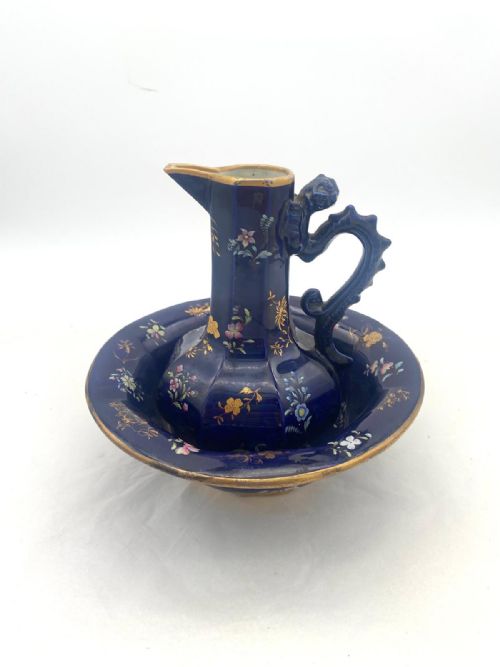
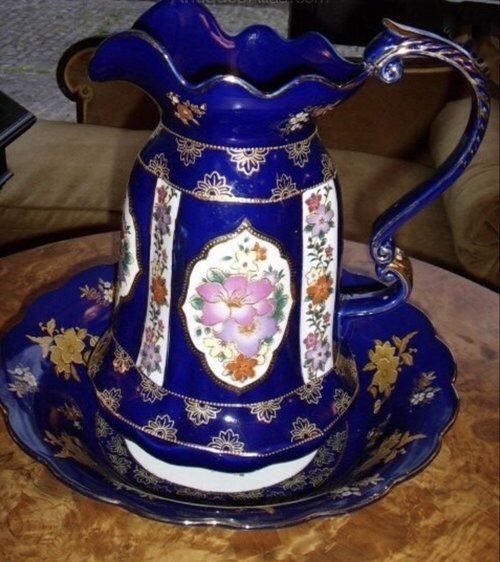
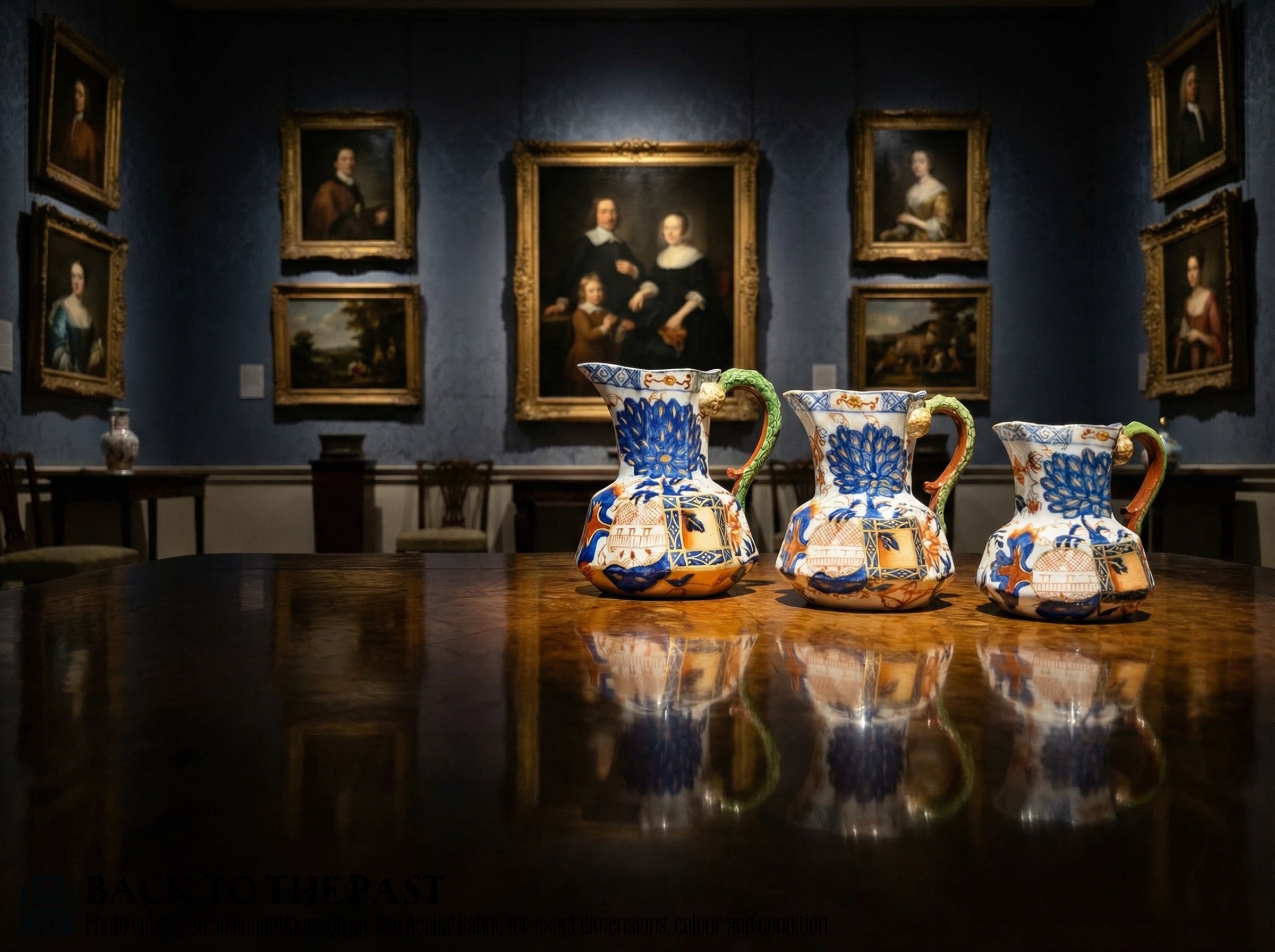
Glazes and surface decoration involved cobalt blue transfer printing, hand-painted floral enamel designs, and occasional gold leaf accents fired at high temperatures. Flow blue techniques created softly blurred patterns within the glaze, while specific aesthetic styles incorporated distinct moulding details like the hydra handle.
Listings feature earthenware, ironstone, and porcelain materials across nineteenth-century and Edwardian periods.
What varies in quality
Quality rests in the crispness of the moulded relief work, the uniformity of the glaze, and the precision of transfer printing or hand-painting. Superior examples maintain clean lines without firing blemishes, displaying sharp cobalt definition and intact gilding across every component of the suite.
The presence of a matched maker mark provides a distinct advantage, as does the completeness of multi-piece graduated sets or full washstand assemblies. Weight and ringing resonance in ironstone or porcelain indicate superior density and better-preserved structural integrity over time.
Mason s Ironstone·Doulton Burslem·Copeland Spode·Minton·Davenport
The Vintage Ceramic Pitcher Set Glossary
- Ironstone
- A dense, durable type of earthenware patented in the nineteenth century to imitate Chinese porcelain while offering greater strength for utilitarian wares.
- Flow blue
- A nineteenth-century printing technique where lime or calcium chloride was introduced into the kiln to blur the cobalt blue transfer print into a soft haze.
- Hydra jug
- A specific vessel shape featuring a moulded serpent or dragon handle, popular among Victorian ironstone makers.
- Washstand set
- A coordinated group of ceramic vessels, usually including a large jug and basin, made to sit on a wooden washstand for bedroom cleansing.
- Imari
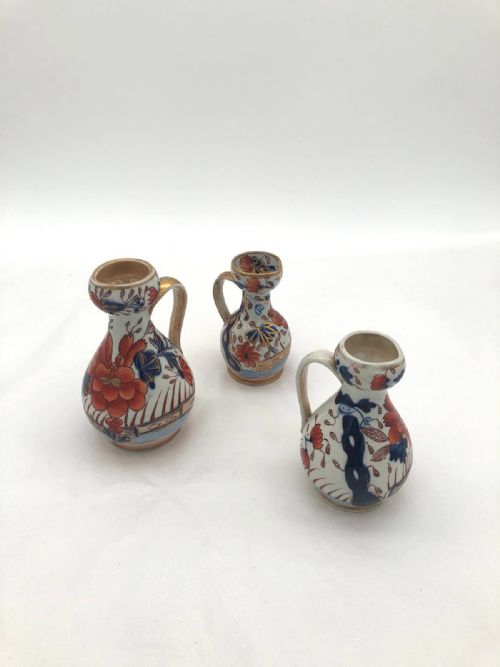
- A decorative style inspired by Japanese export wares, utilising rich cobalt blue, iron red, and gold highlights on a white ceramic ground.
Vintage Ceramic Pitcher Set: Frequently Asked Questions
How were wash sets used originally?
These sets stood on wooden washstands in bedrooms before plumbed bathrooms became standard. Water was poured from the large jug into the basin for morning and evening washing.
They served both a practical hygiene function and a decorative role in furnishing the home. Complete sets often included soap dishes and chamber pots alongside the main jug and basin.
How do I date a ceramic pitcher set?
Dating relies on maker marks stamped or printed on the base, stylistic clues, and the type of ceramic body used. Victorian pieces often feature heavy ironstone forms with transfer-printed patterns.
Edwardian sets frequently display softer floral designs or art nouveau motifs. The presence of registration numbers or specific pottery names helps narrow down the decade of production.
Are these pitchers waterproof?
Most ceramic pitchers remain fully waterproof and suitable for holding fresh cut flowers or serving liquids. Glazed earthenware and porcelain provide a sealed interior surface that holds water safely.
Buyers should inspect pieces for historical hairline cracks or repairs if intending to use them with liquids. Ironstone and porcelain are generally robust enough for daily functional use.
How should I display a wash set?
These sets look best displayed on sturdy wooden tables, sideboards, or traditional washstands where both the jug and basin remain visible. Placing them in a hallway or dining room highlights their generous scale.
Graduated jugs can be displayed together in a cluster to showcase the variation in size and moulding. Adequate space allows the intricate transfer prints and glazes to catch the light.