

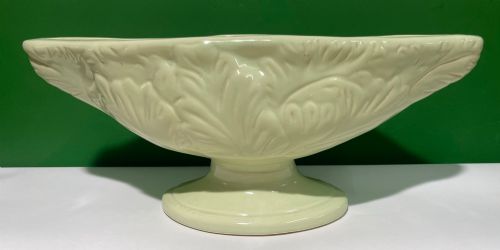



Vintage Ceramic Footed Bowl
A vintage ceramic footed bowl lifts fruit or florals above the table with the quiet grace of porcelain, ironstone, and earthenware shaped across centuries.
Vintage Ceramic Footed Bowl
When you search for a vintage ceramic footed bowl, you meet pedestals, comports, and raised centrepieces spanning Georgian, Victorian, Edwardian, and twentieth-century eras. These raised vessels serve to display fruit or hold decorative flowers, elevated on a distinct base or tripod feet.
The selection on this page ranges from nineteenth-century English ironstone and porcelain to Japanese Imari porcelain and early twentieth-century lustre wares. Forms shift from simple fruit comports and lattice bowls to grand centrepieces adorned with applied figures and gilded details.
Makers represented in the current evidence include Minton, Schierholz Plaue, Maling, Mason's, Wedgwood, Royal Worcester, and Arita. Each piece brings the specific decorative vocabulary of its period, whether blue and white transfer printing, hand-painted enamel, or iridescent lustre glazes.
How they were made
Potters shaped these vessels using traditional methods in porcelain, bone china, and ironstone, often building complex forms with applied figures or openwork lattice borders. Glazes were applied by hand, incorporating cobalt blue, polychrome enamel, and rich lustre finishes.
Decoration frequently involved detailed gilding with gold leaf, alongside transfer-printed patterns or hand-painted motifs such as dragons, butterflies, and floral sprays. Firing in kilns fixed these metallic oxides and enamels to the ceramic body, creating durable surfaces designed for daily display.
Vintage Ceramic Footed Bowl Retail Price Guide 2026
Typical asking prices for vintage ceramic footed bowl among the pieces listed under this phrase on Sellingantiques today, from the lower quarter to the upper quarter. They describe what is for sale here now, not the wider market.
Early twentieth-century lustre bowls captured fairy dragons and coiling serpents in shimmering metallic glazes.
What varies in quality
Quality rests in the crispness of the moulded form and the skill of the hand-painted or transfer-printed decoration, where finer pieces display delicate brushwork and rich application of gold leaf. Elaborate modelling, such as applied roses or putti on centrepieces, requires exceptional artisan control during the shaping and firing stages.
The depth and brilliance of the glaze also separate standard production from superior examples, particularly in lustre wares and Imari porcelains where colours must remain vibrant and distinct. The integrity of the raised foot or pedestal structure indicates the overall durability and balance of the vessel.
Minton·Schierholz Plaue·Maling·Wedgwood·Royal Worcester·Arita
The Vintage Ceramic Footed Bowl Glossary
- Comport
- A shallow dish or bowl raised on a high foot or pedestal, traditionally used for serving fruit or sweets at the table. These vessels often match larger dessert services from the eighteenth and nineteenth centuries.
- Lustre Glaze
- A metallic ceramic glaze that creates an iridescent, pearlescent surface reflecting rainbow colours in the light. This technique was frequently utilised on early twentieth-century decorative bowls to catch the eye.
- Ironstone
- A heavy, durable type of earthenware patented in the nineteenth century to imitate Chinese porcelain. It provides a robust body for transfer-printed fruit bowls and table comports.
- Imari
- A style of Japanese porcelain featuring a distinct palette of underglaze blue, iron red, and gilt highlights. These export wares were produced in Arita and prized by European collectors.
Vintage Ceramic Footed Bowl: Frequently Asked Questions
What is a footed bowl used for?
These elevated vessels traditionally serve to present fruit, nuts, or sweetmeats as part of a formal table setting. Today, they function equally well as decorative centrepieces holding seasonal flowers or standing alone on a sideboard.
The raised foot draws the eye upward, giving smaller arrangements greater presence and creating a distinct focal point in a room.
How do I date a ceramic bowl?
Dating relies on identifying the maker's mark stamped or painted on the base, alongside stylistic clues such as the glaze type and moulding technique. Victorian pieces often feature transfer-printed floral or blue and white patterns, while twentieth-century examples frequently showcase lustre finishes.
Comparing the weight of the ceramic body and the style of the footrim helps narrow down whether a piece originates from the Georgian era or later decades.
How should I clean my bowl?
Wash ceramic vessels gently by hand using warm water and mild soap, avoiding abrasive sponges that can scratch the glaze or wear away delicate gilding. Pieces with gold leaf or lustre finishes require particular care to preserve their reflective surfaces.
Dry the bowl thoroughly with a soft cloth immediately after washing to prevent water spots from forming on the glaze.
Are these bowls safe for food?
Most antique and vintage ceramic vessels are best reserved for display or dry presentation rather than everyday dining, particularly pieces featuring overglaze gilding or delicate enamels. Older glazes may also contain lead or show wear from age that makes them unsuitable for wet or acidic foods.
Enjoy these pieces as decorative centrepieces or fruit holders where their historical glazes can be safely admired.