
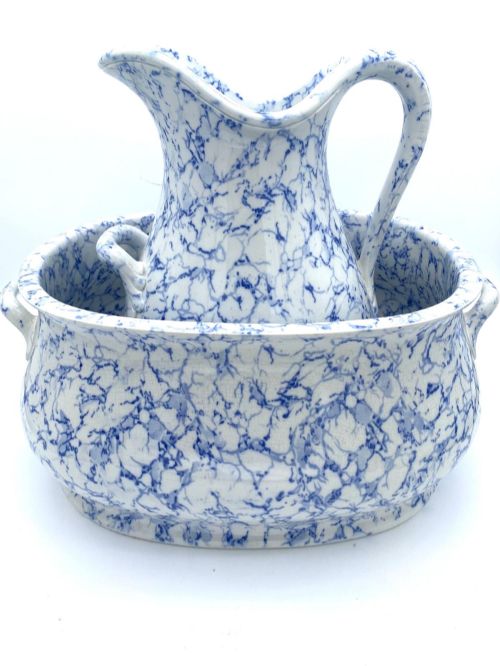
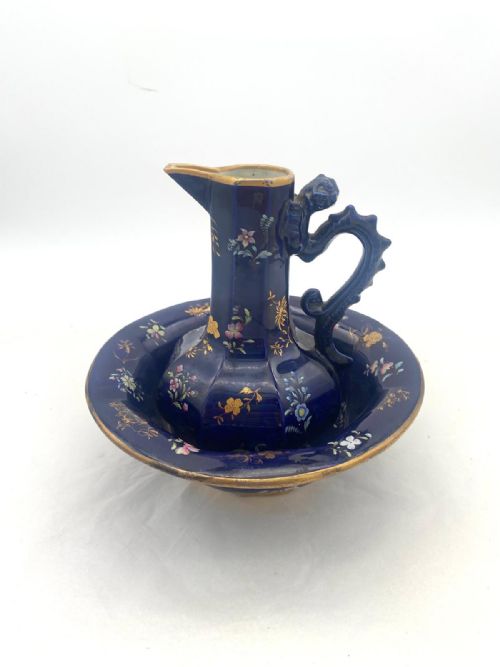
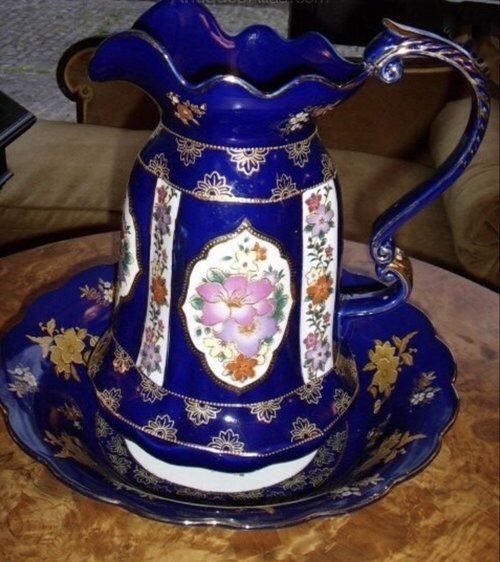
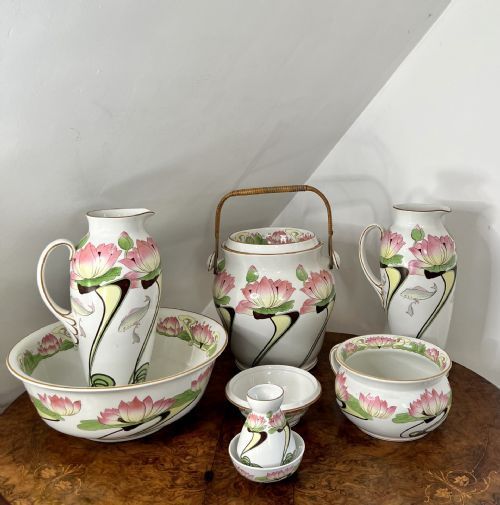
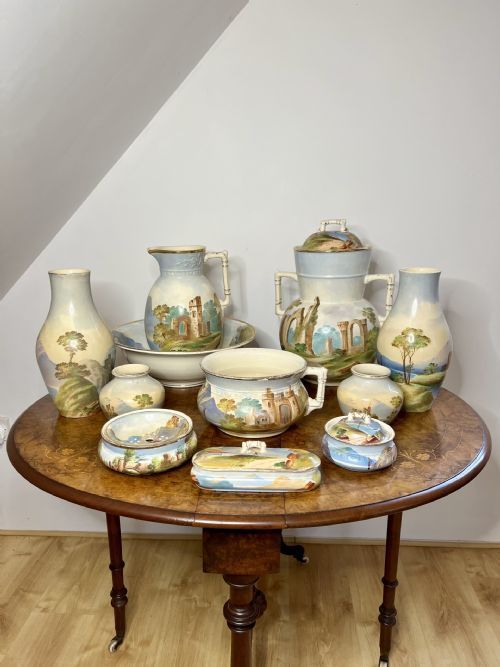


Vintage Ceramic Basin Set
These vintage ceramic basin set pieces bring period washstands to life with earthenware jugs and bowls.
Vintage Ceramic Basin Set
A vintage ceramic basin set comprises matching jugs and bowls used for washing before plumbed bathrooms became common in homes. These pieces appear across Victorian, Edwardian, and Art Nouveau periods, taking the form of washstand sets and footbaths.
The objects span ironstone, porcelain, and earthenware, often decorated with cobalt blue glaze or floral patterns. Makers such as Minton, Masons Ironstone, Doulton Burslem, and Shelley produced these functional items for daily domestic hygiene.
How they were made
Potters shaped earthenware, ironstone, and porcelain into deep bowls and pouring jugs before applying glazes and surface decoration. Some examples incorporate delicate gold leaf detailing or flow blue transfer printing.
Makers utilised ceramic firing techniques to achieve durable finishes suitable for heavy daily use on wooden washstands. Surface patterns range from intricate floral motifs to bold cobalt blue applications.
Listings feature earthenware, ironstone, and porcelain across Victorian, Edwardian, and Art Nouveau periods.
What varies in quality
The distinction between standard domestic ware and top tier production rests on the crispness of the mould and the depth of the glaze. Finer pieces display sharply defined octagonal forms or hand-finished floral details rather than flat transfer prints.
Renowned factories such as Doulton Burslem and Masons Ironstone achieved superior weight and resonance in their ceramic bodies. The complexity of the pattern, from simple cobalt blue to elaborate flow blue or gold leaf, also dictates the standing of the set.
Minton·Masons Ironstone·Doulton Burslem·Shelley·Mark Jones And Sons
The Vintage Ceramic Basin Set Glossary
- Earthenware
- A porous pottery type fired at lower temperatures, commonly used for utilitarian vessels. It requires a complete glaze to hold water effectively.
- Ironstone
- A dense, durable type of British pottery patented to resist chipping and cracking. It bridges the gap between earthenware and true porcelain.
- Flow Blue
- A cobalt blue transfer printing style where the colour bleeds slightly into the surrounding white glaze during firing. This technique created a soft, hazy aesthetic popular in nineteenth-century ceramics.
- Footbath
- A large, deep basin designed for soaking feet before the widespread installation of fitted porcelain baths. These items often match the accompanying wash jug.
Vintage Ceramic Basin Set: Frequently Asked Questions
How were wash sets used daily?
These sets sat upon wooden washstands holding water for morning and evening washing routines. Servants filled the large jug with warm water from the kitchen.
The user poured water into the matching bowl to wash face and hands using soap and sponges. Dirty water was then emptied into slop buckets kept underneath the stand.
Can I use these sets for modern washing?
Most antique ceramic basins remain watertight and function well for gentle hand washing or floral displays. Modern harsh detergents should be avoided to protect the historic glaze.
Thermal shock from boiling water can crack nineteenth-century earthenware, so tepid water suits them best. Careful handling prevents chips to fragile spouts and rims.
How do I date an Edwardian set?
Edwardian wash sets typically display lighter floral patterns and softer colour palettes influenced by Art Nouveau design. These pieces date from around nineteen hundred to nineteen ten.
Maker marks on the base often help narrow down the production year. Simpler shapes distinguish them from heavy Victorian ironstone designs.
What is flow blue pottery?
Flow blue refers to a chemical process occurring during kiln firing where cobalt pigment intentionally blurs into the glaze. This created a rich, misty effect across the ceramic surface.
Originating in the nineteenth century, this technique was widely applied to jugs and bowls. Each piece developed a unique pattern bleed during the firing process.