



Vintage Ceramic Accent Lamp
These vintage ceramic accent lamps bring warm, focused lighting and distinct period character into a room.
Vintage Ceramic Accent Lamp
A vintage ceramic accent lamp provides domestic illumination through bodies formed from glazed earthenware, porcelain, or majolica mounted with electrical fittings. Buyers seek these pieces for their decorative presence on side tables and desks, where they function as both functional light sources and sculptural objects.
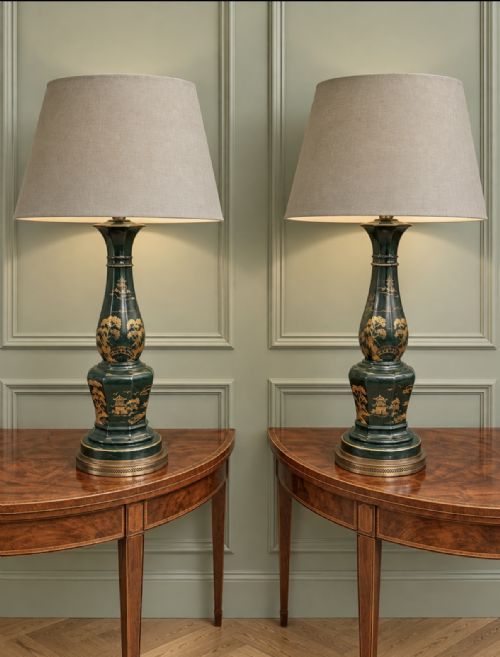
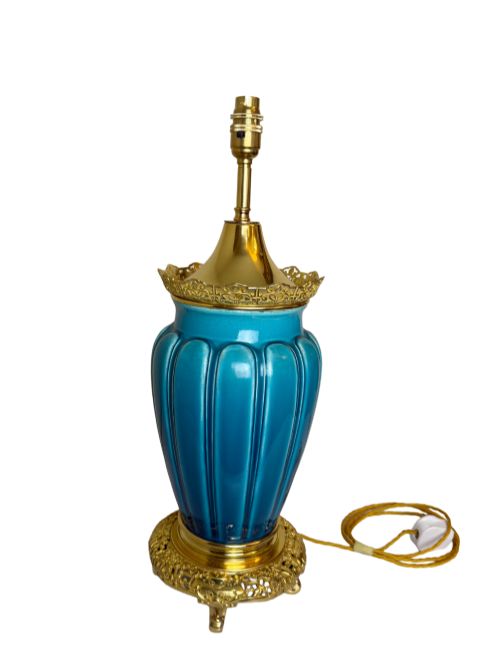
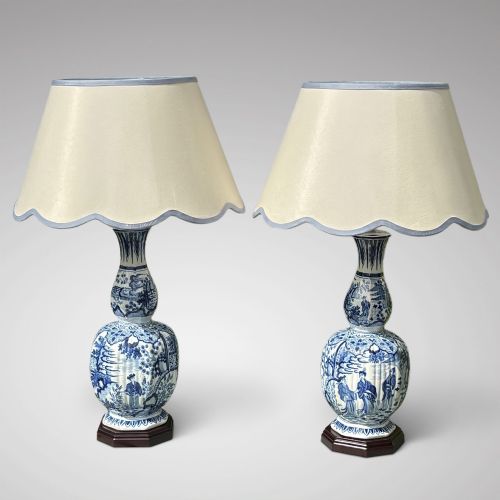
The selections available here range from Chinoiserie and Japanese Satsuma wares to European porcelain and Delft blue and white designs. These examples draw upon centuries of ceramic traditions, adapted in the nineteenth and early twentieth centuries to hold lamp fittings and fabric or silk shades.
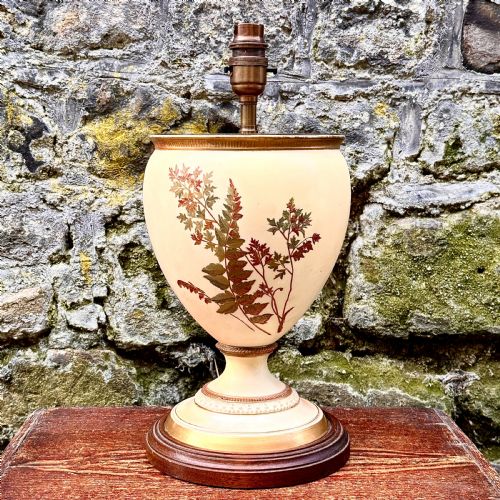
Most pieces date from the nineteenth century through the 1930s, encompassing Edwardian productions, Arts and Crafts influences, and earlier styles mounted on brass or gilt bronze bases. Collectors encounter both single statement pieces and matched pairs featuring hand-painted motifs, animal forms such as elephants and owls, and flambe glazes.
How they were made
Ceramic bodies were thrown, moulded, or cast in earthenware and porcelain, then fired before receiving hand-painted or glazed decoration in blue and white, turquoise, green, or polychrome palettes. Makers applied specialised techniques such as flambe glazes or crackle finishes to achieve varied surface textures and deep coloration.
Completed ceramic vessels were mounted to sturdy metal or wooden foundations, utilising brass or gilt bronze trim to secure the electrical components and provide structural stability. Many examples incorporate fabric or silk shades that complement the proportions and decorative style of the ceramic base.
Vintage Ceramic Accent Lamp Retail Price Guide 2026
Typical asking prices for vintage ceramic accent lamp among the pieces listed under this phrase on Sellingantiques today, from the lower quarter to the upper quarter. They describe what is for sale here now, not the wider market.
Materials represented include porcelain, earthenware, and majolica, paired with fabric and silk lampshades.
What varies in quality
Quality in these lamps rests upon the artistic execution of the ceramic body and the refinement of its painted or glazed surface. Finer examples display meticulous hand-painted detail and sophisticated glaze work, whereas simpler productions rely on standard transfer prints or plain monochrome finishes.
The choice of mounting materials also distinguishes the range, with heavy brass and gilt bronze fittings offering superior weight and durability compared to lighter base constructions. Matched pairs require consistent firing results and uniform dimensions, making symmetrical sets particularly desirable for balanced interior placement.
Royal Worcester·Ernst Bohne and Sohn
The Vintage Ceramic Accent Lamp Glossary
- Chinoiserie
- European decorative style reflecting Chinese artistic influences. This aesthetic appears frequently in the hand-painted motifs and green-glazed ceramic forms found on nineteenth and twentieth-century lamps.
- Flambe
- Pottery glaze featuring variegated, streaked coloration produced by high-temperature firing. This technique creates rich, mottled red and blue effects across the ceramic surface.
- Majolica
- Low-fired earthenware coated with an opaque tin-lead glaze and painted with vibrant colours. Edwardian examples utilise this technique to achieve glossy, textured relief decoration.
- Satsuma
- Japanese earthenware pottery typically decorated with finely detailed polychrome and gilt patterns over a crackle-glazed ivory body. These wares were frequently exported to Europe and adapted as table lamps.
- Delftware
- Tin-glazed earthenware originating in the Netherlands, traditionally rendered in blue and white. Pieces in this style often feature maritime or floral scenes painted directly onto the porous white ground.
Vintage Ceramic Accent Lamp: Frequently Asked Questions
What is a vintage ceramic accent lamp?
A vintage ceramic accent lamp is a lighting fixture constructed from a decorative porcelain, earthenware, or majolica vessel. These pieces combine historical ceramic artistry with functional illumination for interior spaces.
They range from nineteenth-century European porcelains to Japanese Satsuma and Chinese export wares mounted on brass or gilt bronze bases.
How do I date a ceramic lamp?
Dating relies on stylistic markers, manufacturing techniques, and material composition seen across the ceramic body and its metal mounts. Pieces from the nineteenth century often exhibit hand-painted detailing and heavy bronze trim, while 1930s examples reflect simpler modernist or traditional revival forms.
Examining the base, glaze type, and electrical fittings helps establish the era of production.
Where should I place an accent lamp?
These lamps suit small surfaces such as side tables, desks, and sideboards where they provide soft, localized illumination. Their compact scale makes them effective for highlighting dark corners or adding height and colour to a room.
Matched pairs work well placed symmetrically on either side of a larger piece of furniture.
How do I care for my lamp?
Dust the ceramic body and fabric shade gently with a soft cloth to prevent buildup. Avoid harsh chemical cleaners that might damage delicate hand-painted glazes or metal mounts.
Ensure the electrical wiring is inspected periodically by a qualified professional to maintain safe operation.