





White Ceramic Desk Lamp
A white ceramic desk lamp brings substantial history to a modern workspace, transforming centuries-old vessels into functional lighting.
White Ceramic Desk Lamp
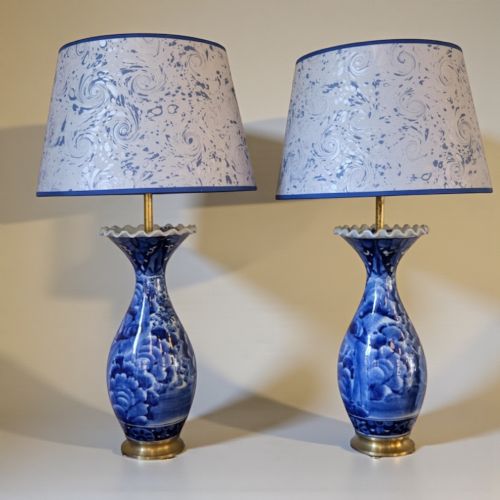
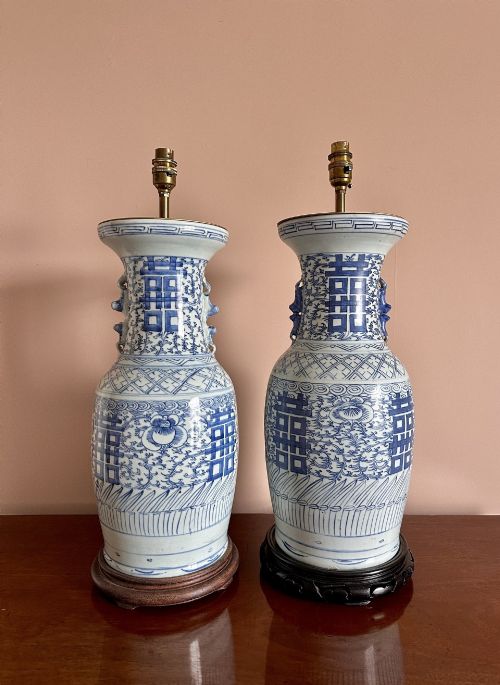
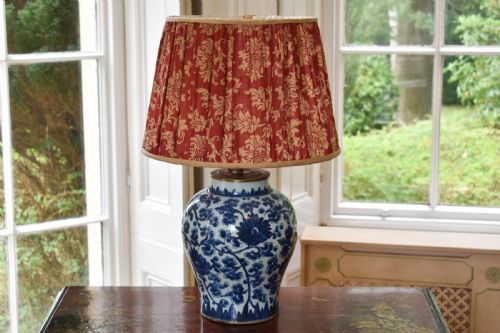
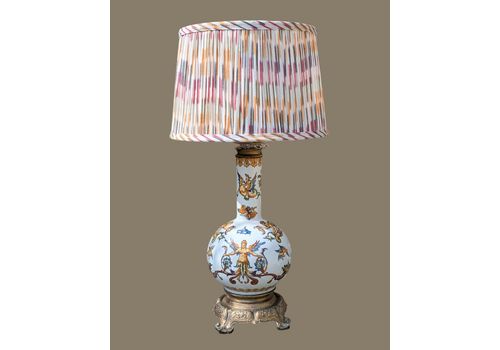
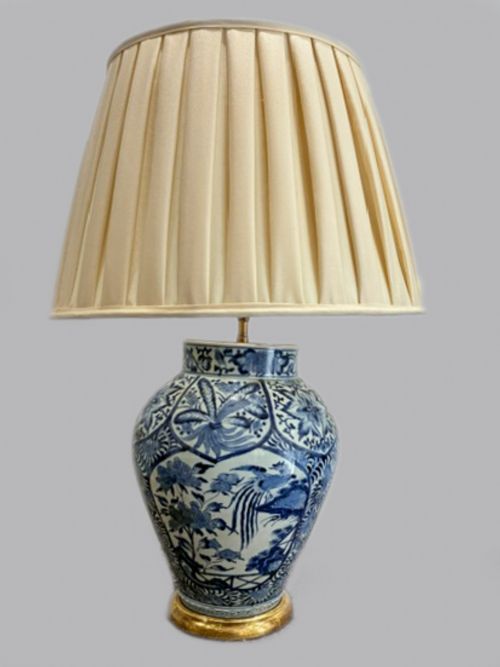
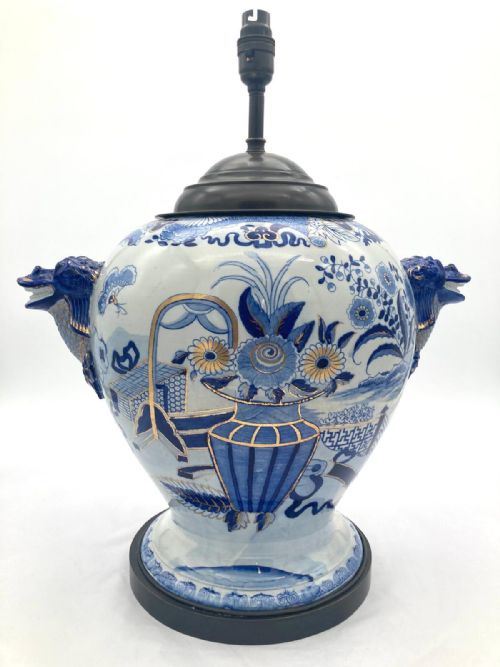
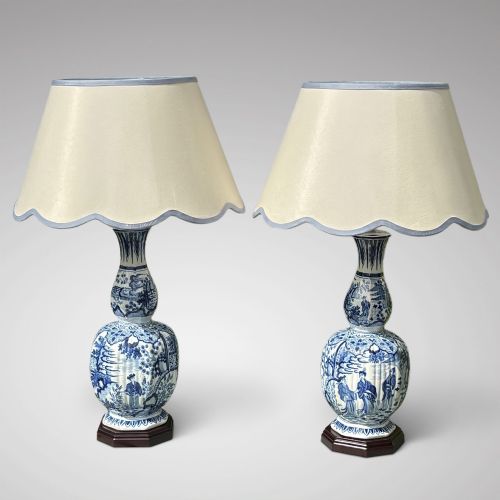
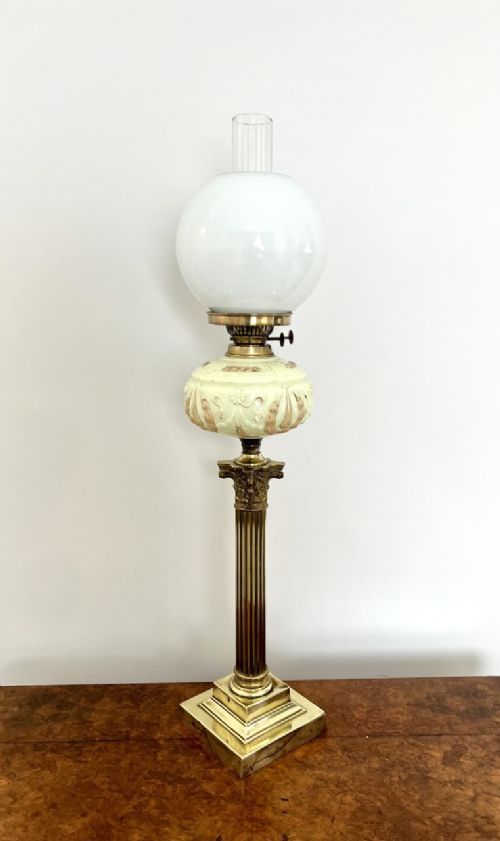
White ceramic desk lamps on this page are predominantly formed from converted antique vases, ginger jars, and oil lamps originating from Chinese, Japanese, and European kilns across the seventeenth, eighteenth, and nineteenth centuries. Buyers searching for a white ceramic desk lamp encounter numerous blue and white porcelain pieces alongside earthenware, majolica, and Paris porcelain adaptations mounted for modern illumination.
The forms span baluster vases, ginger jars, and figural animal designs such as German porcelain dogs and owls, often paired with silk or fabric shades and brass or gilt bases. Many feature traditional motifs including Chinese export patterns, Chinoiserie styles, and Delft designs, bridging classical ceramic artistry and practical task lighting.
Materials and construction
The bodies of these lamps rely on hard-paste porcelain, earthenware, and soft-paste ceramic, shaped on the potter's wheel or in moulds before receiving cobalt blue, famille rose, or majolica glaze applications. Artisans historically fired these vessels as decorative or utilitarian containers long before subsequent generations drilled the ceramic base to thread electrical wiring.
Metal mounts in brass, ormolu, and cast bronze frequently secure the ceramic body to a weighted plinth, occasionally incorporating black glass bases for stability. Fabric and silk shades complete the structure, resting upon fitted lamp hardware attached during conversion.
White Ceramic Desk Lamp Retail Price Guide 2026
Typical asking prices for white ceramic desk lamp among the pieces listed under this phrase on Sellingantiques today, from the lower quarter to the upper quarter. They describe what is for sale here now, not the wider market.
The listings span eight distinct centuries, running from seventeenth-century Japanese and Dutch pieces through to twentieth-century Art Deco porcelain.
Quality variations
Quality rests primarily on the integrity and artistic merit of the underlying ceramic vessel, distinguishing hand-potted eighteenth-century porcelain or Arita Imari from later mass-produced wares. The crispness of the underglaze painting, the subtlety of the crackleware glaze, and the weight of the supporting brass or ormolu mounts signal superior craftsmanship.
The discretion of the conversion process also dictates distinction, where professional drilling that preserves the maker's mark and avoids fracturing the antique body separates high-calibre pieces from utilitarian alterations.
Ernst Bohne Sohn·Hicks and Meigh
The White Ceramic Desk Lamp Glossary
- Ginger jar
- A broad-shouldered ceramic vessel originally designed to store spices, frequently converted into the body of a table lamp.
- Arita Imari
- Japanese porcelain produced in the Hizen province and exported through the port of Imari, characterised by underglaze blue and iron-red decoration.
- Majolica
- Heavy earthenware coated with an opaque tin-lead glaze, notable for its bright colour palette and moulded relief decoration.
- Ormolu
- Gilt bronze mounted onto furniture and ceramics to provide decorative enrichment and structural support.
- Delftware
- Tin-glazed earthenware manufactured in the Netherlands, heavily influenced by imported Chinese porcelain designs.
White Ceramic Desk Lamp: Frequently Asked Questions
How do I date an antique lamp body?
Dating relies entirely on the ceramic body rather than the lamp hardware, observing glaze characteristics, potting techniques, and painted underglaze marks.
Stylistic cues such as Chinese export motifs or Japanese Edo period designs help narrow the era in which the original vessel was fired.
Can I change the lampshade safely?
Standard harp and spider fitter systems allow you to swap lampshades easily provided the drop and width match the proportion of the ceramic vase.
Selecting silk or fabric shades with neutral tones maintains the balance between the historic ceramic base and contemporary interior schemes.
How should I clean the ceramic body?
Dust the porcelain or earthenware surface gently with a dry, soft microfiber cloth to prevent any accumulation of dirt within surface crazing.
Avoid chemical cleaning agents or submerging the lamp in water, as moisture can compromise both the historic glaze and the internal wiring.