

Vintage Cast Iron Side Table
A vintage cast iron side table brings heavy industrial weight and decorative metalwork into domestic rooms, offering a sturdy surface with unmistakable age.
Vintage Cast Iron Side Table
When you search for a vintage cast iron side table, you encounter practical items originally built for commercial, domestic, or garden use. These range from heavy pub and bistro tables to industrial machine bases fitted with timber or stone tops.
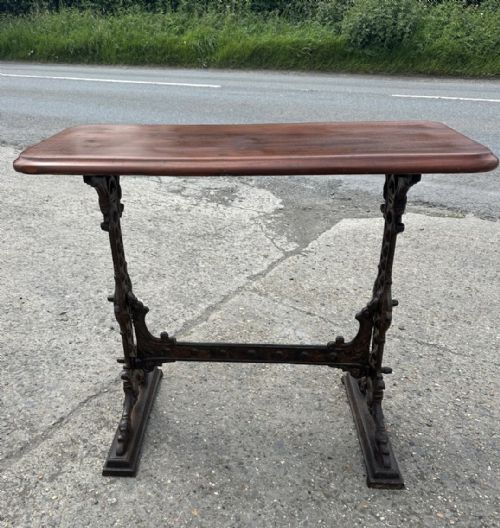
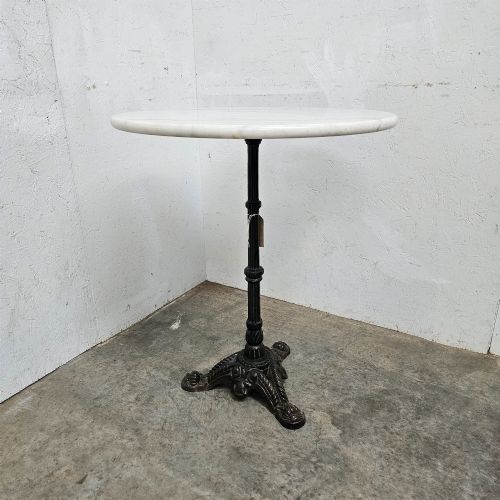
Victorian and Edwardian examples dominate the selection, alongside numerous nineteenth-century French designs. You will frequently find pieces featuring intricate pub or garden bases paired with mahogany, oak, pine, or marble surfaces.
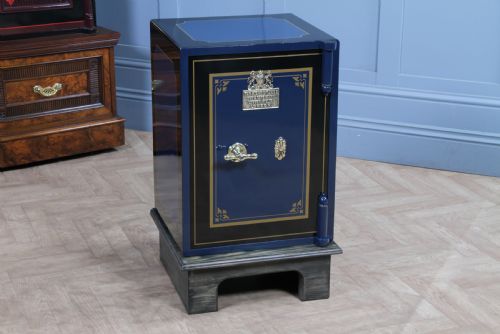
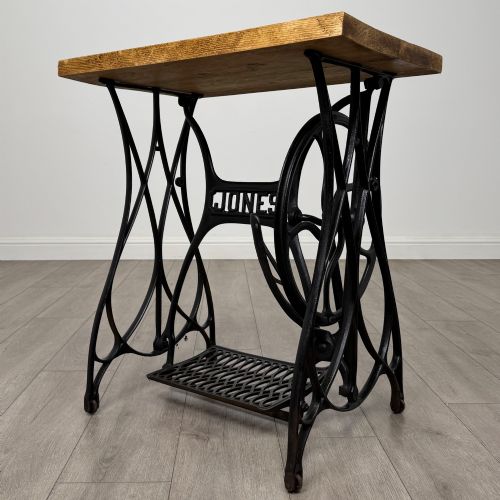
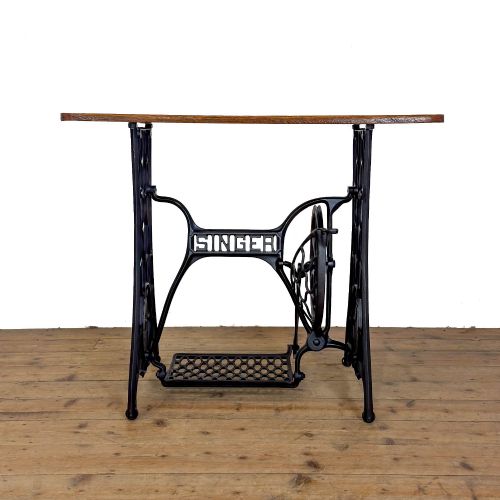
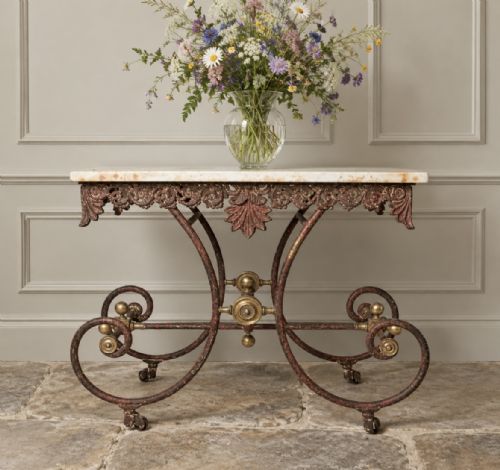
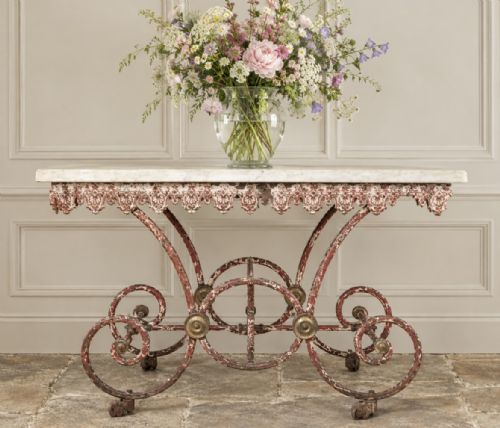
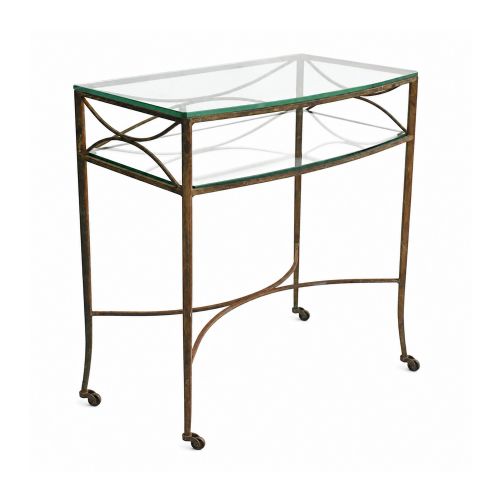
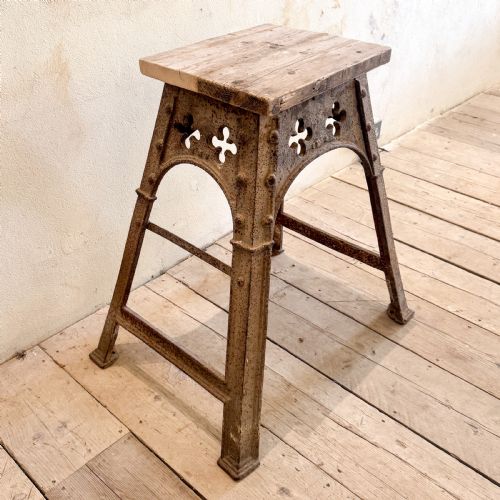
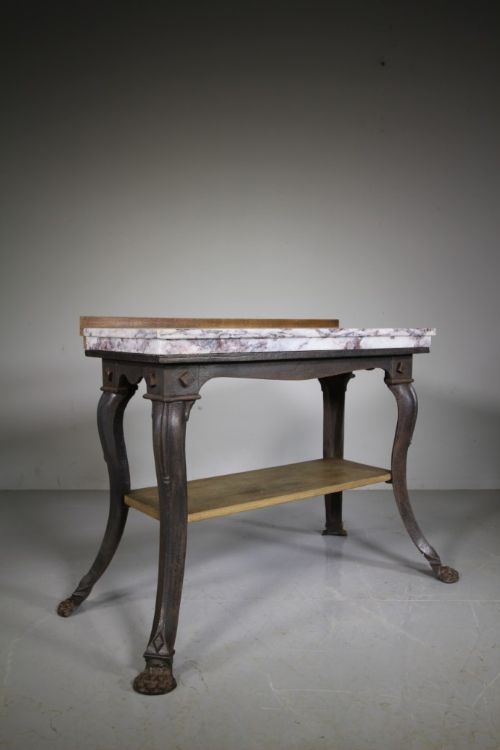
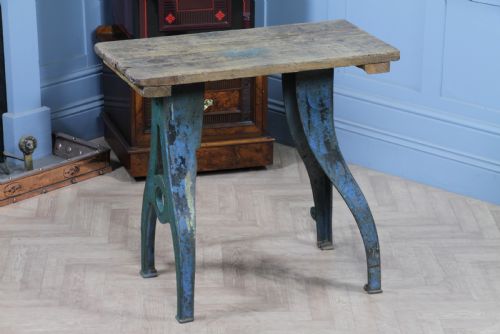
The assortment includes specialised forms like console tables, drinks tables, and adjustable stands repurposed from sewing machines or safes. Their enduring appeal lies in the contrast between robust metal legs and warm wooden or cool stone tops.
Materials and construction methods
Foundries produced the heavy metal bases using sand casting techniques, pouring molten iron into moulds to create ornate scrolling, fluted columns, or rigid industrial frames. These robust foundations were engineered to withstand commercial use in pubs, cafes, and workshops.
Tops were fashioned from dense timbers such as mahogany, oak, pine, and natural timber, or surfaced with smooth marble for French cafe and bistro settings. Artisans joined these diverse materials using sturdy bolts, brackets, and functional iron fittings designed for easy adjustment or heavy daily service.
The documented periods range from the 1880s through the Victorian and Edwardian eras into the 1930s.
Judging the quality of cast iron tables
Quality rests primarily in the crispness of the foundry casting and the integrity of the original components. Finer pieces display deeply detailed moulding on the ironwork without the pitting or smoothing often found in later reproductions.
The relationship between the base and the top determines the overall character of the piece. Tables retaining their original marble, mahogany, or seasoned timber surfaces hold greater authenticity than later assembled combinations.
Archibald Knox·Carters Of London·Singer·Tanns Defiance London
The Vintage Cast Iron Side Table Glossary
- Britannia metal
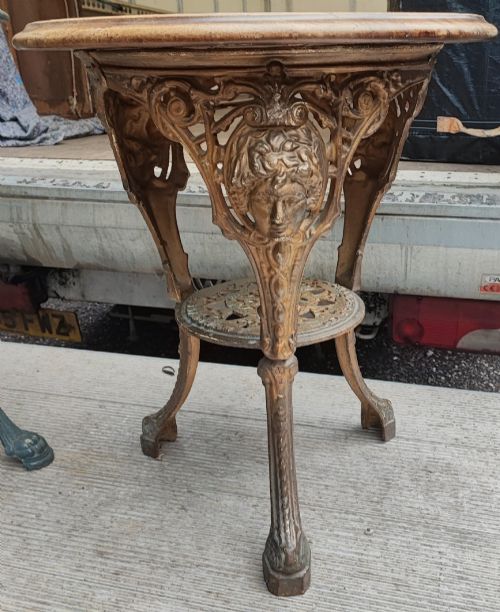
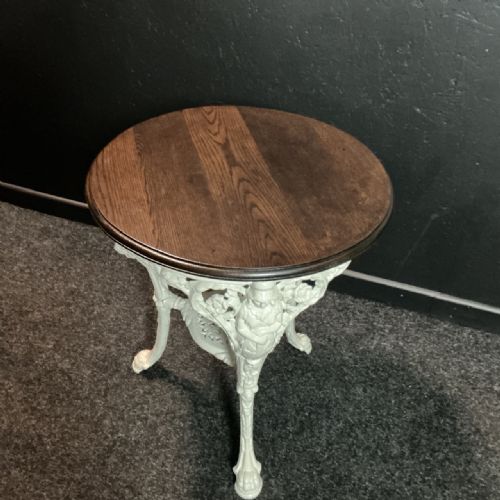
- A tin-based alloy, though in pub tables the term usually refers to a specific Victorian cast iron base design featuring Britannia figures or classical scrolling. These heavy pedestals provided stability in crowded taverns.
- Gueridon
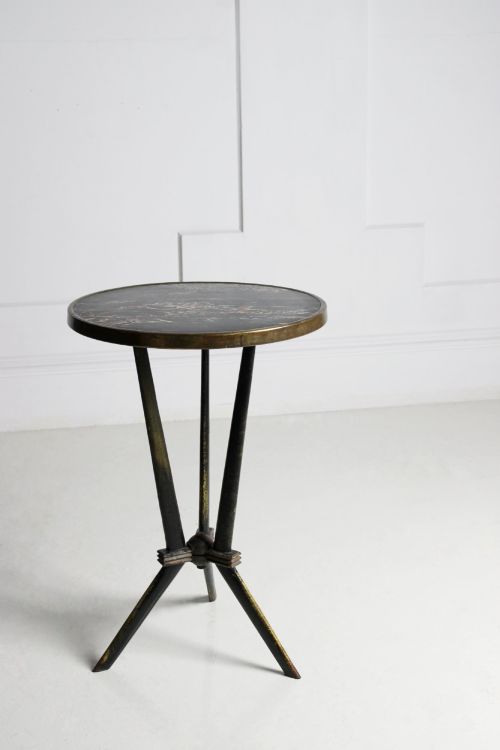
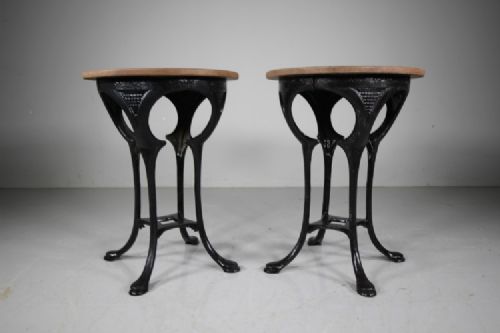
- A small French round table supported by a single central pillar or pedestal. These often feature cast iron tripod bases beneath marble or wooden tops.
- Marble top
- A smooth stone surface prized for its cool touch and resistance to heat and moisture. Commonly found on French cafe and bistro tables.
- Console table
- A table designed to stand against a wall, frequently featuring a narrow profile. Many examples utilise repurposed industrial or machine iron bases.
- Up-cycled
- The practice of adapting an older industrial base, such as a sewing machine frame or factory stand, to support a newly fitted wooden or metal top.
Vintage Cast Iron Side Table: Frequently Asked Questions
What periods do these tables come from?
The pieces span the nineteenth and twentieth centuries, with a strong representation of Victorian and Edwardian examples.
You will also discover items originating from various decades up to the 1930s, alongside nineteenth-century French designs.
How were these cast iron tables originally used?
Many served functional roles in public houses, cafes, and commercial workshops as heavy-duty serving or work surfaces.
Others functioned in domestic settings as conservatory furniture, sewing machine stands, or garden tables built to endure the elements.
Are the marble tops original to the iron bases?
Many French cafe and bistro tables retain their original marble surfaces paired with heavy iron tripod or four-leg bases.
Some pieces combine period cast iron bases with complementary stone or timber tops selected during later restoration or adaptation.
How do I identify a Victorian pub table?
Victorian pub tables typically feature robust cast iron pedestals, often with Britannia or scrolling designs, paired with heavy timber tops like mahogany.
They carry the substantial weight and utilitarian construction characteristic of nineteenth-century commercial hospitality furniture.