
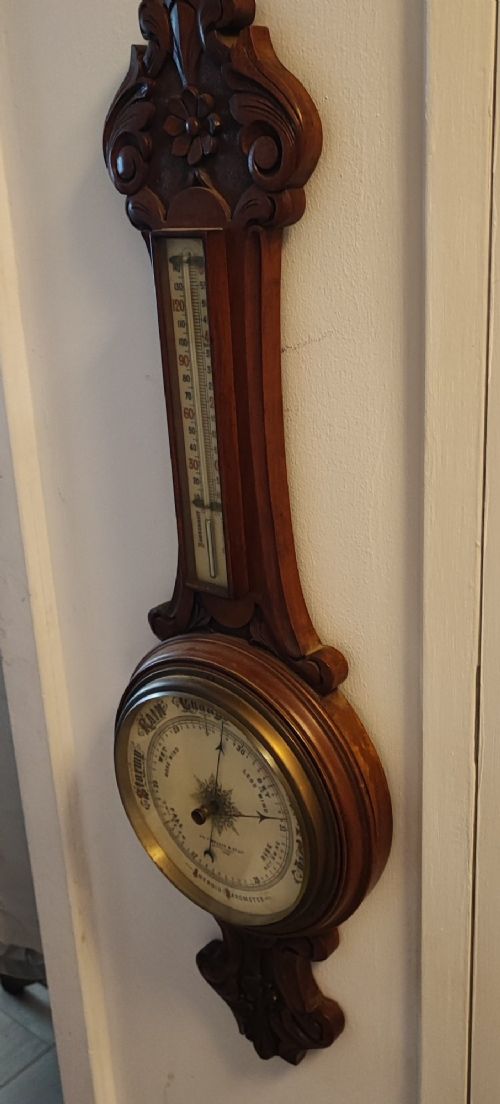
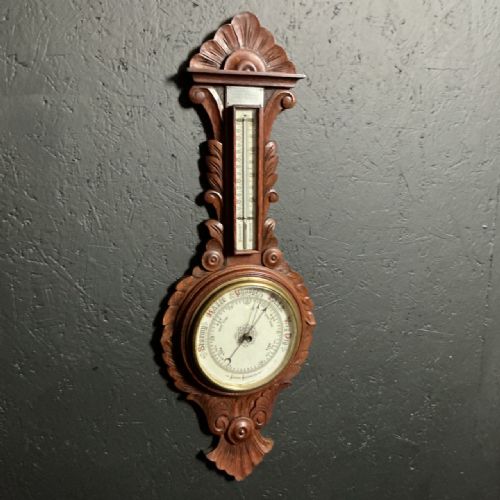
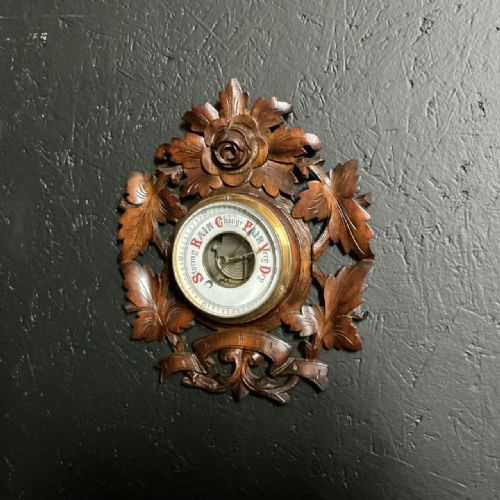
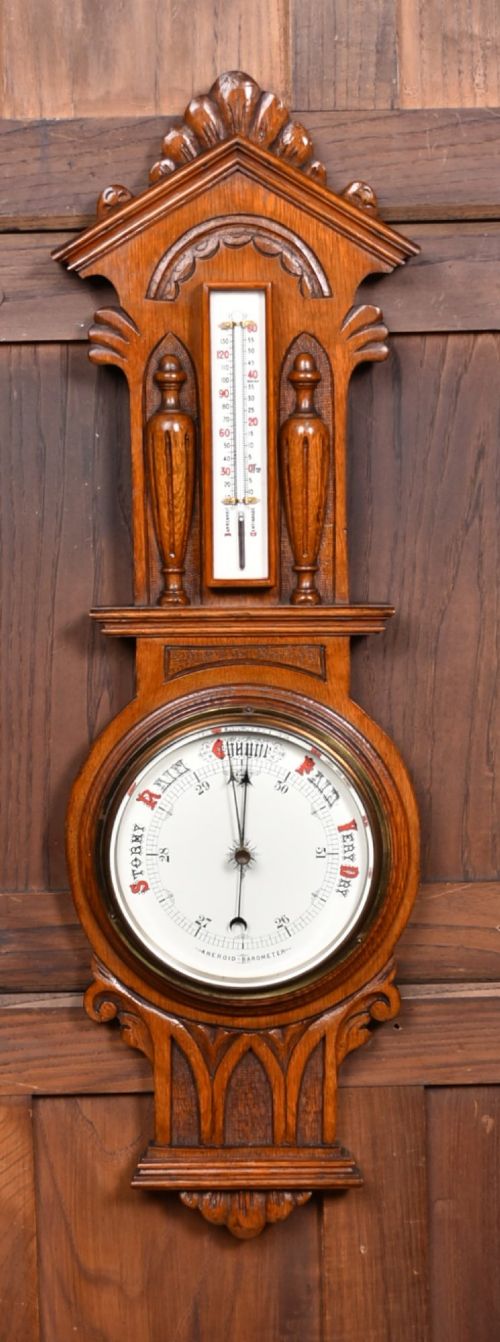




Vintage Carved Wall Barometer
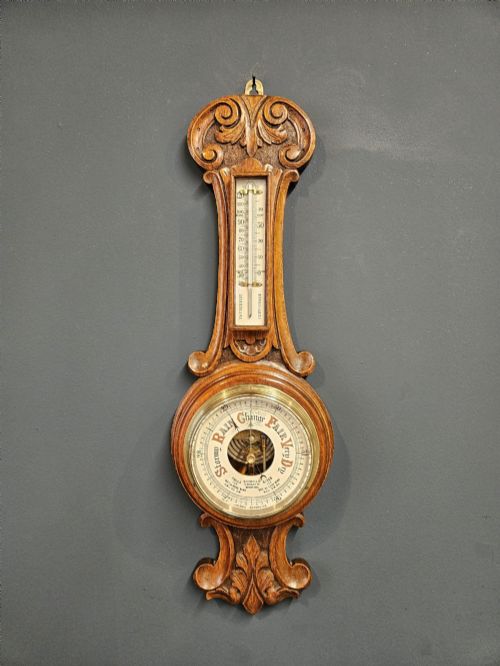
These vintage carved wall barometer pieces measure atmospheric pressure while bringing rich timber cases to domestic walls.
Vintage Carved Wall Barometer
A vintage carved wall barometer is a functional instrument designed to hang on interior walls, recording changes in air pressure. When searching for a vintage carved wall barometer, buyers encounter numerous Victorian and Edwardian iterations.
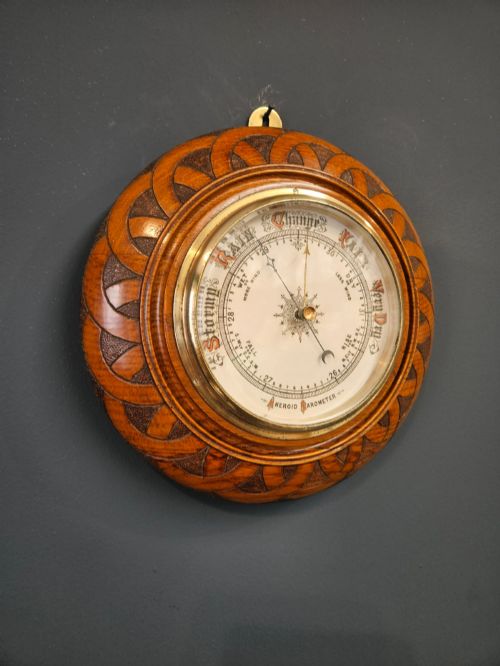
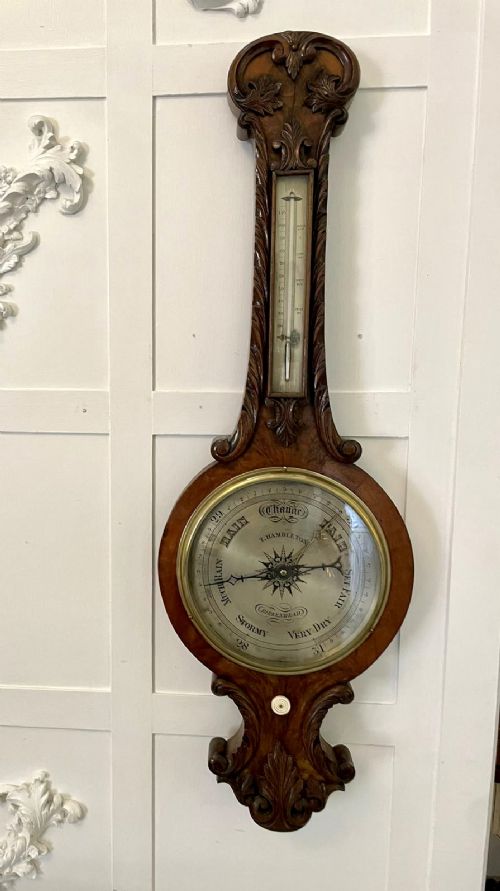
The selections on this page span the nineteenth century into the early twentieth century, showing substantial oak, walnut, and mahogany timber frames. Banjo shapes and circular instruments dominate the forms available.
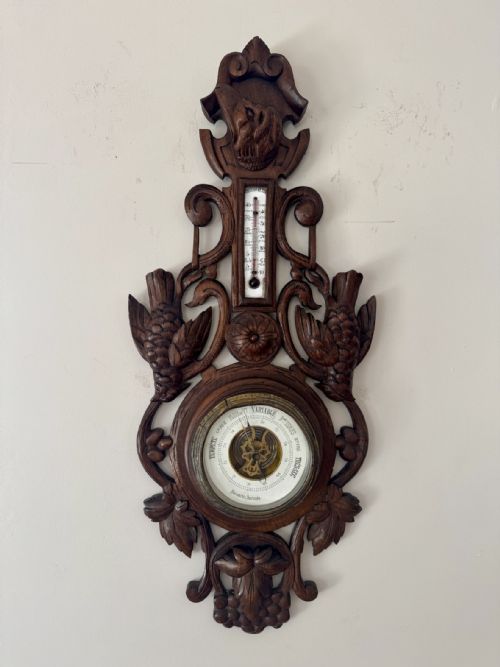
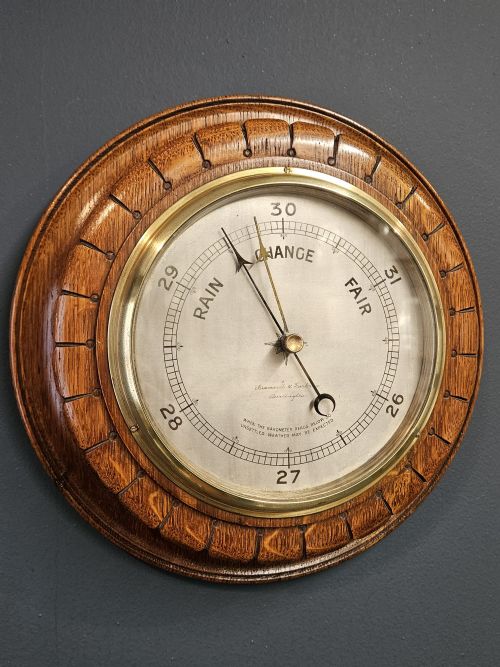
Makers such as Negretti & Zambra and Bramwell & Harbron of Darlington appear among the pieces, alongside Black Forest style carvings and ceramic dials.
Materials and construction methods
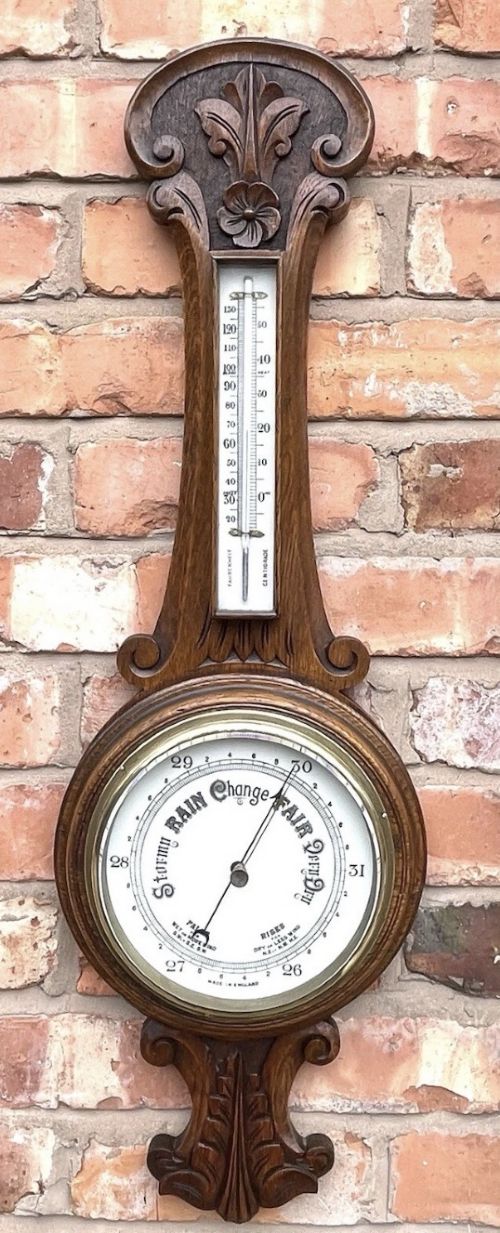
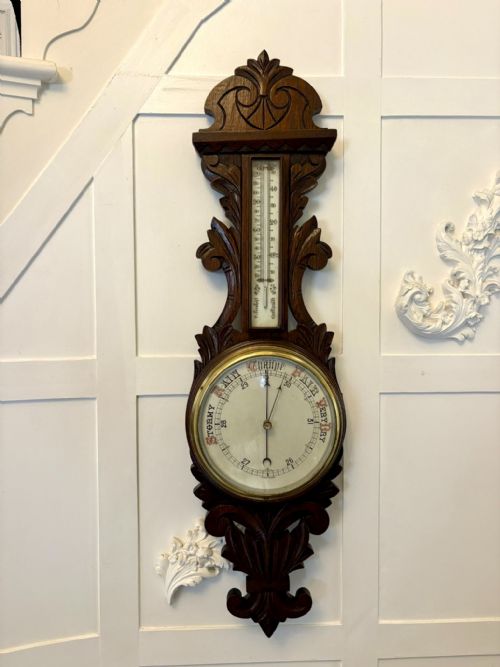
Carpenters utilised dense hardwoods like oak, walnut, and mahogany to construct the structural surrounds, applying deep hand-carving and geometric designs. Skilled artisans shaped these timbers into banjo profiles, circular frames, and stick barometer housings.
Precision instrument makers integrated brass bezels, silvered dials, and ceramic faces alongside glass covers to protect the delicate internal aneroid or mercury mechanisms.
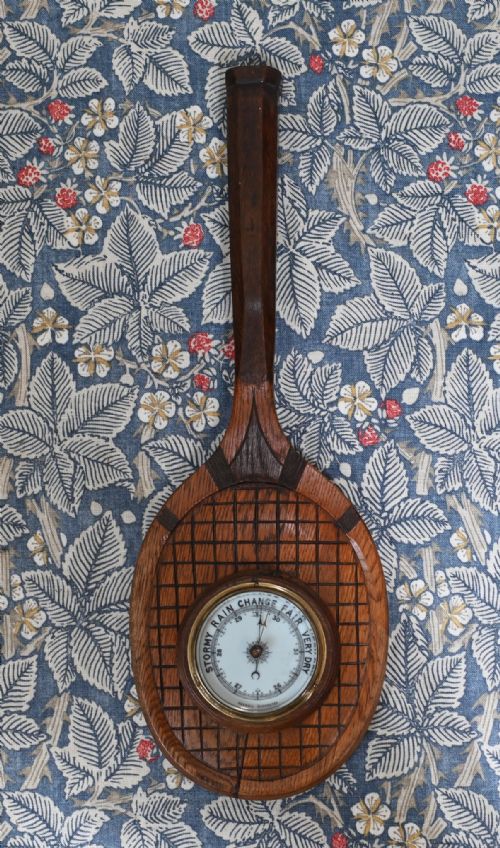
One unexpected listing includes a barometer built specifically for a tennis racquet club.
Assessing quality in carved wall barometers
Quality rests upon the crispness of the wood carving and the choice of timber, with burr walnut and figured oak representing superior craftsmanship. The intricacy of Black Forest carvings or detailed marquetry separates standard items from exceptional ones.
The legibility of the silvered or ceramic dial and the reputation of the maker inscribed upon the face also influence the standing of an instrument.
Hyde & Sons Sleaford·Bramwell & Harbron·Negretti & Zambra·W Watson & Sons
The Vintage Carved Wall Barometer Glossary
- Aneroid barometer
- An instrument that measures air pressure without liquid by using a small flexible metal box. This box expands and contracts as pressure changes.
- Banjo barometer
- A wall barometer shaped like a banjo with a bulbous lower section for the thermometer or cistern. These often feature extensive carved woodwork.
- Stick barometer
- A tall, vertical barometer containing a column of mercury. These display atmospheric pressure through the height of the liquid column.
- Silvered dial
- A metal dial face treated to produce a soft silvery finish with etched graduations. Makers engraved the scale and retailer details directly onto this surface.
- Black Forest style
- A style of wood carving originating from Central Europe known for naturalistic motifs. Pieces often depict foliage, animals, and deep relief work.
Vintage Carved Wall Barometer: Frequently Asked Questions
How do I read a vintage wall barometer?
Read the needle pointing to weather descriptions like rain or change on the dial face. Tapping the glass gently helps confirm the current atmospheric trend.
Compare the primary hand with the secondary indicator needle to see whether pressure rises or falls over the day.
Where should I hang a wall barometer?
Hang the instrument on an interior wall away from direct sunlight, radiators, and heavy draughts. Stable indoor temperatures ensure more reliable mechanical readings.
Secure the piece firmly to a wall plug or stud using the hanging bracket provided on the wooden case.
Did these barometers always include thermometers?
Many banjo and stick barometers incorporate a thermometer mounted on the trunk below the main dial. This provides a simultaneous reading of ambient room temperature alongside atmospheric pressure.
Simpler circular models often omit the thermometer entirely, focusing solely on the barometer face.
What is the difference between aneroid and mercury barometers?
Aneroid barometers use an internal metal vacuum capsule to register pressure changes safely without any liquid. This makes them robust and practical for domestic wall hanging.
Mercury barometers rely on a tall glass tube filled with liquid metal to measure atmospheric weight, requiring careful handling during transit.