




Victorian Weather Gauge
These Victorian weather gauge instruments combine scientific utility with period craftsmanship, offering accurate atmospheric measurement wrapped in rich historic timber cases.
Victorian Weather Gauge
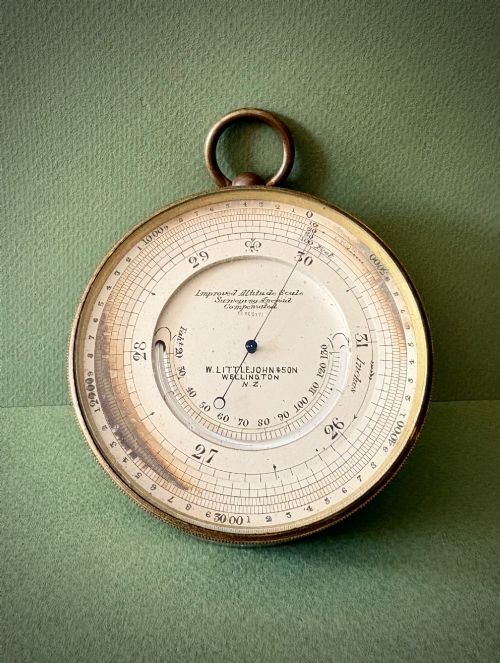
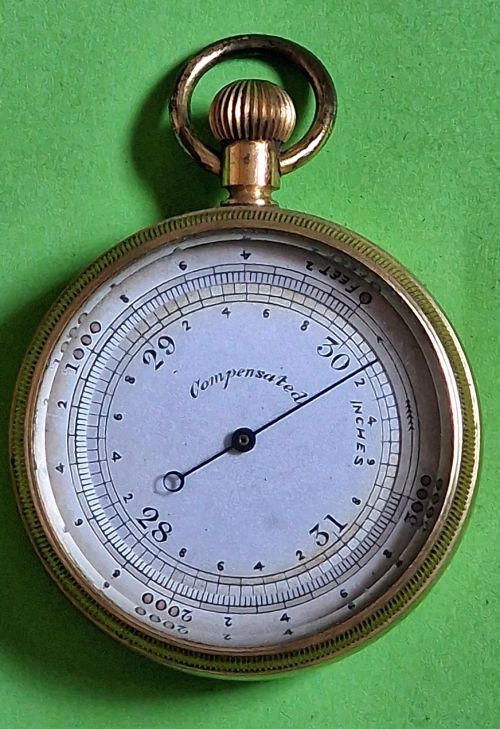
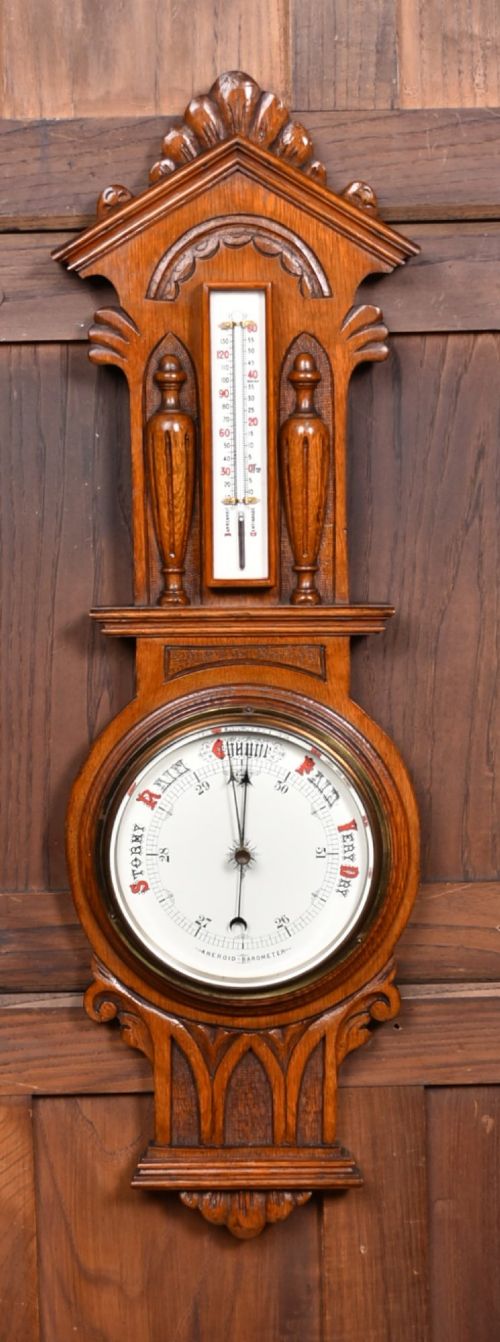
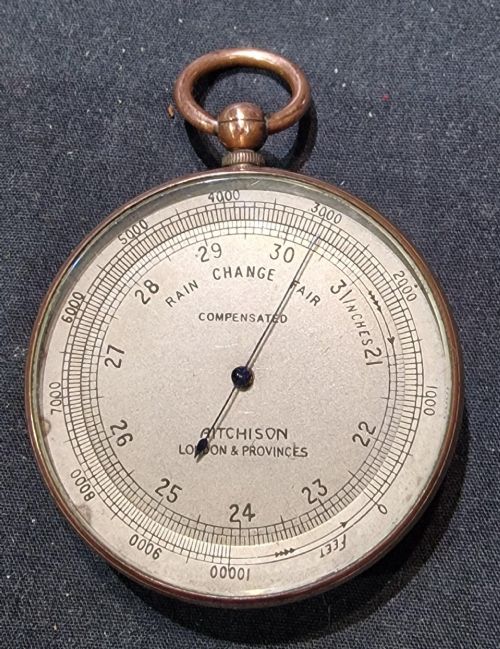
When you search for a Victorian weather gauge, you encounter an array of barometers, hygrometers, barographs and thermometers designed to record atmospheric pressure, humidity and temperature. The selections span pocket altimeters, substantial oak wall barometers, and mahogany banjo barometers produced throughout the nineteenth century.
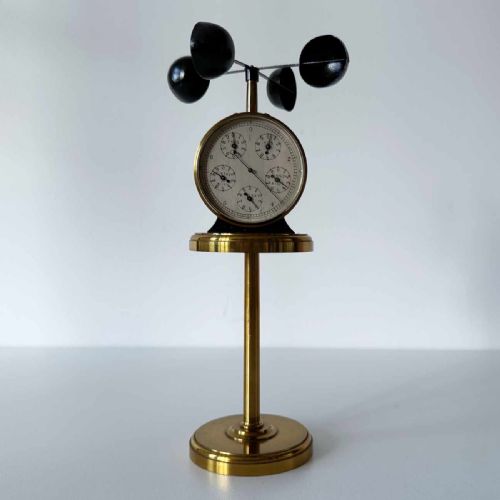
Wall-mounted banjo barometers in mahogany, oak or walnut dominate the domestic pieces, while specialised scientific instruments such as hair hygrometers, anemometers and recording barographs appear alongside pocket-sized instruments.
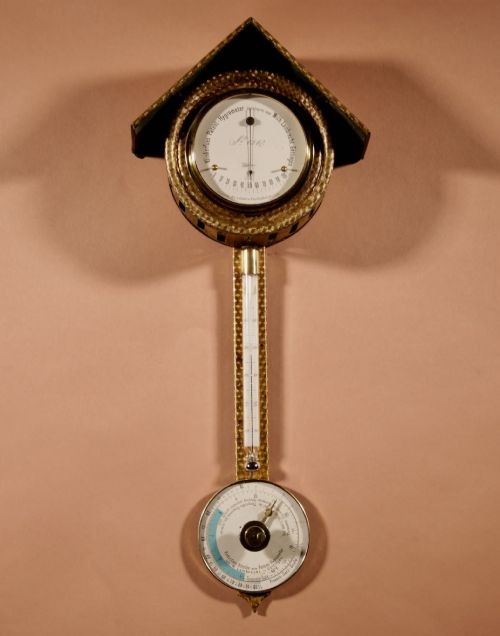
The materials reflect period tastes, pairing silvered brass dials with rich timbers like rosewood and ebonised wood, alongside carved Victorian Black Forest frames.
Materials and construction methods
Cases rely on seasoned hardwoods including oak, mahogany, walnut and rosewood, often featuring turned bezels, intricate wood carving, or marquetry inlay. Timber selection governed both domestic wall pieces and cased scientific apparatus.
Dials utilise silvered brass, porcelain or ceramic, inscribed with detailed meteorological scales and maker signatures. Glass protects delicate indicator needles and thermometer tubes within brass or wooden rims.
Mechanical interiors combine steel springs, levers and vacuum chambers for aneroid mechanisms, or delicate human hair elements for hygrometers, calibrated to register minute atmospheric shifts.
The listings encompass glass, brass, oak, mahogany, metal, steel, walnut and ceramic materials across the nineteenth and early twentieth centuries.
Assessing quality in meteorological instruments
Quality rests in the precision of the mechanical movement and the crispness of the dial engraving. Maker signatures from reputable firms often indicate superior internal engineering and accurate calibration.
Cabinetwork distinguishes standard production from finer examples, seen in deep carving, choice veneers, well-fitted bezels and intact original glass. The harmony between the instrument's housing and its scientific mechanism dictates overall desirability.
Wilh Lambrecht Gottingen Germany·Poulenc Freres of Paris·Elliott Brothers·Short and Mason London·Negretti and Zambra·J Hicks of London·James H Kelly of Glasgow·Blake and Son·Dollond of London·W Watson and Sons London
The Victorian Weather Gauge Glossary
- Aneroid barometer
- An instrument that measures atmospheric pressure by the expansion and contraction of a flexible metal capsule, omitting liquid mercury. This design allowed for compact pocket instruments and robust wall barometers.
- Hygrometer
- A device used to measure the humidity level in the air. Many period examples utilise human hair to detect moisture changes.
- Barograph
- A recording barometer that traces atmospheric pressure over time onto a paper chart fitted to a rotating drum. These self-contained units typically sit in glazed mahogany or walnut cases with drawer storage for spare charts.
- Anemometer
- An instrument designed to measure wind speed and pressure. Specific patterns attribute their design to notable nineteenth-century engineers.
- Banjo barometer
- A domestic wall barometer housed in a characteristic curved wooden case resembling a banjo. They commonly incorporate hygrometers, thermometers and spirit levels alongside the main dial.
Victorian Weather Gauge: Frequently Asked Questions
How do I maintain a wooden barometer case?
Keep the instrument away from direct heat sources and sudden temperature fluctuations to prevent the timber case from splitting or warping.
Apply a microcrystalline wax periodically to nourish the polished wood surface without building up residue.
Are these old barometers still accurate?
Many aneroid movements retain functional sensitivity and respond correctly to local barometric pressure shifts once properly calibrated.
Adjustment screws located on the rear or beneath the dial allow for tuning against known local pressure readings.
Where were these instruments typically placed?
Domestic wall barometers and banjo styles hung in hallways, libraries or entrance ways where household occupants checked conditions before heading outdoors.
Desk thermometers and smaller cased barographs occupied study tables or office desks for continuous meteorological tracking.
How can I distinguish a wall barometer from a ships barometer?
Ships barometers often feature gimbal mountings or heavy brass protective cases designed to swing with the motion of a vessel at sea.
Domestic wall versions rely on flat wooden backboards intended for secure vertical mounting on interior walls.