

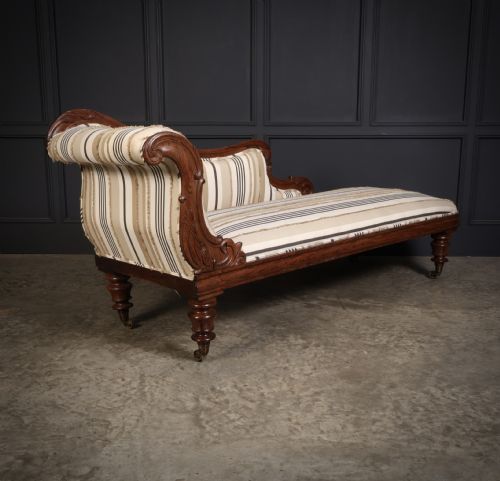


Vintage Carved Daybed
A vintage carved daybed brings architectural presence and reclining comfort to a room, spanning styles from Victorian mahogany to French painted cane.
Vintage Carved Daybed
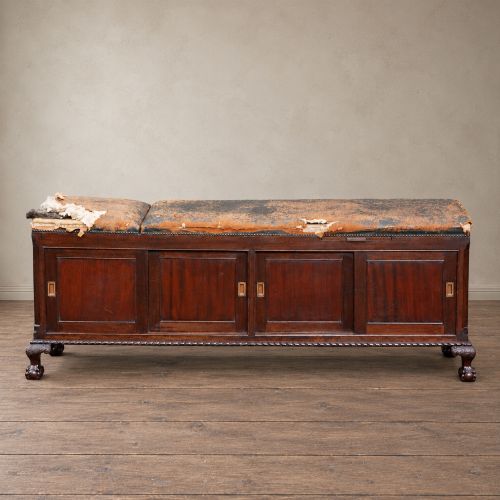
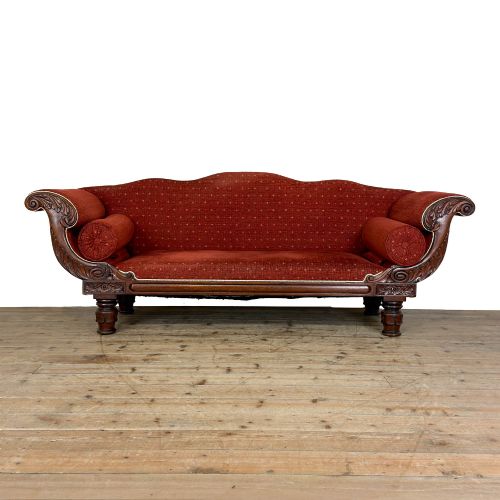
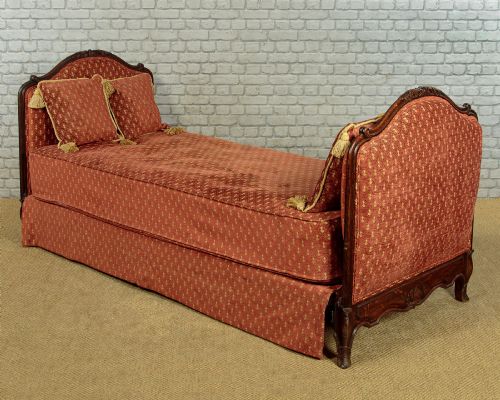
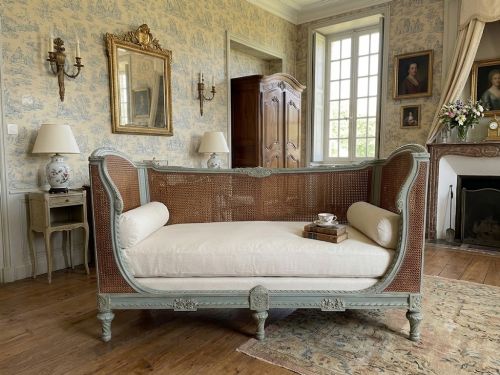
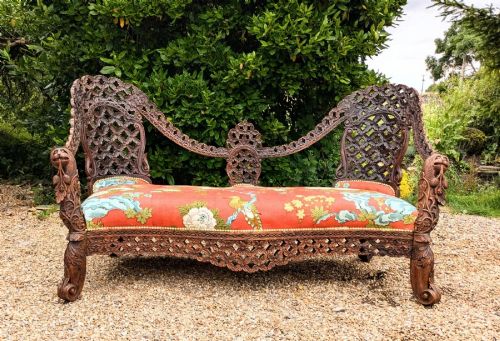
A vintage carved daybed encompasses a broad range of nineteenth- and early twentieth-century seating forms designed for horizontal rest and formal display. When searching for this phrase, buyers encounter variations spanning Anglo-Indian hardwood pieces, French Louis XVI style painted frames, and heavy Victorian mahogany constructions.
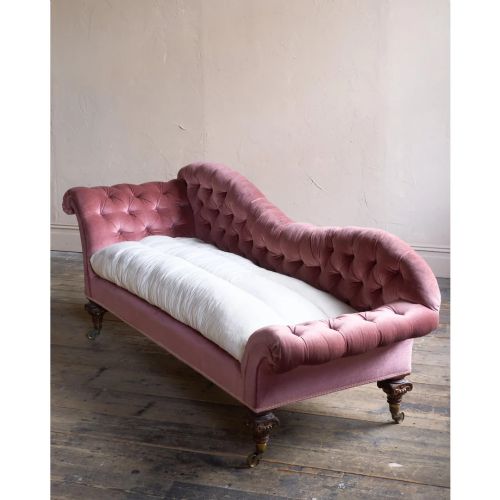
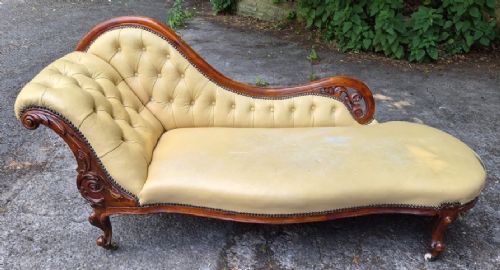
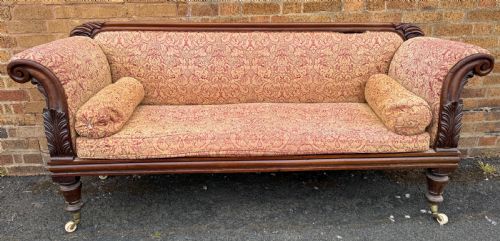
The selection on this page leans heavily towards nineteenth-century examples alongside Edwardian and 1920s interpretations. Forms extend beyond standard daybeds to include chaise longues, settees, window seats, and scroll-end sofas sharing carved wooden elements.
Origins vary considerably, moving from English country houses and Irish workshops to French provincial centres and South Asian artisanal traditions. This diversity means a piece might function as a central architectural sofa or a subtle window seat depending on its regional provenance.
Materials and construction methods
Makers relied primarily on dense timbers such as mahogany, rosewood, oak, and exotic hardwoods to support elaborate hand-carvings and structural weight. These woods provide the necessary rigidity for scroll ends, ionic column legs, and deep mouldings.
Cane work and upholstery define the seating surfaces, utilising woven rattan alongside traditional fabrics like velvet, linen, and contemporary textiles. Frames frequently incorporate brass accents, gilt decoration, or painted finishes to achieve specific period aesthetics.
Vintage Carved Daybed Retail Price Guide 2026
Typical asking prices for vintage carved daybed among the pieces listed under this phrase on Sellingantiques today, from the lower quarter to the upper quarter. They describe what is for sale here now, not the wider market.
Current listings feature hardwood, mahogany, brass, cane, and velvet across nineteenth-century and early twentieth-century periods.
Evaluating the standard of craftsmanship
Quality resides in the crispness of the hand-carved detail and the selection of timber used for the primary frame. Superior pieces display deep, intentional carving rather than shallow moulding, utilising richly figured mahogany or dense exotic hardwoods that hold structural integrity over generations.
The integrity of the structural joinery and integrated support work, whether tightly woven cane panels or solid wooden rails, separates standard commercial items from exceptional studio output. Original hardware and undisturbed surface patination further distinguish higher-tier examples.
The Vintage Carved Daybed Glossary
- Bergere
- A French upholstered armchair or sofa with enclosed wooden sides, frequently incorporating woven cane panels. This style gained prominence during the eighteenth century and heavily influenced nineteenth-century revivals.
- Chaise Longue
- An elongated chair or sofa designed for reclining, combining the backrest of a seat with the footrest of a bed. Nineteenth-century versions often feature single scroll ends and ornate mahogany frames.
- Canapé
- A French term for an ornamental sofa or settee, often built with exposed carved wooden framing and decorative painted finishes. These pieces served as formal seating in nineteenth-century salons.
- Scroll End
- A sweeping, curved wooden terminal found on the arms or ends of daybeds and settees, popular during the Regency and William IV periods. It provides a distinct architectural silhouette referencing classical furniture.
- Takhat
- A traditional Indian low platform or daybed constructed from heavy hardwoods, often featuring carved supports. These items reflect South Asian domestic traditions distinct from European cabinetmaking.
Vintage Carved Daybed: Frequently Asked Questions
Where were daybeds typically placed?
Nineteenth-century households positioned these seating forms in public drawing rooms, private boudoirs, and spacious window alcoves. They served dual purposes for daytime lounging and casual receiving.
Later Edwardian and country house interiors utilised them similarly, often placing them against long walls to highlight carved mahogany or painted frames.
How do I identify a French style daybed?
French daybeds and canapés display distinct stylistic markers such as painted wooden frames, Louis XV or Louis XVI carved motifs, and integrated caning. Their silhouettes often reference classical furniture forms with curved cabriole legs or decorative gilt work.
They rely heavily on aesthetic lightness compared to heavier Victorian or William IV mahogany equivalents.
What is an Anglo-Indian daybed?
Anglo-Indian and Ceylonese pieces combine British furniture forms with South Asian woodworking techniques and dense native hardwoods. They frequently incorporate intricate pierced carvings and woven cane seating.
These items were produced during the nineteenth century for export or colonial residences.
Are these beds meant for sleeping?
Most historical daybeds, chaise longues, and settees were designed primarily for daytime rest, reading, and formal lounging rather than nightly sleeping. Their dimensions and scroll ends restrict full extension unless custom mattresses are fitted.
Modern buyers often utilise them as day-use seating or occasional guest beds.