
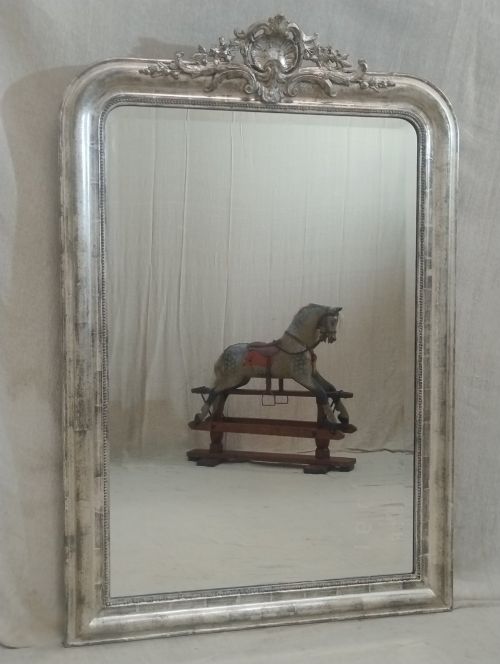
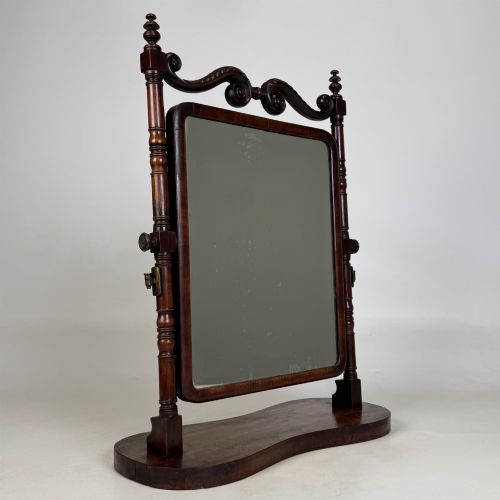
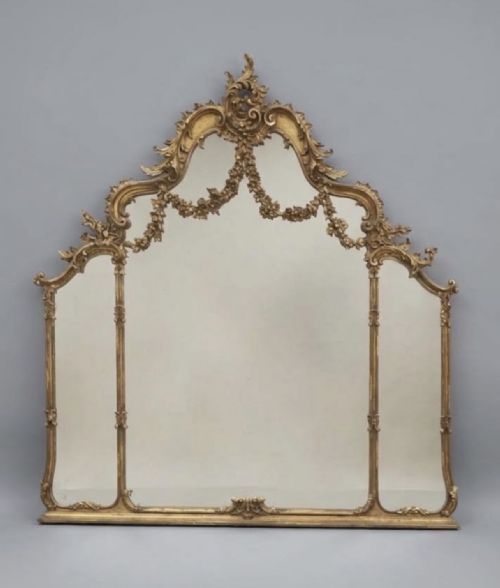
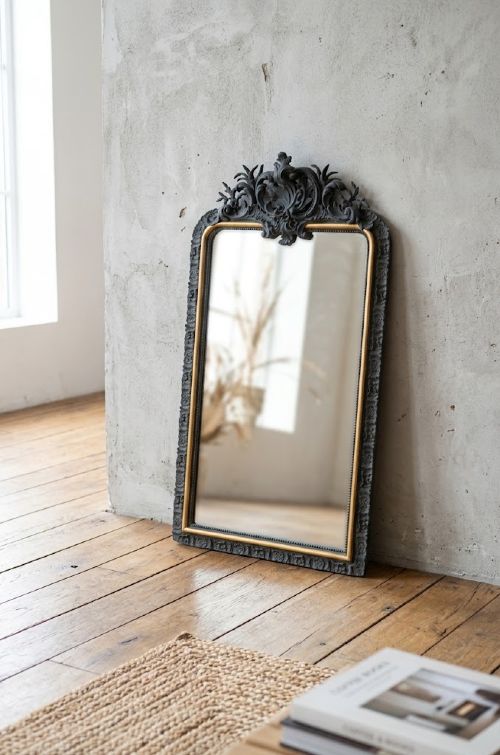
Vintage Carved Crest Mirror
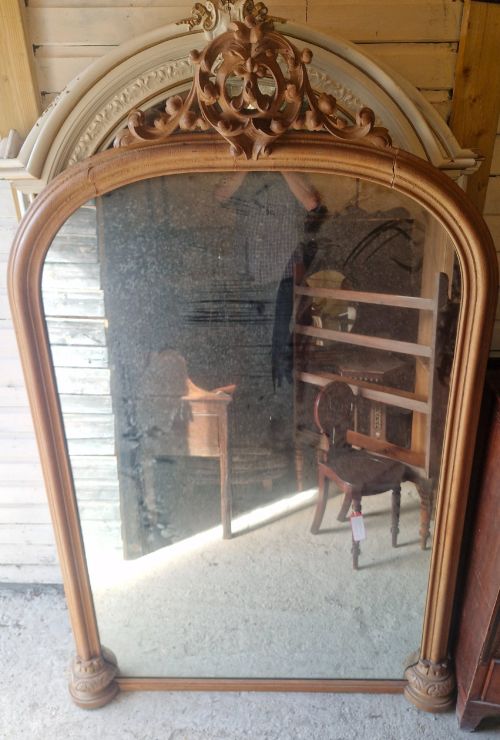
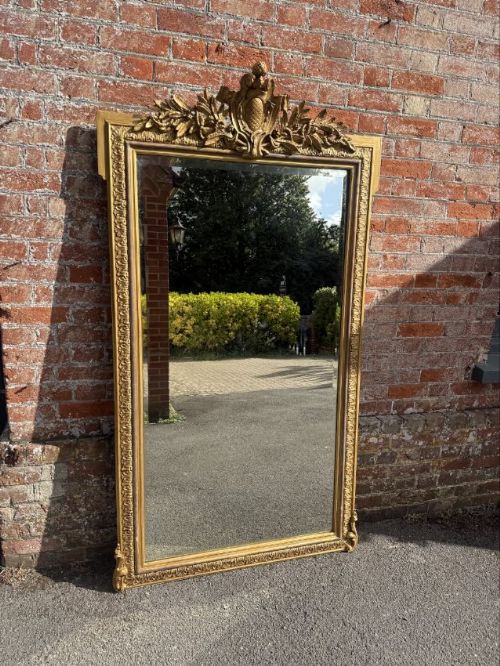
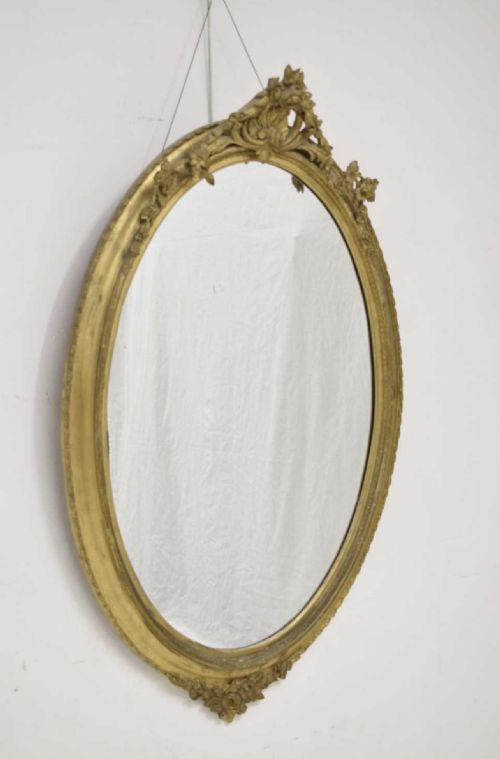
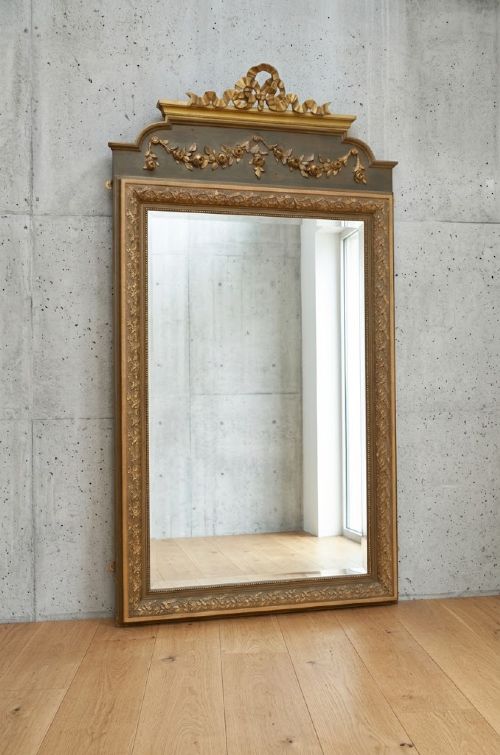
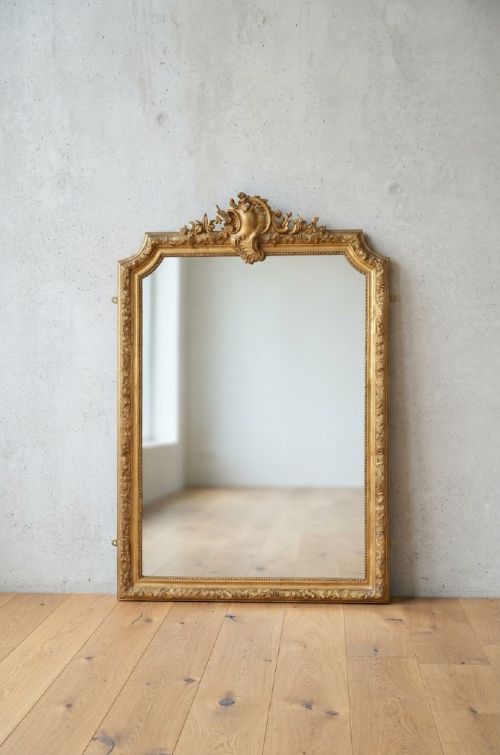
A vintage carved crest mirror brings sculptural focal weight to a room through traditional woodworking and gilded ornament.
Vintage Carved Crest Mirror
A vintage carved crest mirror brings sculptural focal weight to a room through traditional woodworking and gilded ornament.
Buyers seeking a vintage carved crest mirror find wall hanging and overmantel formats spanning the eighteenth, nineteenth, and early twentieth centuries.
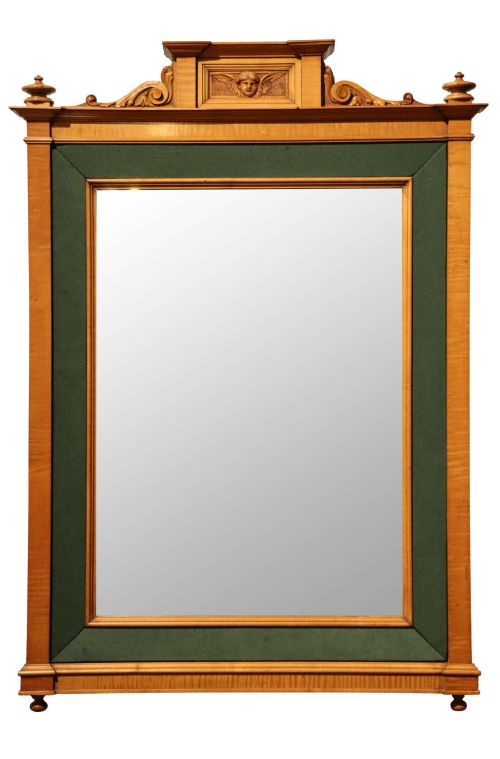
The assortment relies heavily on nineteenth century French and English examples, featuring elaborate architectural frames and prominent top ornamentation.
Materials and construction
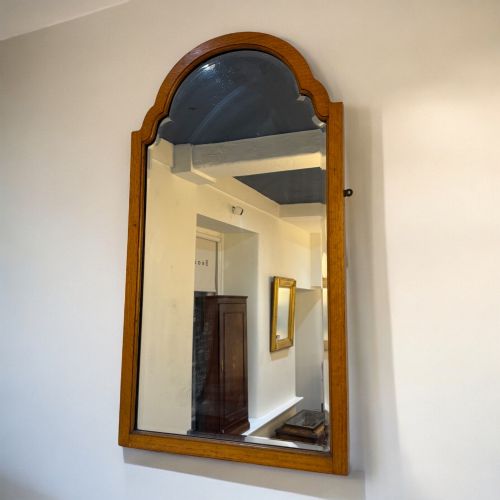
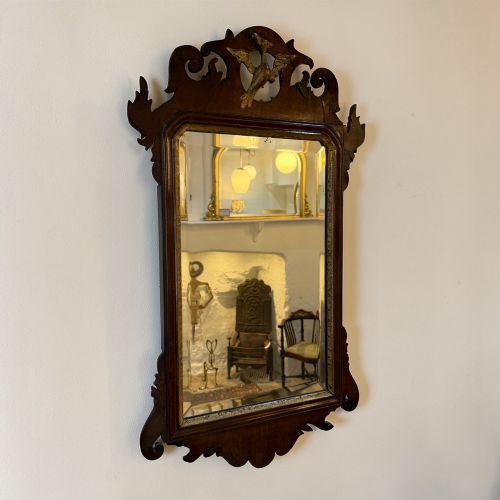
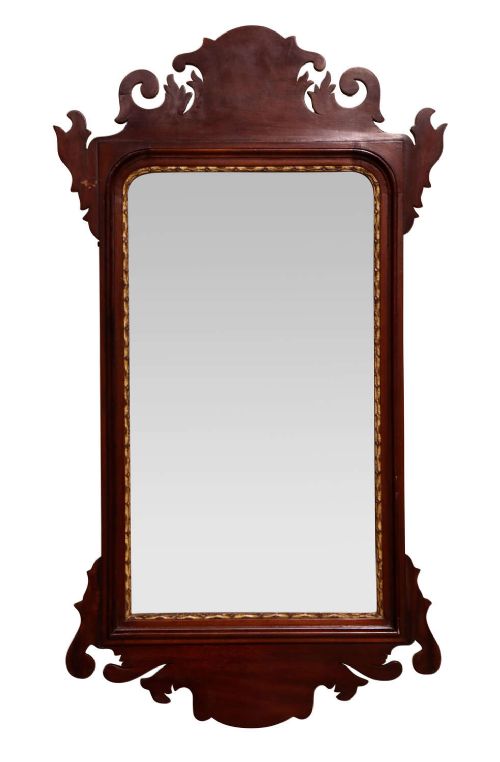
Frames rely on solid timbers such as mahogany, walnut, oak, and yew, shaped by hand and joined with traditional cabinetmaking methods.
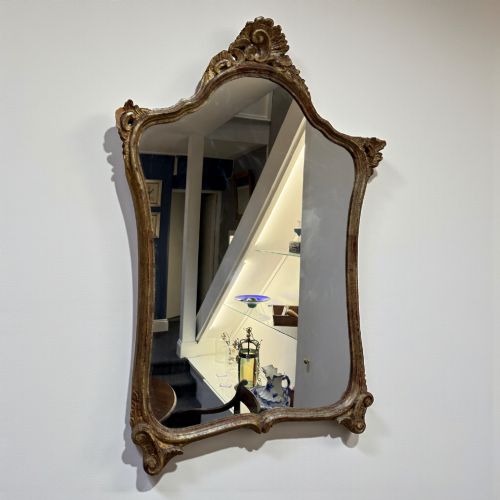
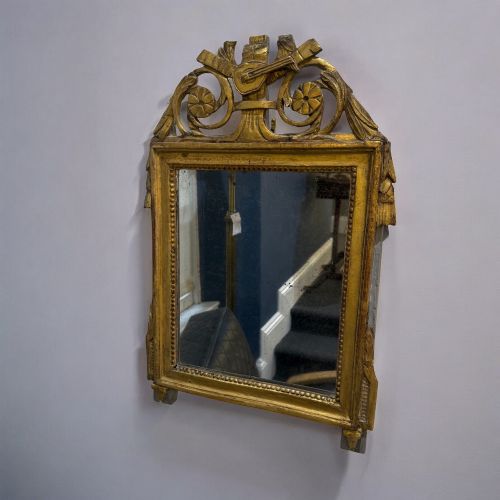
Giltwood and gesso pieces receive layers of plaster composition applied over wood bases, then carved and coated in gold leaf or silver leaf.
Reflective surfaces include early mirror glass and mercury plate, secured within the rebated frame backs.
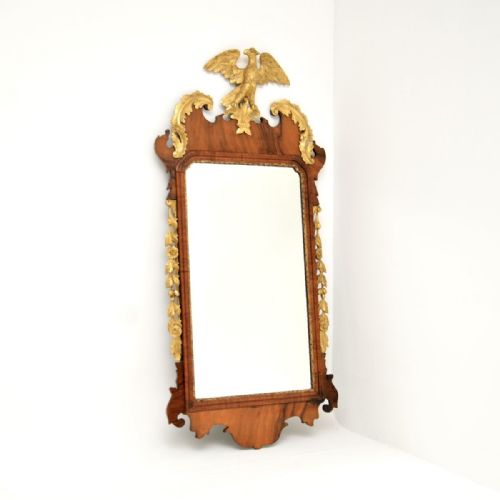
Several mirrors feature fierce spread eagles perched atop the crest, keeping a watchful glass eye over the room.
Assessing quality
Depth and crispness of the hand carving on the crest separate superior examples from softer, mechanically cast ornament.
Survival of original gilding and silver leaf surfaces determines authenticity and visual depth, distinguishing untouched pieces from later overpainting.
The Vintage Carved Crest Mirror Glossary
- Giltwood
- Wood carved and coated with gold leaf over a prepared ground. It provides a luminous surface that catches ambient light.
- Gesso
- A plaster mixture applied to wood frames to build up decorative relief. It allows intricate moulded and carved motifs before gilding.
- Overmantel mirror
- A large horizontal mirror designed to hang above a fireplace mantel. These pieces anchor principal reception rooms.
- Pier mirror
- A tall narrow mirror made to hang on the wall space between windows. They reflect additional light into period interiors.
- Mercury plate
- An early mirror glass produced using a tin and mercury amalgam. It exhibits characteristic soft grey mottling and foxing.
Vintage Carved Crest Mirror: Frequently Asked Questions
Where should I hang an overmantel mirror?
Position the piece centrally above a fireplace mantel to reflect room lighting and anchor the surrounding wall space.
Ensure adequate wall fixings support the considerable weight of timber and gesso frames.
How do I date a carved wooden mirror?
Examine the timber species, backboards, joinery methods, and the style of the carved crest ornament.
Evolving decorative movements from Georgian mahogany fretwork to Victorian and Belle Époque gilding provide clear chronological markers.
What causes dark spots on old mirrors?
Foxing occurs when moisture degrades the backing amalgam over decades of exposure.
This chemical ageing process is typical in genuine antique glass plates.
How do I clean a giltwood frame?
Dust gently with a soft dry brush to remove surface particles without disturbing fragile leaf.
Avoid liquid cleaners and moisture entirely on gilded or gesso surfaces.