


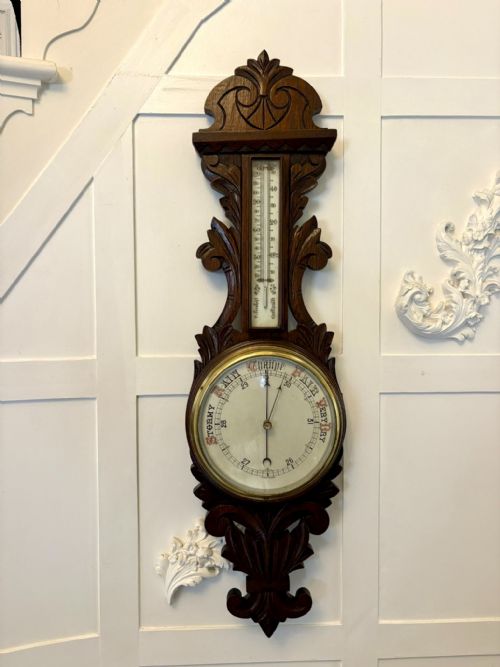

Vintage Carved Aneroid Barometer
A vintage carved aneroid barometer records atmospheric pressure through a mechanical metal cell, bringing period craftsmanship and practical weather tracking into a room.
Vintage Carved Aneroid Barometer
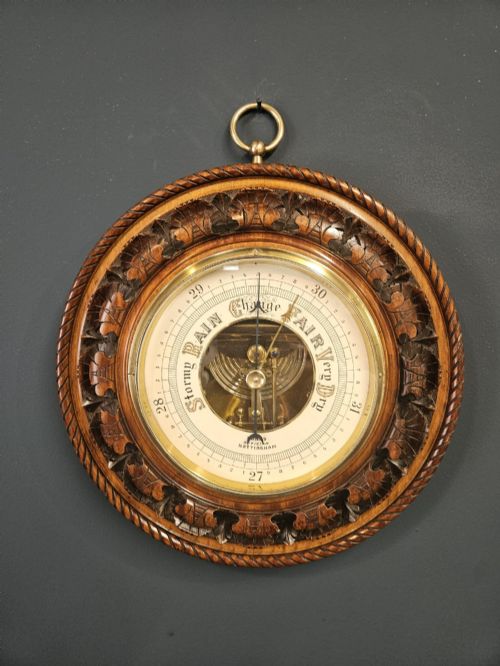
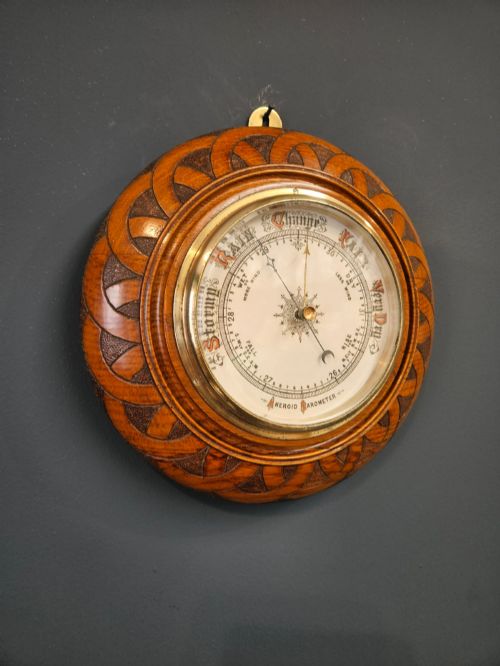
A vintage carved aneroid barometer brings together mechanical weather-recording instruments and detailed woodwork from the nineteenth and early twentieth centuries. These instruments measure atmospheric pressure without liquid mercury, relying instead on an internal flexible metal capsule that expands or contracts with weather changes.
Originating predominantly from Victorian and Edwardian workshops, alongside distinctive Black Forest carving traditions, these instruments served as both scientific tools and prominent domestic furnishings in period homes.
Materials and construction
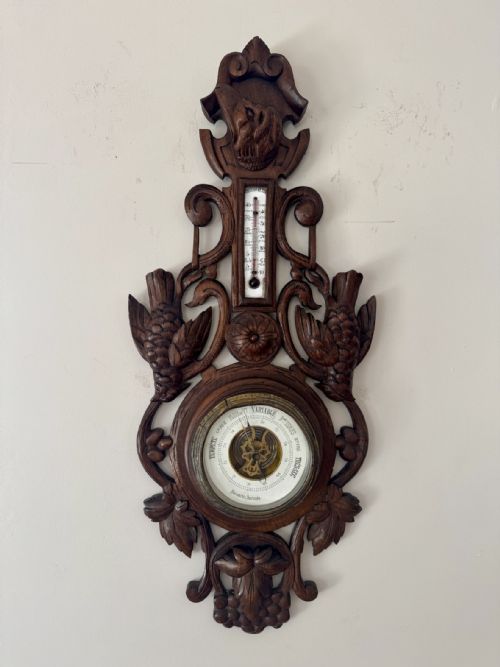
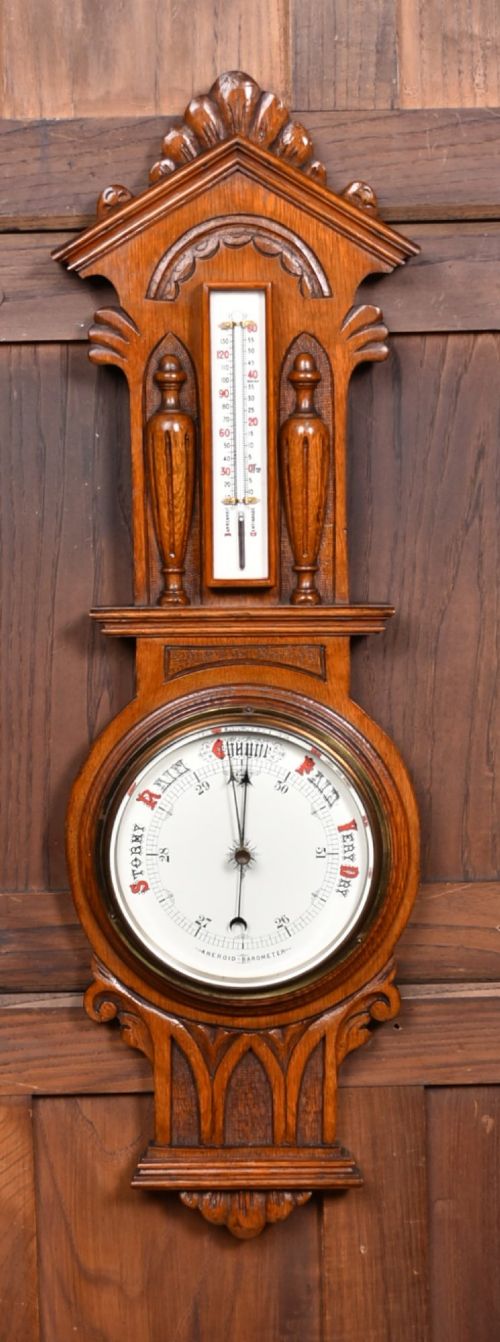
Cabinetmakers constructed the wooden housings primarily from solid oak, walnut, and mahogany, selecting timbers that responded well to deep hand-carving and turning. Dense hardwoods allowed artisans to execute high-relief botanical motifs, geometric borders, and architectural pediments.
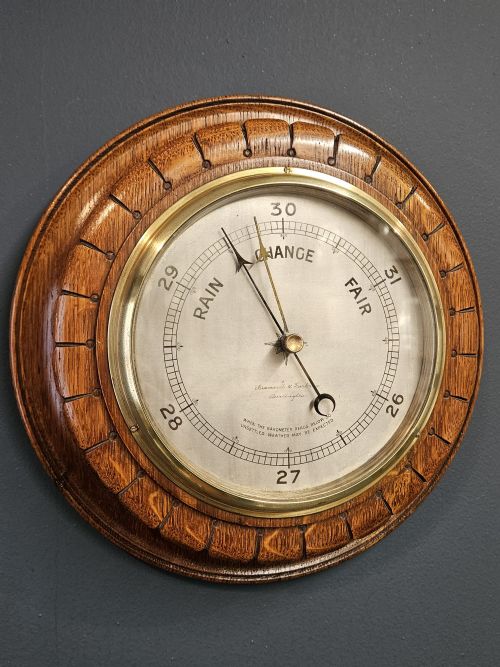
The dial faces utilise materials such as silvered brass, porcelain, and ceramic, etched or painted with legible meteorological scales. Protective bezels fitted with glass shield the delicate pointer needles and inner mechanisms from dust and damage.
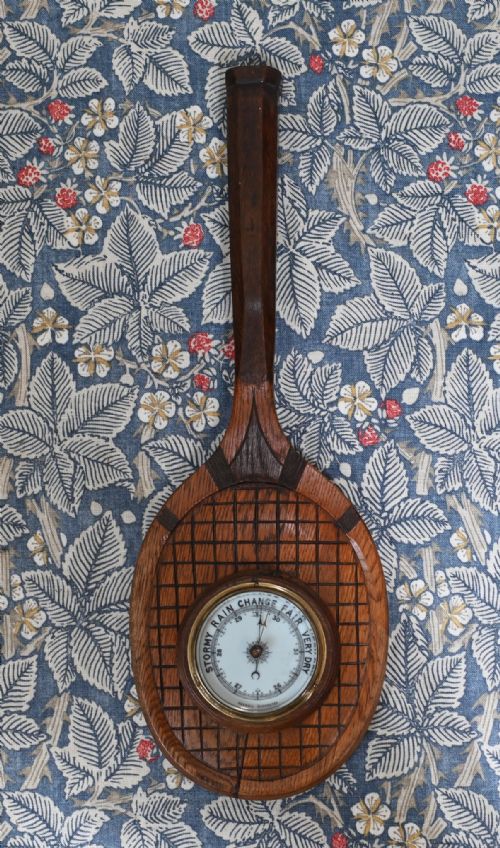
An unusual Victorian tennis racquet club barometer records matches alongside the weather.
Factors that separate examples
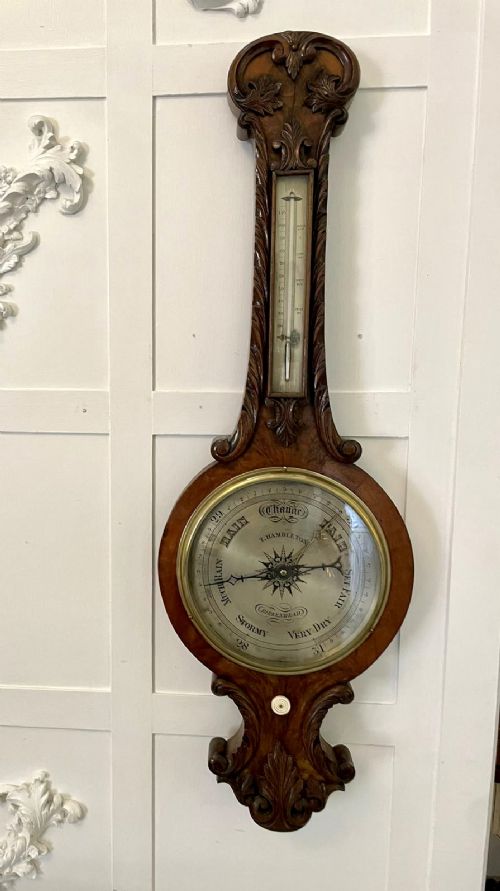
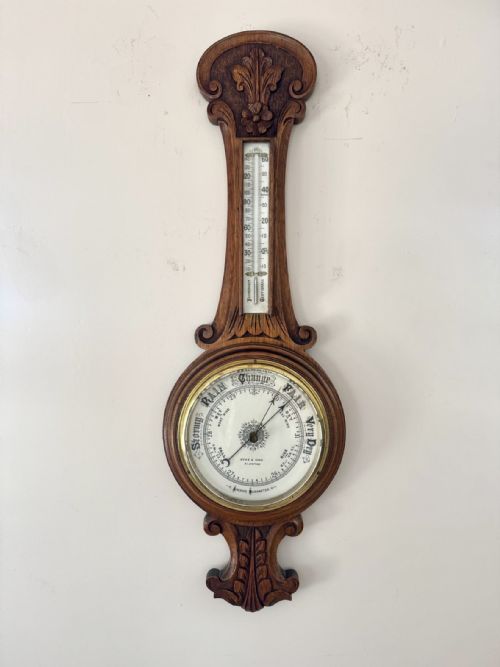
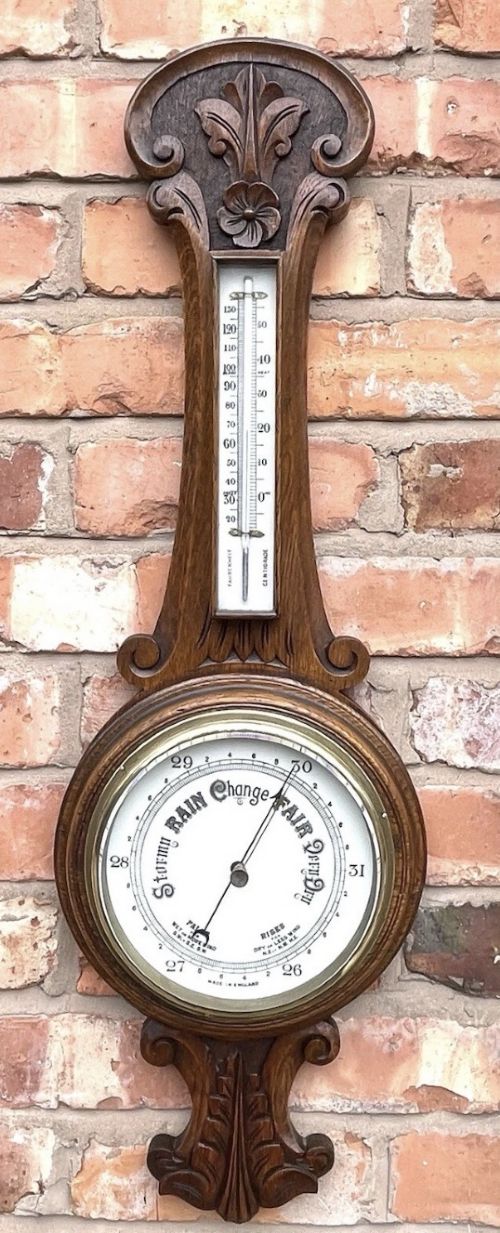
The distinction between standard and superior pieces rests upon the crispness of the wood carving and the architectural ambition of the case. Deeply undercut foliage, balanced proportions, and secondary functions like integrated thermometers or clock dials elevate an instrument.
The legibility and finish of the dial further distinguish the work. Finely engraved silvered brass dials paired with original bevelled glass demonstrate superior workshop standards compared to plain ceramic replacements or simplified wooden surrounds.
Hyde & Sons Sleaford·Bramwell & Harbron of Darlington·Negretti & Zambra·W Watson & Sons
The Vintage Carved Aneroid Barometer Glossary
- Aneroid barometer
- An instrument that measures atmospheric pressure using a sealed corrugated metal box that expands or contracts, avoiding the use of liquid mercury. The movement connects directly to the visible indicator needle on the dial.
- Banjo barometer
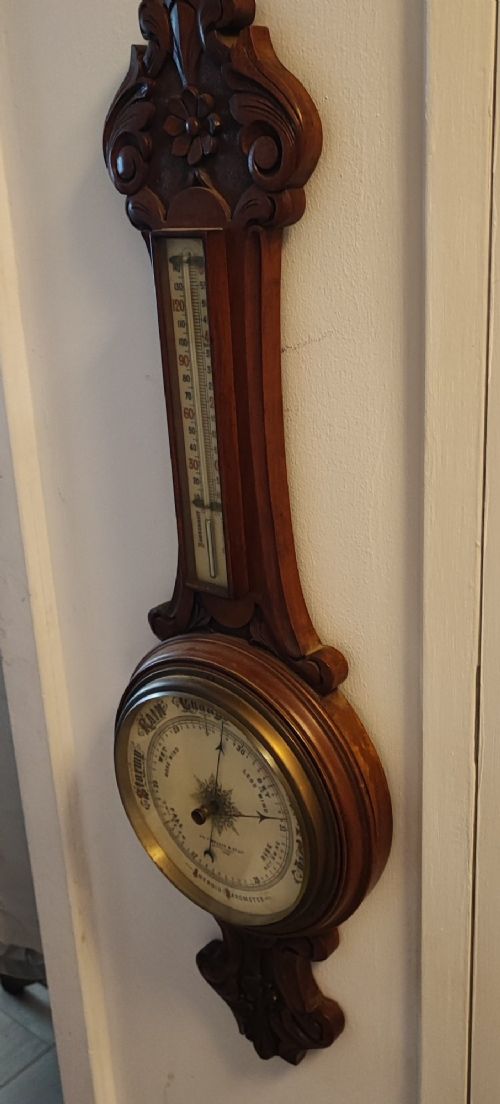
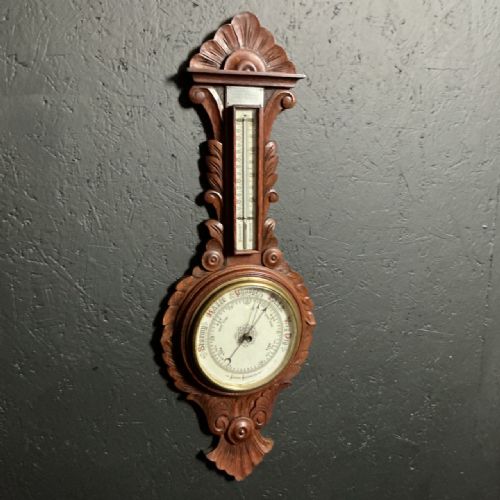
- A tall, tapered wall barometer shaped vaguely like a banjo, typically housing a thermometer on the upper stem and the main dial on the lower bulb. This form became dominant during the Victorian period.
- Skeletonised barometer
- An instrument design where the dial centre is open or transparent, revealing the mechanical levers and gears operating behind the face. This style showcases the precision of the internal metalwork.
- Black Forest style
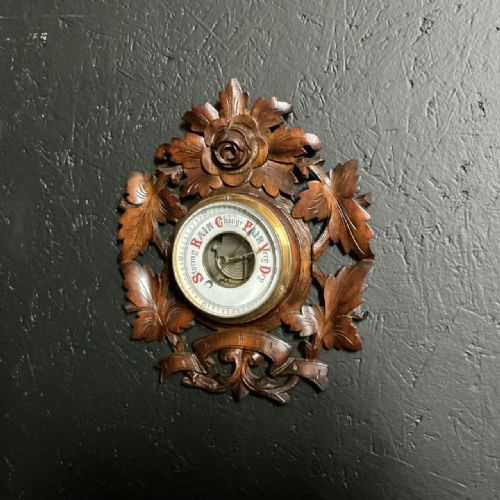
- A carving tradition originating in central Europe known for highly naturalistic rendering of foliage, animals, and rustic scenes. Pieces in this style feature deeply carved wooden frames populated by oak leaves and forest motifs.
- Silvered dial
- A brass dial face treated with a silver compound to produce a matte, reflective surface that receives engraved numbers and lettering clearly. This finish prevents glare under domestic lighting.
Vintage Carved Aneroid Barometer: Frequently Asked Questions
How do aneroid barometers work?
An aneroid barometer measures changes in air pressure using an internal sealed metal capsule. As pressure rises and falls, the thin metal walls flex slightly, moving a system of delicate levers that turns the pointer on the dial.
This mechanical movement eliminates the need for glass tubes filled with liquid mercury. The instrument requires initial calibration against local weather reports using a small adjustment screw on the back or front.
Where should I hang a wall barometer?
Hang your barometer on an interior wall away from direct sunlight, radiators, and draughty doors. Sudden temperature fluctuations can affect the internal metal capsule and lead to inaccurate pressure readings.
Choose a sturdy wall fixing because solid wood and glass instruments carry significant weight. Placing the barometer at eye level ensures easy daily reading of both the weather dial and any attached thermometer.
How do I tell Victorian from Edwardian pieces?
Victorian barometers often feature darker woods like walnut and mahogany, denser hand-carvings, and elaborate architectural or Gothic elements. The cases tend to be heavier and more ornate, reflecting mid-to-late nineteenth-century tastes.
Edwardian pieces frequently showcase lighter oak timbers, cleaner geometric lines, and simpler carved borders. The transition into the twentieth century favoured brighter domestic interiors and more restrained decorative woodwork.