
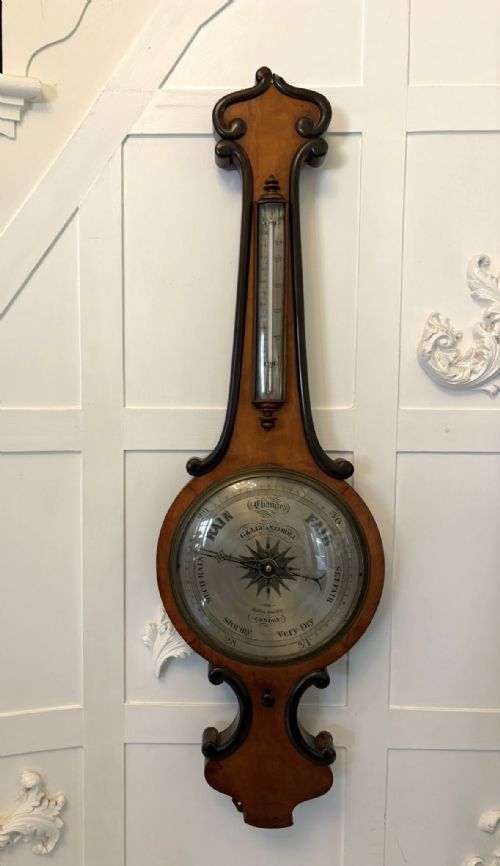


Carved Walnut Wall Barometer
A carved walnut wall barometer brings practical science and rich Victorian craftsmanship together on the wall, making it a focal point in any room.
Carved Walnut Wall Barometer
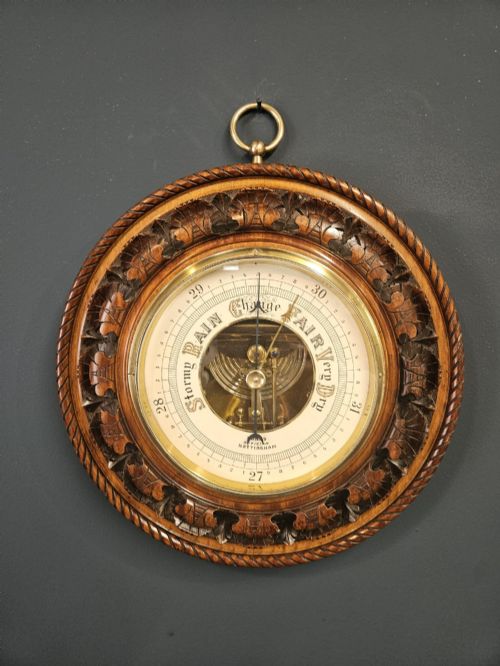
A carved walnut wall barometer is a domestic weather-measuring instrument housed in a timber case designed to hang securely on a room's wall. These instruments date primarily from the nineteenth century, encompassing Victorian, Edwardian, and Black Forest styles.
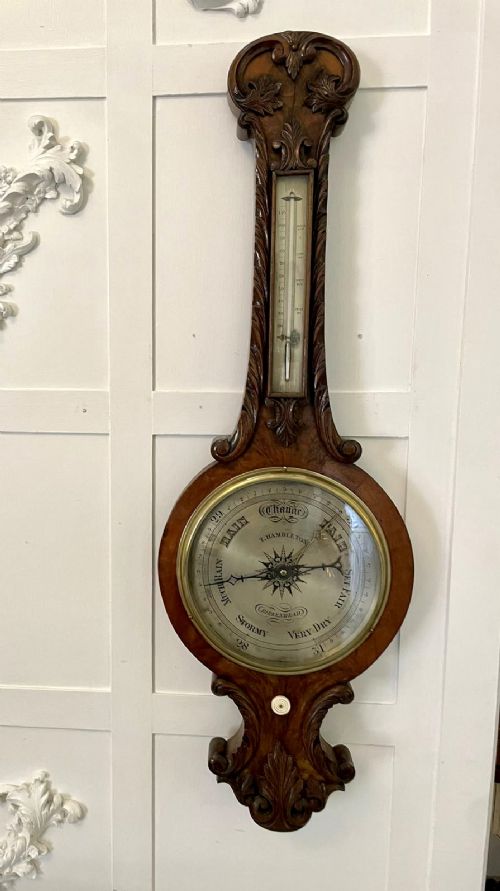
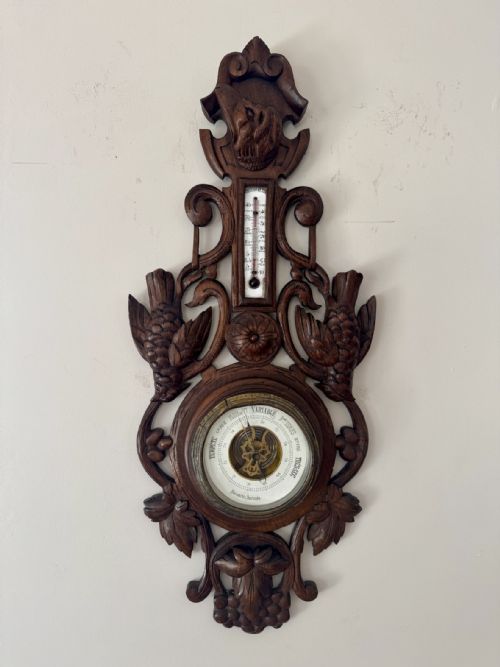
The selections on this page feature banjo barometers, wheel barometers, stick barometers, and skeletonised aneroid models. Many examples combine the barometer with a thermometer, a ceramic dial, or even a clock mechanism.
Makers such as Negretti & Zambra and G & L Guanziroli London appear among the English pieces, alongside Scandinavian, American, and continental Black Forest workshops. The predominant material is walnut, frequently seen in burr walnut or lindenwood variants.
What varies in quality
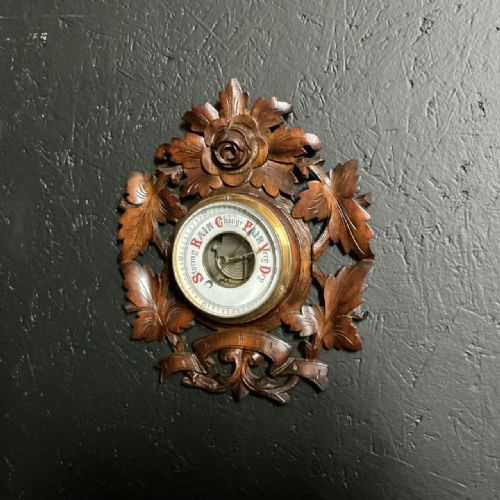
The distinction between standard and superior pieces rests largely on the crispness and depth of the wood carving. Elaborate Rococo Revival motifs and intricate Black Forest foliage demand high levels of carving skill.
Signed works by established makers such as Negretti & Zambra carry greater authority. The inclusion of secondary functions like thermometers and clock movements also elevates the complexity of the piece.
G & L Guanziroli London·Negretti & Zambra
The Carved Walnut Wall Barometer Glossary
- Aneroid barometer
- An instrument that measures air pressure using a flexible metal box rather than liquid mercury. It expands and contracts with atmospheric changes to move the pointer on the dial.
- Banjo barometer
- A wall barometer shaped like a banjo, featuring a circular dial at the top and a long trunk containing a thermometer or tube below. This form became very popular during the Victorian period.
- Stick barometer
- A tall, narrow barometer where the mercury column is visible behind a glass tube. These instruments offer precise atmospheric readings.
- Skeletonised barometer
- A design where the internal mechanical movement is exposed to view rather than hidden behind a solid dial. It highlights the brass gears and levers inside.
- Wheel barometer
- A mercurial barometer housed in a banjo-shaped case where the pressure changes move a float connected to a visible dial needle via a pulley wheel.
Carved Walnut Wall Barometer: Frequently Asked Questions
How do I hang a wall barometer safely?
These instruments require a secure wall fixing due to the weight of the timber case and glass components. Use a heavy-duty screw and wall plug matched to the weight of the specific piece.
Hang the barometer away from direct heat sources and exterior doors to protect the wood and ensure accurate atmospheric readings.
What is the difference between aneroid and mercurial barometers?
Mercurial barometers use a column of liquid mercury to measure atmospheric pressure directly in a glass tube. They represent traditional scientific craftsmanship.
Aneroid barometers use a sealed metal capsule that flexes with pressure changes, making them safer and easier to move around.
Can I adjust the barometer for my local altitude?
Many aneroid barometers feature a small adjustment screw on the back to calibrate the needle against local weather reports. You can turn this screw slightly to match current barometric pressure.
Mercurial barometers generally require professional calibration or setting according to your specific height above sea level.
How do I care for the walnut case?
Dust the carved walnut case gently with a soft, dry cloth to prevent dirt from settling in the recesses of the carving. Avoid using modern chemical polishes that can damage the antique finish.
Maintain a stable room temperature and humidity level to prevent the wood from warping or cracking over time.