
Vintage Cane Seat Chairs
These vintage cane seat chairs bring together woven textures and sturdy timber frames to offer character and resilient seating for any room.
Vintage Cane Seat Chairs
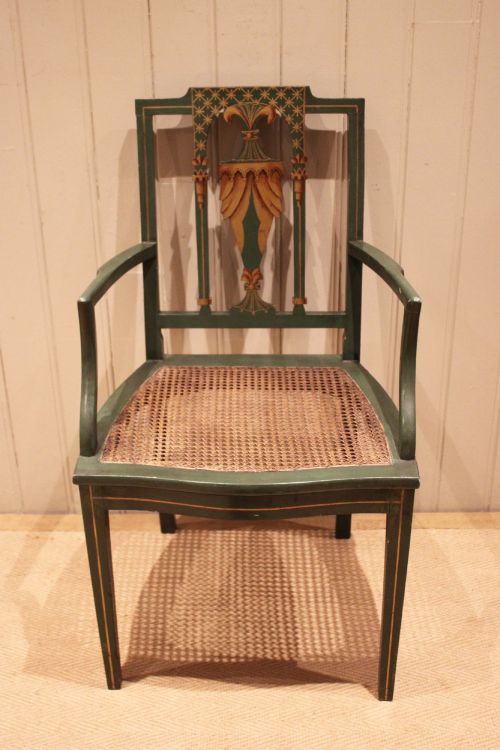
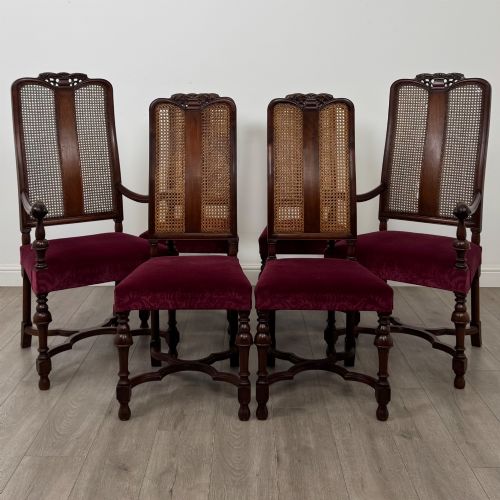
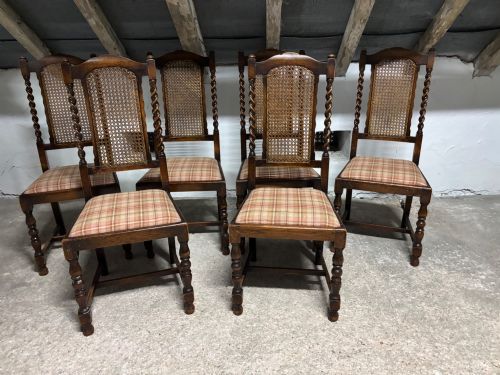
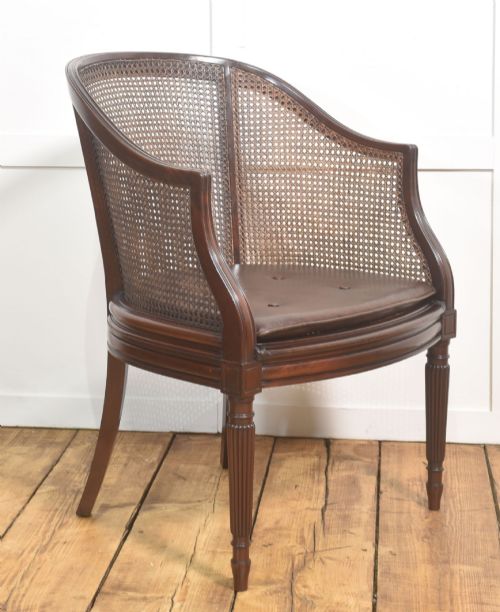
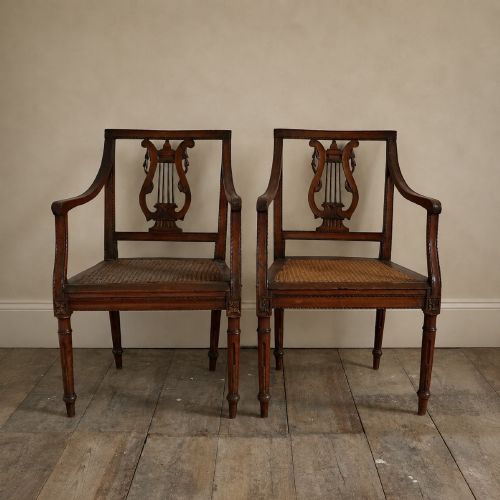
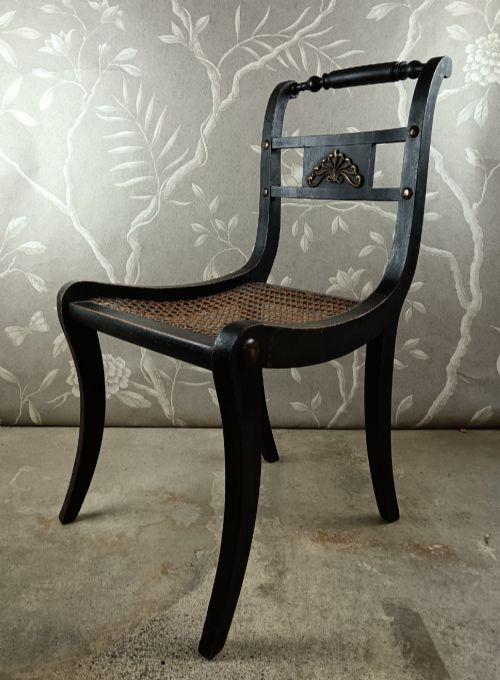
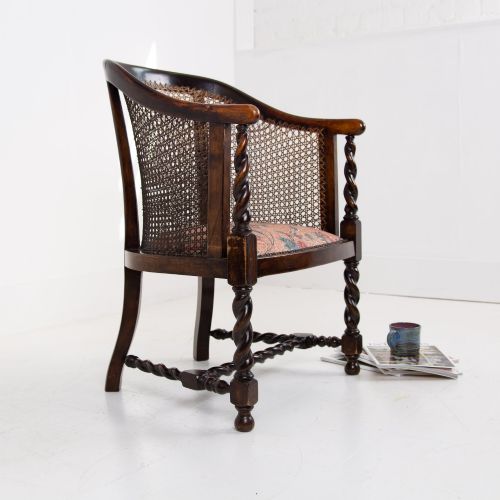
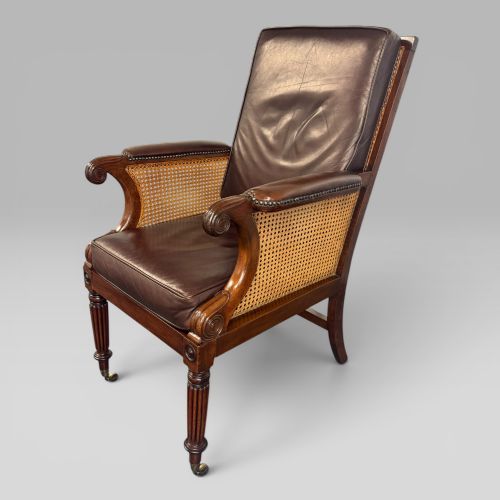
When you search for vintage cane seat chairs, you encounter seating constructed with woven plant fibres across frames dating from the Georgian and Regency eras through the Victorian, Edwardian, and early twentieth-century periods. These items encompass dining chairs, side chairs, armchairs, and library bergères, alongside occasional pieces like bedroom chairs, hall chairs, and child high chairs.
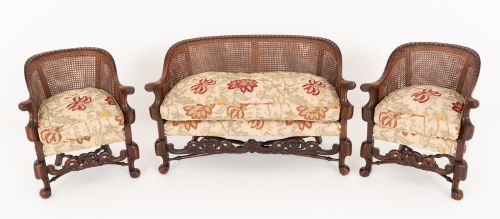
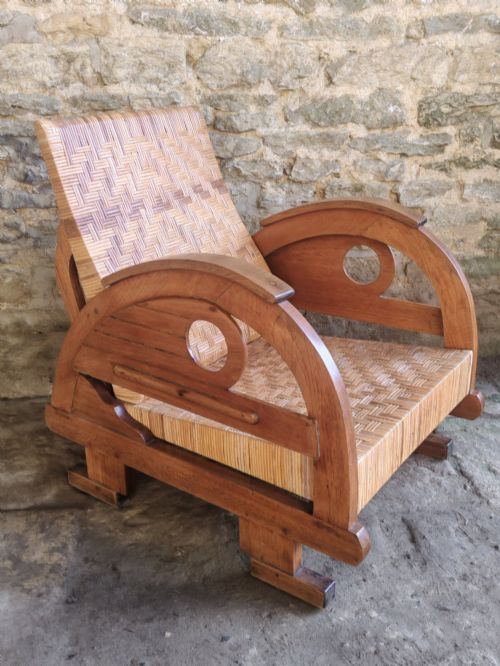
The styles span formal revival designs such as Carolean, Jacobean, William and Mary, and Hepplewhite alongside Anglo-Indian Colonial, Arts and Crafts, Art Deco, and English Country traditions. You most frequently meet mahogany, oak, and walnut examples featuring traditional woven cane or split cane panels within the frame.
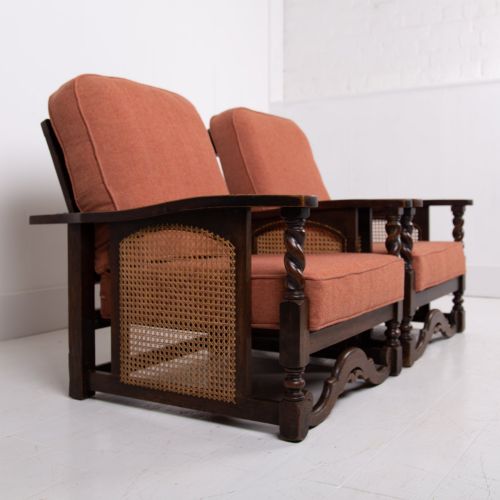
Forms range from simple side chairs to deep library armchairs and suites, often incorporating upholstered cushions in leather, velvet, or fabric. Makers working in these styles utilised local and exotic timbers, producing seating suitable for dining rooms, libraries, and bedrooms.
How they were made
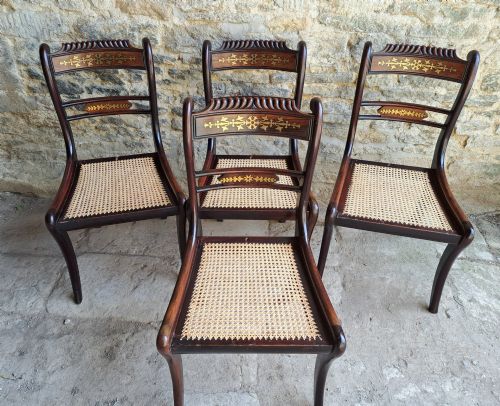
Frames are constructed from hardwoods such as mahogany, oak, walnut, rosewood, satinwood, ebony, and teak, joined with traditional woodworking joints. Some pieces incorporate brass inlay, giltwood, or lacquer to ornament the timber structure.
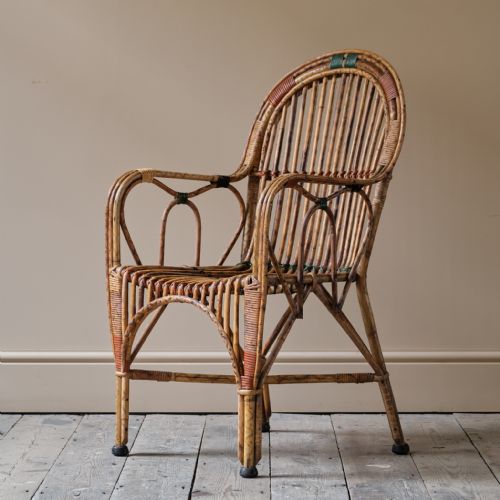
The seating panels utilise woven cane, split cane, or rattan, threaded through pre-drilled holes along the seat rail or back frame. Additional comfort is provided in many examples through loose cushions covered in leather, fabric, or velvet.
Listings feature timbers including mahogany, oak, walnut, rosewood, satinwood, ebony, teak, and brass-inlaid woods.
What varies in quality
The refinement of the timber carving and the precision of the frame joinery distinguish the standard of manufacture. Finer pieces display crisp hand-carved details, matched wood veneers, and carefully integrated brass or inlay work.
The tightness and regularity of the cane weave also determine quality, as does the choice of primary timber, ranging from standard oak and mahogany to solid ebony, satinwood, and rosewood.
Dryad And Co·Waring And Gillow
The Vintage Cane Seat Chairs Glossary
- Bergère
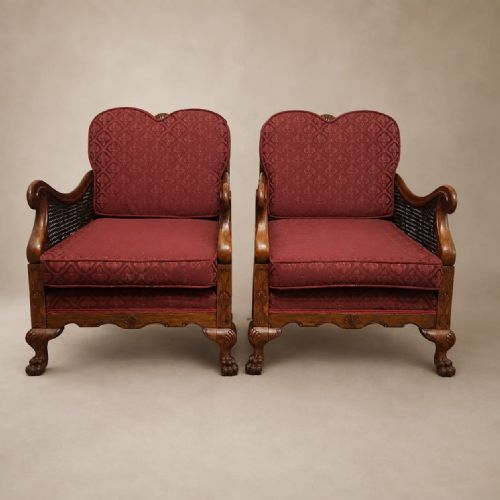
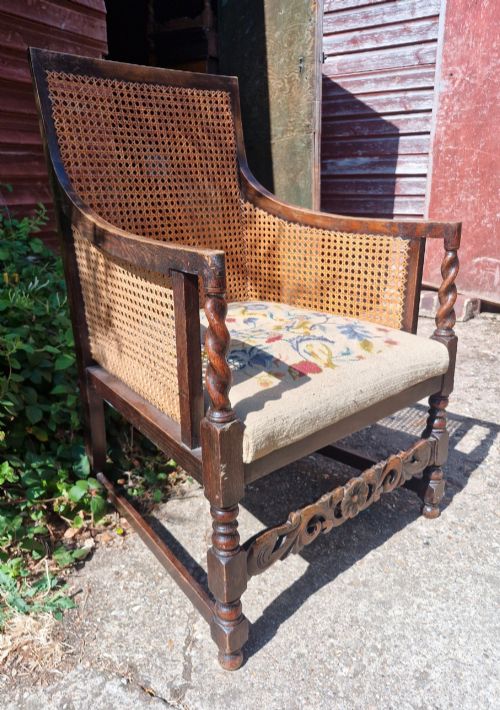
- An enclosed upholstered armchair with wooden framing, often featuring cane panels to the back and sides. This form became popular during the eighteenth century and inspired later revival pieces.
- Cane
- Strips of material derived from the rattan palm, used in tight weaves to form resilient seats and chair backs. It provides flexibility and breathability.
- Regency
- A period spanning the early nineteenth century, characterised by classical restraint, influence from ancient Greek and Roman forms, and dark timbers.
- Edwardian
- The period covering the reign of Edward VII up to the First World War, noted for lighter furniture designs and revived historical styles.
- Jacobean Revival
- A nineteenth and twentieth-century style imitating seventeenth-century English furniture, typically featuring heavy turned oak components and high backs.
Vintage Cane Seat Chairs: Frequently Asked Questions
What is a bergere chair?
A bergère is a type of armchair featuring an enclosed wooden frame with cane or upholstered sides and back. These seats often include a loose cushion for added comfort.
They appear in various timbers such as mahogany, walnut, and oak across different periods including the Regency and early twentieth century.
How do I care for cane seats?
Cane requires moderate humidity to prevent the natural fibres from becoming brittle and snapping. Light dusting and occasional damp wiping maintain the flexibility of the woven material.
Using cushions on top of the cane seat helps distribute weight and reduces direct wear during daily use.
Are these chairs comfortable?
The woven cane provides a flexible, supportive surface that yields slightly to the body. Many armchairs also incorporate loose cushions filled with fabric, leather, or velvet.
Deep library bergère styles and upholstered armchairs offer more relaxed seating compared to upright dining or hall chairs.
How do I identify the period?
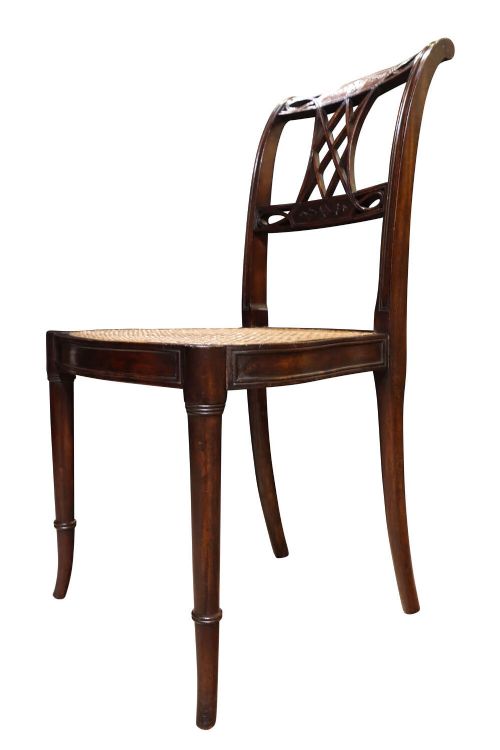
Dating relies on timber selection, construction methods, and stylistic cues such as sabre legs, lyre backs, or revival motifs. Georgian and Regency pieces generally display heavier classical influences, while Edwardian examples often feature lighter inlaid frames.
Details like brass inlay, lacquer work, and specific revival styles help narrow down the decade of manufacture.