



Vintage Cane Club Chair
A vintage cane club chair brings relaxed structure and tactile warmth to a room, offering deep seating wrapped in natural woven panels.
Vintage Cane Club Chair
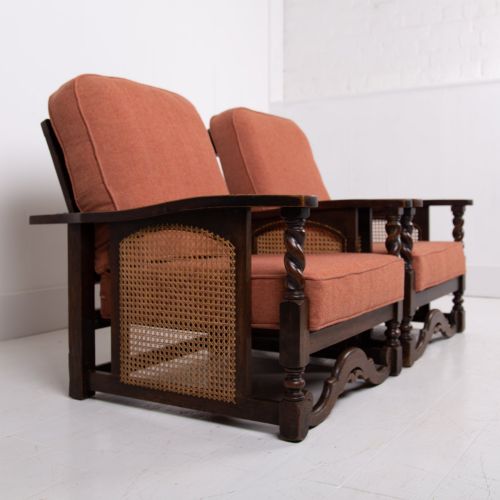
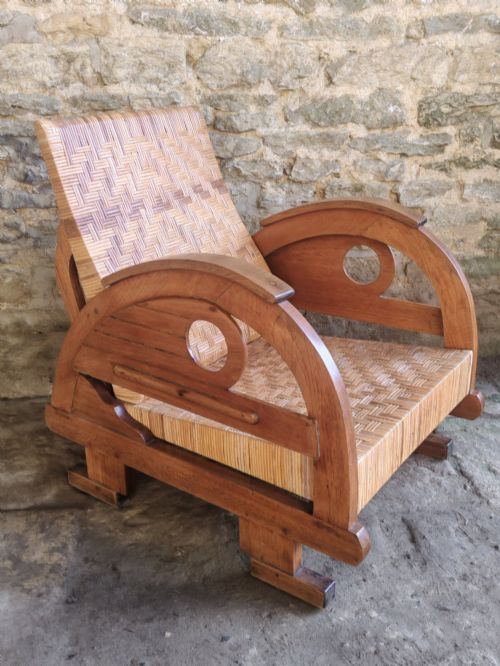
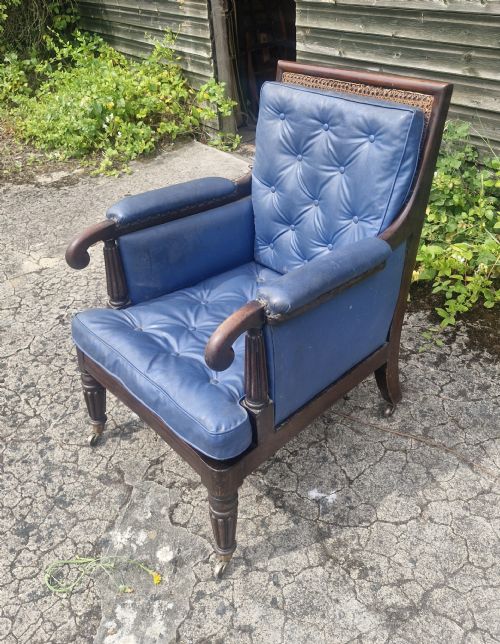
When you search for a vintage cane club chair, you are looking at substantial seated furniture designed for comfort, featuring woven plant materials combined with solid wood frames. These pieces originate from various periods including the Edwardian era, the nineteen-twenties, and the late nineteenth century.
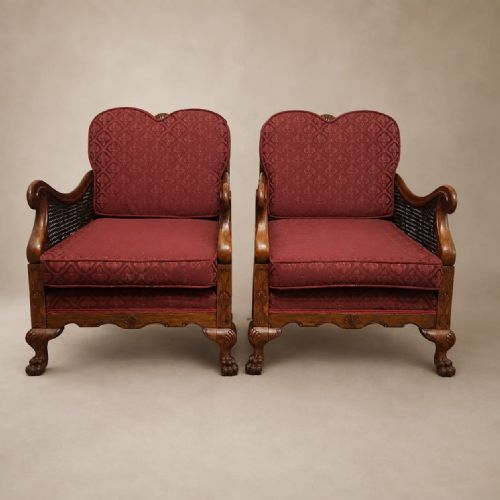
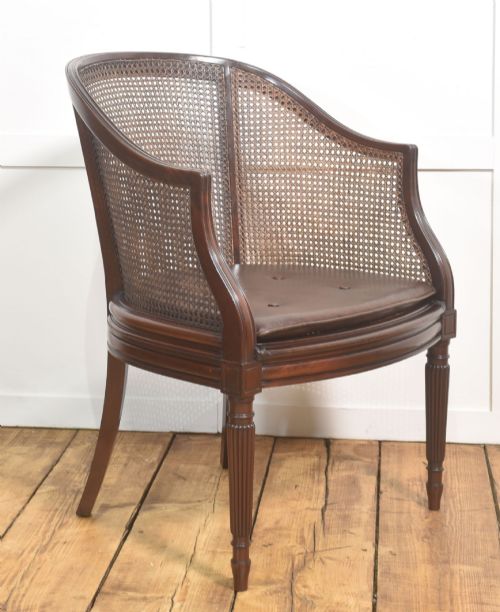
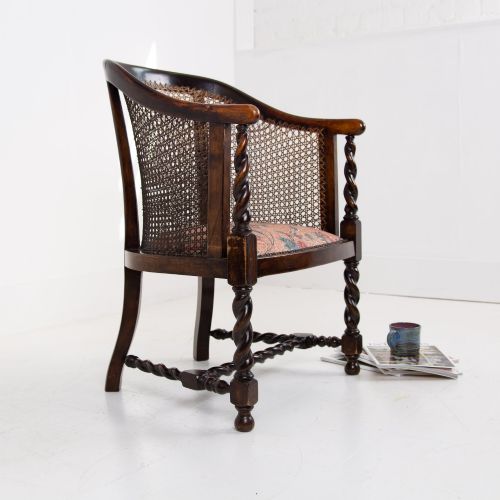
You are most likely to meet bergere styles, tub armchairs, and library models on this page. These chairs frequently employ oak, mahogany, or walnut for their structural woodwork, paired with woven cane panels and upholstered cushions.
The designs span diverse aesthetic movements such as Art Deco, Arts and Crafts, Jacobean Revival, and French Revival. They serve as functional seating that balances sturdy timber construction with breathable woven elements.
How they were made
The makers of these chairs built robust frames using hardwoods like oak, mahogany, and walnut, frequently shaping the timber into tub forms, reclining mechanisms, or panelled armrests. These wooden skeletons provide the structural integrity required to support daily use.
Cane panels are hand-woven through perforations in the wooden framework, creating flexible yet supportive backrests and sides. Many examples incorporate supplementary materials such as leather, brass details, and plush fabric or velvet cushions.
Current listings showcase pieces spanning the late nineteenth century through to the nineteen-thirties, utilising oak, mahogany, walnut, brass, leather, and velvet alongside traditional cane.
What varies in quality
The refinement of the timber carving and the complexity of the wood framing dictate the initial distinction between standard seating and finer library or parlor examples. Chairs featuring intricate joinery, such as reclining mechanisms or matched pairs, demonstrate superior workshop execution.
The precision and tightness of the cane weaving also separate basic utility items from exceptional pieces. Furthermore, the selection of secondary materials, including premium leather or rich mahogany, elevates the overall execution of the design.
The Vintage Cane Club Chair Glossary
- Bergere
- A French-style upholstered armchair featuring enclosed cane panels on the sides and back. It typically includes a loose seat cushion resting on a supportive frame.
- Cane
- Strips of rattan or similar plant material woven into an open mesh pattern. It provides lightweight ventilation and flexibility for chair backs and panels.
- Tub armchair
- A comfortable seat characterised by a low, curved backrest that flows continuously into the armrests. This enclosing form creates a snug posture for the sitter.
- Jacobean Revival
- A decorative style inspired by seventeenth-century British design, utilising dark woods and sturdy proportions. It appears in revival pieces with heavy turned supports.
- Arts and Crafts
- A design movement emphasising honest construction, visible handcraftsmanship, and simple utility. Pieces from this tradition prioritize functional integrity over excessive ornament.
Vintage Cane Club Chair: Frequently Asked Questions
How do I style a cane club chair?
These armchairs work well as reading seats in studies or as accent furniture in living rooms. Pair them with complementary wooden side tables to balance the natural woven textures.
Allow enough surrounding space to appreciate the timber frames and open cane panels from multiple angles. Adding contrasting cushions can also tie the chair into your existing interior palette.
Are these chairs comfortable for daily use?
Most models feature deep seats and supportive backrests designed for prolonged lounging. Many surviving examples come equipped with replacement cushions that enhance modern sitting comfort.
The combination of flexible woven cane and upholstered cushioning provides a supportive yet yielding experience.
How do I identify an Edwardian cane chair?
Edwardian examples frequently utilise mahogany or light-toned woods with refined proportions. They often reflect lighter aesthetic sensibilities compared to heavier Victorian predecessors.
Look for slender framing, subtle inlay work, and understated curved lines typical of the early twentieth century.
What is the difference between a bergere and a club chair?
A bergere specifically incorporates exposed wooden frames with woven cane sides and back panels. Traditional club chairs are typically fully upholstered in leather or heavy fabric without cane work.
However, vintage terminology sometimes blends these categories when describing low, deep-seated lounging chairs with woven elements.