
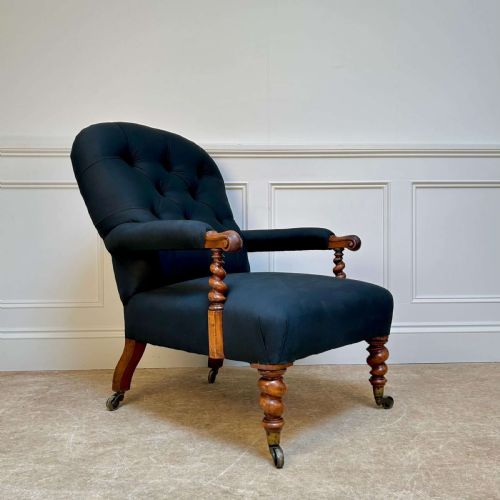

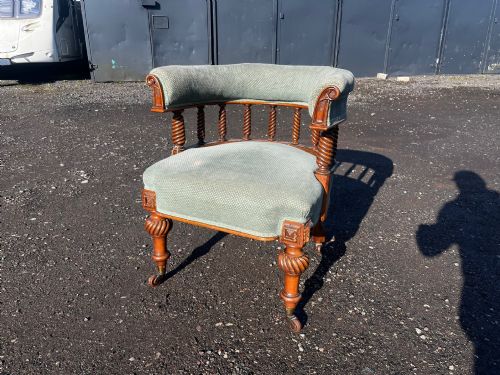
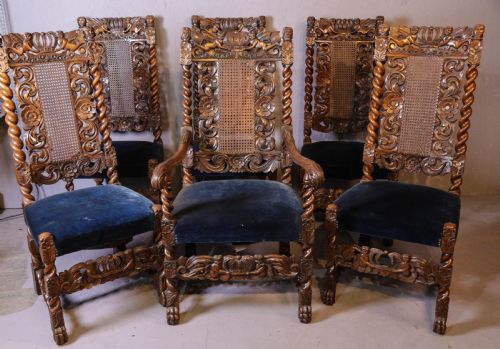


Carved Barley Twist Armchair
A carved barley twist armchair brings dense timber framing and helical turning together, offering substantial seating with centuries of stylistic revival behind it.
Carved Barley Twist Armchair
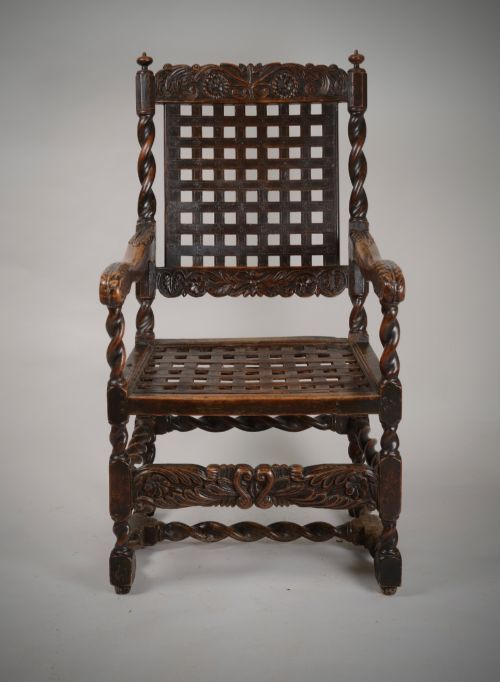
A carved barley twist armchair is a seating form defined by spiral-turned wooden members alongside carved ornamentation, appearing across the seventeenth, nineteenth, and early twentieth centuries. These pieces emerge in oak and walnut, often reflecting Jacobean, Carolean, or Victorian Gothic revivals that re-create earlier seventeenth-century aesthetics.
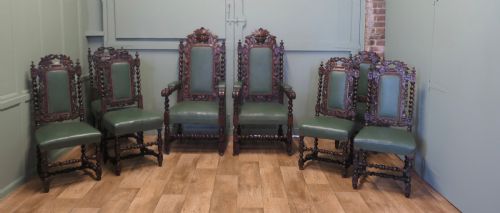
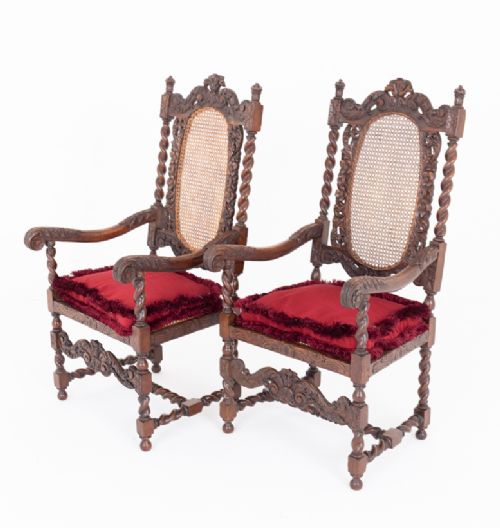
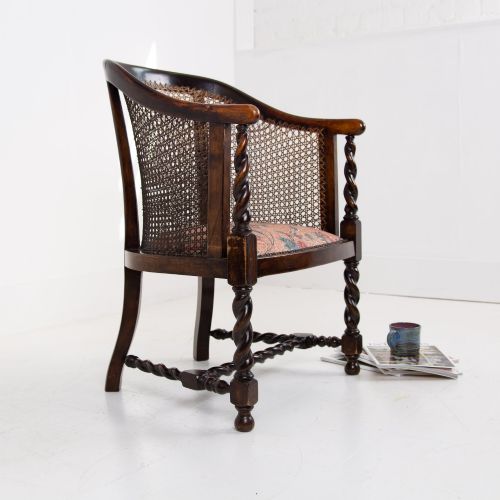
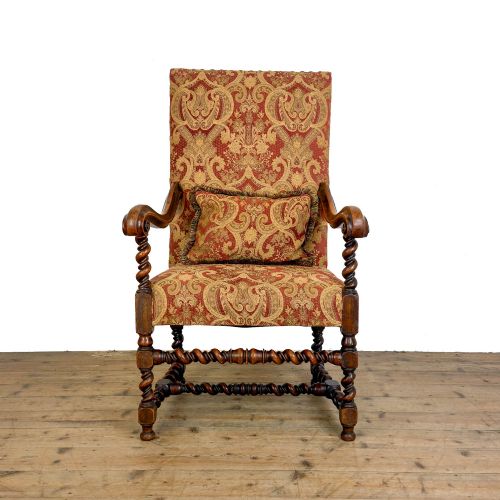
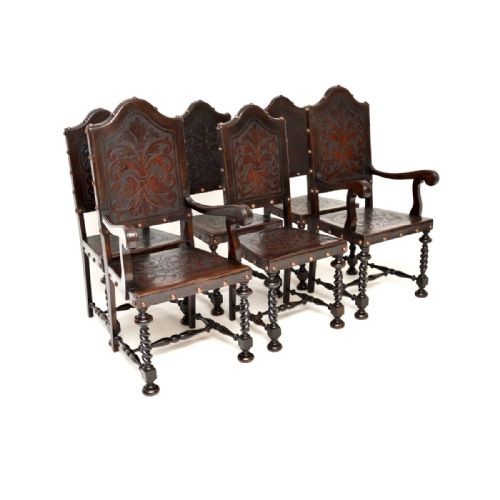
The versions most frequently met on this page span the Victorian era and the nineteen-twenties, incorporating armchairs, carver armchairs, and heavy throne chairs. Makers utilised sturdy frames built for libraries, dining rooms, and halls, pairing turned stretchers and uprights with upholstered panels, cane, or embossed leather.
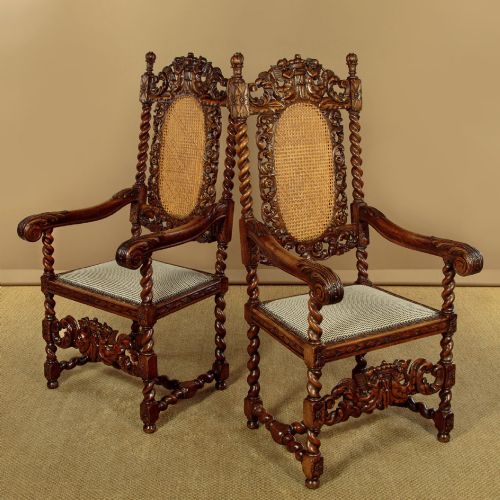
Surviving examples range from simple oak desk chairs to large throne chairs featuring lion heads, green man carvings, and tapestry covers. Buyers encounter both single statement seats and matched pairs or sets, showing how domestic seating evolved through historic revival periods.
Materials and construction methods
Construction relies heavily on dense hardwoods, predominantly oak and walnut, selected for their structural strength and ability to hold deep chisel work. Craftsmen shaped the signature spiral legs and stretchers using lathes and hand-chiselling, producing the continuous helical rhythm characteristic of the twist.
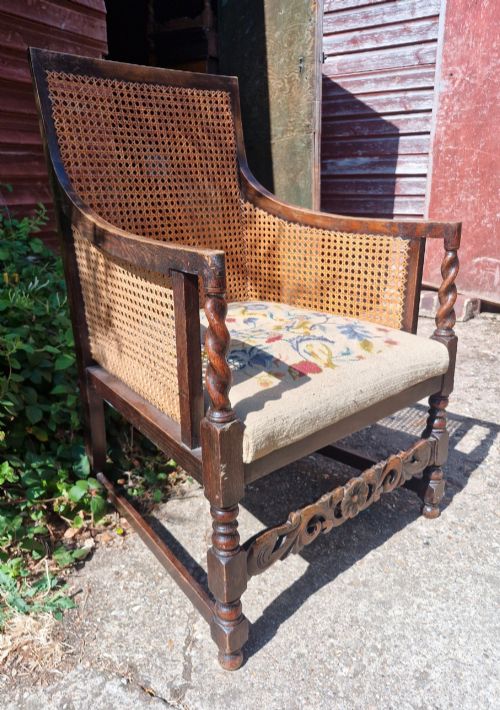
Upholstery materials such as leather, velvet, fabric, and cane were integrated into backs and seats, secured with traditional tacks or exposed framework. Secondary materials like brass studs, cane panels, and tapestry work completed the seating surfaces, whilst frame joints relied on mortise and tenon construction.
The furniture forms include open armchairs, desk chairs, dining chairs, and imposing high-backed throne chairs decorated with figural carvings.
Distinctions in quality and execution
Quality rests upon the crispness and depth of the hand-carving and the precision of the spiral turning across the frame. Superior pieces display sculptural confidence in figural motifs like lion heads or green men, whereas lesser examples show shallow, mechanical detailing.
The integrity of the timber and the retention of original elements, such as cane panels, embossed leather, or period upholstery, separate exceptional survivals from heavily altered or later assembled pieces.
Hindley & Sons
The Carved Barley Twist Armchair Glossary
- Barley twist
- A spiral turning resembling a twisted rope or stalk of barley, formed on wooden furniture legs and stretchers. This decorative turning method gained immense popularity during the seventeenth century and subsequent revival periods.
- Bergere
- An enclosed upholstered armchair with a wooden frame where the sides and back are often panelled in woven cane. Originating in France, these chairs prioritise comfortable domestic lounging.
- Carver armchair
- A sturdy wooden armchair designed to sit at the head of a dining table or function as a desk seat. They typically feature open arms and matching side chairs in a set.
- Carolean
- A stylistic period spanning the reign of Charles II, characterised by rich walnut framing, ornate carving, and scrolled details. Revival versions of this style appeared frequently during the Victorian era.
- Throne chair
- A high-backed, imposing armchair designed with architectural dignity and heavy ornamentation. These pieces often feature prominent crest rails and figural carvings.
Carved Barley Twist Armchair: Frequently Asked Questions
How do I date a carved barley twist armchair?
Dating relies on examining the timber species, joinery methods, and the character of the wear alongside stylistic markers from periods like the seventeenth century or Victorian revivals. Oak dominates earlier pieces, while walnut and mahogany frequently appear in later nineteenth-century interpretations.
Hardware, upholstery remnants, and tool marks on the timber provide further clues to distinguish a seventeenth-century original from a nineteenth-century revival piece.
What is the difference between a carver and a throne chair?
A carver armchair is generally proportioned for dining or desk use, offering functional wooden arms and a balanced frame suitable for daily sitting. In contrast, a throne chair is significantly larger and heavier, designed as a commanding statement piece.
Throne chairs often incorporate elaborate crests, deep relief carvings such as green men or lions, and expansive upholstered or tapestried backs.
Are these chairs comfortable for daily use?
Many of these armchairs provide firm, supportive seating due to their rigid wooden frames and high backs. Versions upholstered in leather, fabric, or fitted with padded seats offer softer support suited to modern living.
Upholstered components and cane panels can be assessed for their resilience, though buyers intending heavy daily use often consider the internal webbing and padding condition.
How should I care for antique oak and walnut frames?
Maintaining these timber frames involves keeping them away from direct heat sources and strong sunlight to prevent the wood from drying out or splitting. Gentle dusting with a dry cloth preserves the finish without harming the patina.
Period leather, cane, and fabric elements require specialist cleaning appropriate to their material, ensuring the historic integrity of the chair remains undisturbed.