


Dark Oak Cane Armchair
A dark oak cane armchair brings substantial timber and woven seating together, offering robust character and historic revival style for the home.
Dark Oak Cane Armchair
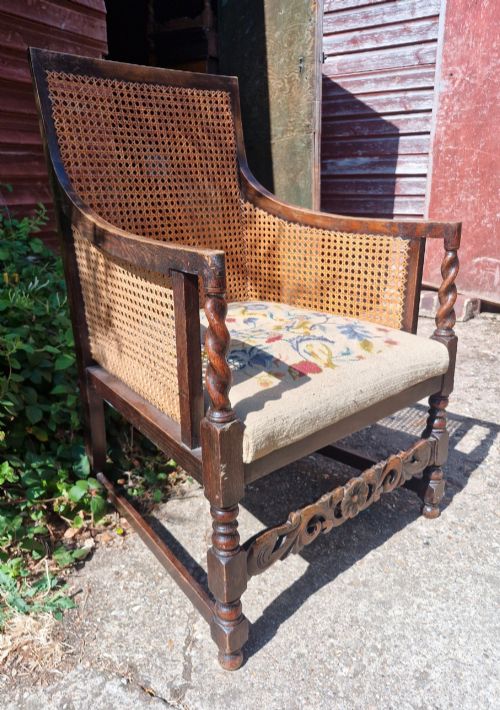
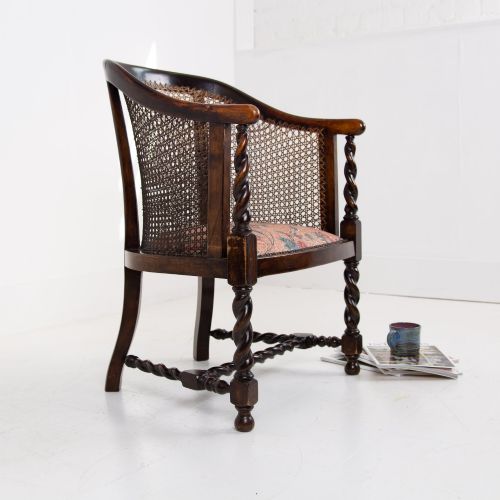
Every dark oak cane armchair combines a sturdy wooden framework with a woven seat or back panel. The dark oak cane armchair appears across multiple periods including the Victorian era and the early twentieth century.
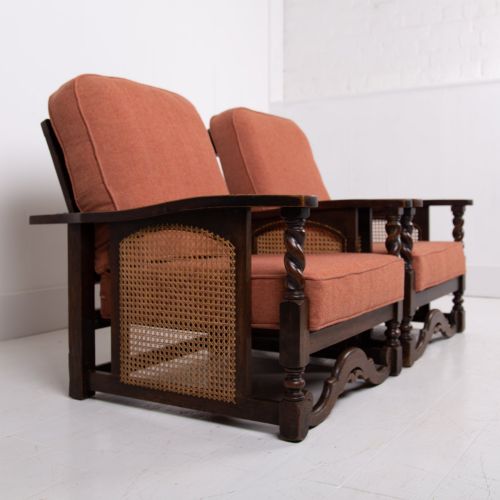
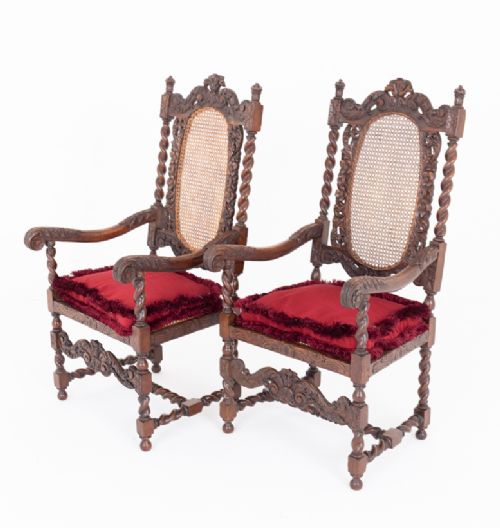
The selection here encompasses several forms from simple open armchairs to heavier throne chairs and reclining designs. Revival styles such as Jacobean and Carolean strongly influence the overall aesthetic of these pieces.
Makers often drew upon seventeenth-century precedents, incorporating turned bobbin framing or carved details. Buyers encounter single items alongside pairs and larger sets of dining chairs sharing similar construction.
Materials and Construction
Workshops utilised solid oak for the primary framework, sometimes applying ebonised finishes to heighten the dark visual impact. Natural cane forms the woven panels for seats and backs, offering flexible support.
Secondary materials appear in specific elements, with brass details and various cushions covered in fabric, velvet, leather, or tapestry fabric. Joinery methods reflect traditional cabinet-making practices suited to heavy timbers.
Some chairs come equipped with new cushions, proving that even a seventeenth-century aesthetic appreciates twenty-first-century padding.
Assessing Quality and Execution
The distinction between standard production and finer pieces rests upon the depth of the wood carving and the precision of the turning. Heavier throne chairs and elaborate revival models demonstrate greater sculptural ambition than simple stick back variants.
The preservation and tightness of the cane work influence the overall integrity of the seating. Integration of replacement seats or new cushions also affects how closely a piece maintains its original period character.
The Dark Oak Cane Armchair Glossary
- Cane
- A material woven from peeled rattan palms to create supportive seats and backs. It provides a resilient, patterned surface within a wooden frame.
- Bobbin
- A style of turned woodwork resembling a string of spools or bobbins. It appears frequently on seventeenth-century revival frames.
- Jacobean Revival
- A nineteenth-century style imitating the heavy, rectilinear furniture of the early seventeenth century. Pieces feature dark finishes and formal carving.
- Throne Chair
- A tall, imposing armchair with an elevated back and substantial arms. These pieces were designed to dominate a room.
- Stick Back
- A chair construction method where turned spindles are inserted directly into the seat and top rail. It offers a lighter alternative to heavily carved frames.
Dark Oak Cane Armchair: Frequently Asked Questions
How do I clean cane seating?
Wipe the woven surface gently with a damp cloth to remove dust from the recesses. Avoid soaking the material to prevent the natural fibres from becoming brittle.
Condition the wood framework with appropriate furniture wax while keeping polishes away from the woven panels.
Can I use these chairs daily?
Most solid timber frames handle regular sitting well, provided the joints remain tight. Consider the condition of the woven panel before placing the seat under heavy daily use.
Adding a fitted cushion helps distribute weight evenly across fragile woven surfaces.
Are replacement cane seats authentic?
Re-caning is a standard maintenance practice required to keep antique seating functional over centuries. Traditional hand-weaving methods preserve the historic appearance of the piece.
New weaving blends into older frameworks successfully when matching the original gauge and pattern.
What defines revival styles?
Revival furniture looks back to earlier historic eras such as the seventeenth century for decorative inspiration. Makers utilise dark oak and deep carving to recreate seventeenth-century aesthetics during the Victorian period.
These pieces offer period character combined with nineteenth-century manufacturing standards.